25 Guiding Principles for Ethnic Unity

Twenty-five years ago I began my journey in ethnic unity ministry. Over the years I have learned some valuable lessons. I thought I’d share twenty-five of them with you.
The journey into ethnic unity is best done relationally, and not ideologically. Learn to sit together over cups of coffee, instead of arguing with one another over concepts.
“White” is not a four letter word.
Remember we are family.
We all speak out of both our experience and lack of experience.
Our story shapes how we see the Bible, so learn to do theology in community.
Proximity breeds empathy.
Hold tight what is essential.
Hold loosely what is not essential.
God doesn’t love me more than the one who hurt me.
I’m called to love the person, not win the argument.
Don’t stop at their sin, see their story.
Cancel culture is the language of dictatorship, not of a democracy, and most certainly not the language of the kingdom.
My identity is in Christ, not my oppression.
My identity is in Christ, not my historical advantage.
Be formed by the Bible and not by the culture.
Wield truth like a scalpel to heal and not a knife to kill.
When uncomfortable around conversations/sermons on race, pray first and ask why, leaving room for the Holy Spirit to work.
People of other ethnicities and cultures are gifts to me to expose my biases, preferences and norms.
Racism is covered by the blood of Christ. If God forgives, so can I.
A person who refuses to repent is an abuser. Forgive and draw a boundary.
I’m not called to change anyone. I can’t even change myself. Therefore, I’m free to speak truth and love.
Filter your sociology through your theology, and not your theology through your sociology.
I don’t need to comment on everything.
Be louder on the gospel than race.
Diversity is not the ultimate goal, unity is.

The Offensive Church | The Big 3
When your seventy-something-year-old mother calls to invite you to facilitate a discussion with her small group centered around a book you’ve written, there’s no way you turn this down. So I obliged, and had a really good time, even with the constant reminders to click “unmute” when one of her near octogenarian friends wanted to speak (I think I’ll pay for that observation when my mother reads this!). When we finally logged off, mother called to thank me for taking the time, and then said, “You know, when it comes to the race conversation in the church there are really only three kinds of people: The ready, reluctant and resistant.” For me, everything stopped. And even though she couldn’t recall where she heard this when I pressed her for her source, I knew she was not only right, but had just gifted me with at least a section in my next book. Thanks mama!
The Ready
In my years of serving the church I have come to see there are many within aspiring multiethnic churches who are ready. In fact, many made the decision to lock arms with this particular church because of its vision to be multiethnic. But don’t assume ready means mature. Sadly, some of the most divisive are those who are ready. The problem is they are so anxious to resolve the issue, they lose sight of the people. Words like pace and patience mean little to them. The challenge in shepherding the ready will be to move them from an activist’s posture to a reconciling one. Those two dispositions are very different.
The Resistant
At the other end of the spectrum are the resistant. No matter how gentle, careful and biblical a pastor may be in laying out the case for ethnic unity, this kind of person will not budge. They won’t sign up for the class on race, or if they catch wind of a sermon series on race they won’t be likely to come. What’s more is they tend to be loud in their objections, seeing any mention of race through the lens of some political or ideological, left wing worldview. Leaders should not be quick to label a person as resistant, though, but should instead exercise pastoral patience and slowly come to this conclusion over time. Once a person proves themselves to be in opposition to this portion of the vision (which emerges from the Scripture), normally what follows is an exit. In some cases, I have seen division, which the Bible says should be addressed.
The Reluctant
The bulk of aspiring multiethnic churches just venturing down the path of ethnic unity will be made up of the reluctant. This is especially true if you are an existing church trying to move in this new direction (as opposed to church plants which have this vision from day one). The reluctant are open but cautious. Like the resistant, they won’t be prone to just buy the book or attend the class on race, but with a gentle, careful, biblical, patient and pastoral posture they can be brought along. Beyond the sermon series or class, what will be significant in the pastoral formation of the reluctant will be to immerse themselves in close proximity to ethnically different people. I am convinced the path to ethnic unity must be entered through the relational door, and not the ideological one. Growth in ethnic unity will not happen when we spar over our positions regarding critical race theory, reparations, affirmative action and the like, but when we lock arms with one another in rich conversation and relationship, much like Jesus did with the Samaritan woman at the well (John 4).
For more on these three categories, order my book, The Offensive Church.

The Anamorphic Jesus
On that day, when evening had come, he said to them, “Let us go across to the other side.” And leaving the crowd, they took him with them in the boat, just as he was. And other boats were with him. And a great windstorm arose, and the waves were breaking into the boat, so that the boat was already filling. But he was in the stern, asleep on a cushion. And they woke him and said to him, “Teacher, do you. not care that we are perishing?” And he awoke and rebuked the wind and said to the sea, “Peace! Be still!” And the wind ceased, and there was a great calm. He said to them, “Why are you so afraid? Have you still no faith?” And they were filled with great fear and said to one another, “Who then is this, that even the wind and the sea obey him?” -Mark 4:35-41
When I was a teenager one of my favorite things to do, like most teenagers, was to go to the mall (remember those?). Now I loved going to the mall because this particular one had an art gallery that specialized in a very particular kind of art called anamorphic art- which is a kind of art where there is an image you immediately see, but then there is another image below the surface of the painting which could only be seen when one looked usually from a different angle with a lot more concentration. Now what would usually happen to me is I would see the first image on the surface quickly, and then I would try to find the second image and after a while I would call one of the workers and tell them I couldn’t find the second image, and they would simply smile and respond how it’s there and demand I look closer.
What we have before us in this story is a beautiful portrait of Jesus, a kind of portrait which could quite be labeled anamorphic art. As Americans who have a very individualized way of seeing things, the immediate image we see of Jesus is clear; but I want to challenge us to look much closer at this portrait Mark gives us, because there’s an even more stunning image of Jesus beneath the surface. So what I want to do is to look at both of the images of Jesus here in our text. We will begin with the immediate and obvious image of Jesus, but this obvious portrait of Jesus, while a great secondary application to this story is not the main reason for the story. The main reason is the Jesus we see beneath the Jesus we see. Let’s dive in.
Historical Context
We are in the section of Scripture known as the gospels, which are really like four authorized biographies on the life of Jesus. This particular biography, or gospel, is the oldest of the four, and it is also the shortest. The gospel of Mark can be read in about an hour. Mark’s gospel is fast paced. While Luke reads like a romantic comedy, and Matthew like a drama, Mark is more like an action movie. What’s really important for us to see is that most scholars believe that Mark is getting his information from the apostle Peter who had a front row seat to the life of Jesus.
The details in our text point this out. Mark is careful to note the time of day- it’s evening. He tells us there are several boats on the sea. In fact, in 1987 they found a boat in the Sea of Galilee from the time of Jesus, and they estimated it could seat about 15 people, which adds veracity to this story since the disciples could be in the same boat with Jesus. Mark goes onto say that Jesus isn’t just sleeping, but he is sleeping on a cushion in the stern of the boat. See the detail? Now Mark wasn’t there for this, so the only way these details make sense is if they were the recollections of an eyewitness, which only serves to give veracity to the story! The point is clear: This story isn’t some myth, it actually happened. Which means Jesus did these things. He is real, and that completely changes everything for us!
The great American novelist, Flannery O’Conner wrote a book of short stories called, A Good Man is Hard to Find. In one of these selections she tells the story of someone she calls “Misfit,” who says when it comes to Jesus we have one of two options. One is to say Jesus didn’t exist, and if that’s the case then there is no reason to try to do good because none of that will ever matter. Just live life on your terms, which changes everything for us, right? But on the other hand, the Misfit says, if Jesus did actually exist that changes everything for us in the opposite direction. We better give up life as we know it and go all out and follow him, the Misfit says. What we don’t have the option to do here is to take Jesus as some nice person who offers nice advice that we can either take or leave.
This was exactly C.S. Lewis’ point in one of his most oft quoted passages:
“I am trying here to prevent anyone saying the really foolish thing that people often say about Him: I’m ready to accept Jesus as a great moral teacher, but I don’t accept his claim to be God. That is the one thing we must not say. A man who was merely a man and said the sort of things Jesus said would not be a great moral teacher. He would either be a lunatic- on the level with the man who says he is a poached egg- or else he would be the Devil of Hell. You must make your choice. Either this man was, and is, the Son of God, or else a madman or something worse. You can shut him up for a fool, you can spit at him and kill him as a demon or you can fall at his feet and call him Lord and God, but let us not come with any patronizing nonsense about his being a great human teacher. He has not left that open to us. He did not intend to”- C.S. Lewis, Mere Christianity.
I hate to back you in a corner if you are undecided about Jesus, or have taken this middle view of him being a great moral teacher, but that is not an option.
Jesus on the Surface
Now if you have been around church for a while you probably either heard this particular story taught, or another one like it in one of the other gospels on Jesus. And the basic teaching goes like this: A great storm arises, the disciples are in a panic, Jesus is sleeping, they wake him up and he calms the storm. In the same way, we all go through storms and Jesus can calm the storms in your life. This is the immediate image we see, and so let’s deal with this first before we get to the image beneath this image.
Storms are Unpredictable
The events of our text take place on the Sea of Galilee which sits about 700 feet below sea level, and off to the north about 30 miles away is the great Mount Hermon which is about 9200 feet above sea level. Now what all of this means is that the Sea of Galilee sits in a bowl where the cool air from the mountains would collide with the warm air of the sea and create this very turbulent environment where storms would come out of nowhere. We get a hint of this in our text where Mark notes in verse 37 that “a great windstorm arose”. This points to the sudden and unpredictable nature of storms, which was what the Sea of Galilee was known for.
In academic speak, the Sea of Galilee is like a pop quiz. Tests are predictable, right? They are on the syllabus. We know about mid-terms and finals. But boy do I hate pop quizzes. They come out of nowhere. And that’s the nature of storms- they are unpredictable. We get that don’t we, living in the midst of a pandemic. I mean we literally go from being able to do whatever we want one day, to being quarantined, forced to wear masks and have to cancel plans. This period has been filled with a lot of pain for many of us. Many of you have experienced the loss of loved ones. Some of you have contracted COVID, and you know the struggles physically, mentally and emotionally. Your marriages have been through the ringer. There’s been racial trauma and great division. This has been a long storm that like the Sea of Galilee, seemingly came out of nowhere. Storms are indeed unpredictable.
Storms can be Amoral
But storms can be amoral. What I mean by this is that just because you are in a storm doesn’t mean you have done something wrong. Please notice, these disciples are exactly where Jesus wants them. He told them to get in the boat and go to the other side. What’s more is Jesus is with them! This storm was not a result of God correcting them due to some disobedience. Some of us remember a bible character named Job who went through like the worst storm ever. God described Job to Satan as being perfect and upright. In other words, his storm was not his fault.
But isn’t that what keeps so many people from following Jesus? In academic circles we call this theodicy, which has to do with the question of how can God let good people go through such horrible storms? Elie Wiesel wrestled with this, didn’t he? In his book, Night, he talks about standing in the Nazi death camp and seeing all of the suffering. He says it was that night which “murdered my God.” I can’t tell you how many AA’s who I would have said were strong followers of Jesus Christ, are now deconstructing their faith because of the racial storms.
Storms are Revealing
And that leads me to a final thing this story shows us about storms- and that is storms are revealing. Look at verses 37-38. In essence they are saying to Jesus, “We are dying and you don’t care.” These men are thrown into a deep panic and anxiety. They are undone. And at the end of the story what does Jesus say to them? He critiques their lack of faith. The storm revealed they really didn’t have much faith. They weren’t as strong as they thought. If you really want to know where you and Jesus stand, that can’t be discerned on sunny days- only stormy one’s.
I have a friend of mine- we grew up together in Atlanta. Strong Christian, or so I thought. He was an amazing Bible teacher. Well, he came to live with me in Los Angeles some years ago, and really tried to get into the music industry. He got really close, even signed a deal, but his stuff never got released. He was so disappointed. He then goes onto marry a woman, and they end up divorced. What a storm. One of the last times I was with him, he let me know he is not a Christian- that God could not be real in allowing him to go through all of this heart break. Now what did this reveal? It revealed his faith was never in God. His faith was in music. His faith was in love. His faith was in another person. And when God didn’t facilitate those dreams he gave up on God and moved onto another administrative assistant who could help to facilitate his true desires. And this brings me to the question of you? Is God who you worship, or is he just your assistant to help facilitate your true desires?
Jesus Beneath the Surface
Okay, so we see Jesus getting up and calm the storms, and the panic and worry subsides along with the wind and the waves. But this is just a surface way of looking at Jesus. If all Jesus is to you is someone who exists to calm your storms, then this places you at the center and Jesus as your assistant. And this is why we must understand there is so much more to Jesus, that there’s another picture of Jesus, far more stunning and beautiful beneath the surface.
In the early 1900’s, fingerprinting was used as a way to identify criminals. We know how this works. We all have a unique set of ridges and patterns on our hands that no two are alike. Because of this fingerprints are very key in determining a persons identity. The gospels give us the fingerprints of Jesus. Now this is really important, because in every story we must ask a basic question- what does this story teach me, not ultimately about me, but about who Jesus is? And over and over again, Jesus and the gospels show us that his fingerprints, his identity, is not just some good teacher, but he is God.
Jesus himself said in John 10 that he and the Father are one. What a statement of his deity or God-ness. Two chapters earlier in John 8, Jesus said of himself that before, “Abraham was, I Am.” This was such a profound claim to his deity that the Jews picked up stones to kill him. Ever wonder why the religious leaders got upset when Jesus forgave people of their sins? Because they knew only God could do that, and therefore Jesus was staking his claim to deity. Or take the Sermon on the Mount, where he constantly cites the law and then goes, “But I say to you.” What he is doing here is saying that his words are as authoritative if not more than the law of God.
And we see the deity of Jesus at play in our story. Now to get this, I need you to look really hard at this story, not as a 21st century American, but as one of the ancients. The ancients saw the sea as the most unpredictable, most untamed element in the universe. There was an 11th century Danish king who was concerned that his followers were making a god out of him. He finally asked them, “Am I divine?” Before they could respond he walks to the sea and says to the sea, “Stop,” and of course nothing could happen. His point was that only God could stop the sea. Or take 2 Maccabees 9, which covers the period between the OT/NT. Here we see King Antiochus Epiphanes, a Syrian dictator known to be an evil man, invaded Israel and declared he had the power to calm the sea. All of the Jewish rabbis and prophets accused him of Blasphemy. Only God could do that, they reasoned.
So now we see the stunning image underneath the surface coming into view. The ancients would read this story and would see far more than a Jesus wanting to calm the storms of our lives. They would see this as a profound statement of the deity and authority of Jesus Christ- which has been Mark’s whole point all along. Read this section and you will see Jesus exercising divine authority over the sea, demons and disease. This is why the disciples respond the way they do in our text. They are filled with great fear and wonder because they understand only God could do this. Jesus is far more than just a teacher- he has all authority.
Authority
Okay, Bryan. Thanks for the lesson, but what in the world does Jesus being God have to do with me and the depression I’m battling? What does this have to do with me and the intense loneliness I’m feeling as the reality of being in the bay is settling in? And what does Jesus being God have to do with me and the uncertainty of my marriage or finances? Everything! Because if Jesus is God that means he has authority over my life!
When we say a person has authority we are saying that they have the final say over everything under their rule or domain. In sports the one with authority isn’t the big buffed athlete, but it’s the referee or umpire. In the classroom it’s the teacher who with a stroke of her pen can change the trajectory of your grades. In the corporate world it’s the board of directors who can decide the fate of the company. In San Francisco, the one with authority is the Los Angeles Dodgers who ended your season (just kidding). And in the home it’s the parents. You know what’s interesting in our story? When Jesus says to the storm, “Peace be still,” in the Greek that could be interpreted, be quiet and don’t say another word. Ever said that to your kids, parents? Jesus is talking to the storm like it’s a child because he has the final authority! What this means, and I need you to hear this, is that your situation or circumstance does not have the final say, Jesus does! He has the final say over your finances. He has the final say over your marriage. He has the final say over your children. He has the final say over your career. He has the final say over your health!
As we close, how are we to respond to this wonderful truth that Jesus has the final say? If Jesus has the final say then that means that no matter what I am going through my response must be one of faith. Remember he rebukes them for their lack of faith. Why do they have a lack of faith? Well, because they refer to him as Teacher, and not God or LORD. Never forget the depth of your knowledge of Jesus determines the depth of your faith. If all Jesus is, is a good luck charm or an assistant you will never walk in faith.
I have a friend of mine who decided to take his wife on a cruise, and not long into the cruise they encountered a pretty rough storm. The boat was rocking and people were really getting sick. Most concerning to my friends wife was the lack of communication she was getting from the deck. So she took it upon herself to call and demanded to speak to the captain. The woman at the other end of the line told my friends wife that the captain was busy navigating the ship through the storm but she would gladly take her questions. My friends wife gave in and started hitting her with questions as the lady waited patiently. Finally they hung up and a few minutes later the woman called my friends wife back. She said the captain wants you to know a few things. Number one, go to sleep. He will be up all night navigating us, and because he knows what he is doing and you do not, no sense in both of you being up. Secondly, you can rest easy because this ship was built with this storm in mind. The architects designed the ship and the builders built the ship with the reality of the storm in mind. We will make it. When they got off the phone, my friends wife went to sleep in complete faith, because she hand heard from the authority. And that’s how we must respond to the authority of Jesus- in faith.
Gospel Conclusion
But there’s one final thing. If you were a Jew hearing or reading this story I promise you, your mind went to the story of Jonah. Too many similarities here. Both Jonah and Jesus are in a boat. Both in a storm. Both are asleep. Both have to be awakened by sailors. Both see the intervention of God. But Jonah says to the sailors, throw me into the storm and there will be peace. Jesus in Matthew 12 says that he is the true and better Jonah. Jesus would be thrown into the greatest storm on the cross, and it’s called death. But he would defeat death, which means if we are in Christ, we need not fear life’s greatest storm, because it’s already been defeated. Jesus invites you to follow Him.
The final question to you, is what will you do with this Jesus and his claim to be God? One more time, C.S. Lewis, for the people in the back:
“I am trying here to prevent anyone saying the really foolish thing that people often say about Him: I’m ready to accept Jesus as a great moral teacher, but I don’t accept his claim to be God. That is the one thing we must not say. A man who was merely a man and said the sort of things Jesus said would not be a great moral teacher. He would either be a lunatic- on the level with the man who says he is a poached egg- or else he would be the Devil of Hell. You must make your choice. Either this man was, and is, the Son of God, or else a madman or something worse. You can shut him up for a fool, you can spit at him and kill him as a demon or you can fall at his feet and call him Lord and God, but let us not come with any patronizing nonsense about his being a great human teacher. He has not left that open to us. He did not intend to”- C.S. Lewis, Mere Christianity.

The Five Stages of a Man’s Life
Somewhere around 2003, I heard a talk which was a real paradigm shifter for how I think about manhood. It could not have come at a better time in my life, as I was less than half a decade into marriage, and both a new father and church planter. Outside of the gospel of Jesus Christ, no single message has born greater fruit in my life than this one. And while the message can be applied to women as well, I’ll just give it to you the way I got it.
Here are the five stages:
Boyhood (Birth to somewhere around 11 or 12):
This is the only stage in a man’s life which has a clearly defined age range. Boyhood is marked by such things as innocence, imagination and adventure. Boyhood is also the stage where you are naturally being a consumer more than anything else. Someone is responsible for your care. Others feed you, shelter you, clothe you and the like. Very little is required of you by way of responsibility.
Adolescence:
This stage of manhood can simply be defined as wanting the privileges of adulthood without the responsibility. Adolescence is not so much an age range as it is a mindset. Because of this, some sociologists have suggested we are in an age of extended adolescence, which goes out to mid-thirties. The sure fire recipe for extended adolescence is coddling mothers and passive fathers. Some have even suggested adolescence is especially rampant in middle to upper-middle class homes. The clearest example of adolescent behavior are “men” who choose to cohabitate, where they can get the privileges of a committed relationship without the responsibilities (of course that’s not the driving reason for every instance).
Adulthood:
This stage can simply be defined as embracing responsibility. It’s at this point we can call this person not just a male, but a man. They don’t make excuses. Instead, they take responsibility. A man has emerged from adolescence when they take ownership for their lives, and others they have chosen to commit to (spouse, kids, etc). They do hard things like get a job, keep a job, pay bills and contribute to the well-being of others. Unlike boyhood, they are not marked by a consumers mindset, but a contributors mindset. They bring life to others.
Mentor:
Develop a track record of embracing responsibility faithfully, and other people will take notice, asking you to mentor them. Mentor, has its origins in Greek mythology where Odysseus was headed off to war and wanted someone to care for his son Telemachus. That duty was assigned to an older, wiser, responsible man named Mentor. Adolescents care about the now. Mentors care about the future. Adolescents can’t get past themselves. Mentors are focused on others. Mentors want to multiply themselves for the good of others and society. Show me a person who is too busy to have consistent cups of coffee and meals with younger men, and I will show you a person who has stagnated, if not regressed in their manhood journey.
Patriarchs:
The final stage of a man’s life is that of patriarch. One does not become a patriarch because they have aged into it. Oh no. Society does not need more old people. We need patriarchs. A patriarch is a person who has leveraged the odometer of their life, to invest down in succeeding generations for a time they will not see. If you are 60+ you should be holding court at the local diner, with a long line of young men wanting to glean from your life.
The key:
Life is all about seasons (Ecclesiastes 3). The man who is aware of the season they are in is best positioned to make the most of it for the benefit of themselves and others. Men need awareness, intentionality and other men to make the most of this process. Every great man I have met has had another great man inspire them in their journey of manhood. That great man who inspired you was aware of their season and intentionally leveraged it for your benefit. Let’s pay it forward.

The Road to Significance
Matthew 20:20-28
“Then the mother of the sons of Zebedee came up to him with her sons, and kneeling before him she asked him for something. And he said to her, ‘What do you want?’ She said to him, ‘Say that these two sons of mine are to sit, one at your right hand and one at your left, in your kingdom.’ Jesus answered, ‘You do not know what you are asking. Are you able to drink the cup that I am to drink?’ They said to him, ‘We are able.’ He said to them, ‘You will drink my cup, but to sit at my right hand and at my left is not mine to grant, but it is for those for whom it has been prepared by my Father.’ And when the ten heard it, they were indignant at the two brothers. But Jesus called them to him and said, ‘You know that the rulers of the Gentiles lord it over them, and their great ones exercise authority over them. It shall not be so among you. But whoever would be great among you must be your servant, and whoever would be first among you must be your slave, even as the Son of Man came not to be served but to serve, and to give his life as a ransom for many.’”
Some years ago when our family was living in NYC, a really close friend of mine called me up and offered me tickets to a new musical his wife was in. I turned him down and gently reminded him that I don’t do musicals. Like, I do concerts. And I do plays, but I don’t mix them together. Like, I’ll listen to a preacher, and I’ll listen to a worship leader, but I’m not into worship leaders who talk too much, or preachers who sing. Just me, but I digress. Well, thankfully, I remembered my wife loves musicals, and so I decided to die to self and take the tickets after all. I was glad I did, because it turned out to be Hamilton. I remember sitting there and being stunned by Hamilton, and not just the music, but by the sheer force of his life. Later on I would go and buy the biography that inspired the musical. Here’s a guy who was one of the founding fathers, served in the revolutionary war, became the architect of our financial system and served as our first Secretary of the Treasury. Hamilton also was a prolific writer, writing over 50 of the Federalist Papers. Where did his drive come from? His biographer said it came from the shame of his past and how he hated his immigrant status. So Hamilton decided to forge a new identity based on achievement. I guess we could say that Hamilton was determined that he was not going to lose his shot. He was going to make a mark.
Believe it or not, that’s all of us right now. You and I have a drive to matter. We all want to leave our mark for our moment in time and beyond. While this isn’t wrong, what does become problematic is when our desire to leave our mark turns into our desire for status and fame- a desire Jesus takes on and corrects in our passage.
Our story opens up with a woman named Salome, who is the mother of James and John, aka, the sons of Zebedee, and also the sister of Jesus’ mother, Mary, coming up to Jesus with an urgent request. We know that it’s urgent because the text tells us that she came to Jesus kneeling. The word for kneeling means to worship. So she comes to Jesus in the right way, but asking the wrong thing- she wants her boys to be given the seats of prominence in the kingdom. No doubt, because she is Jesus’ aunt, she is trying to leverage her familial relations to curry favor with Him. Jesus tells her no.
Let me stop right here and send you a quick text message. We can come to Jesus the right way, and make the wrong request and hear him say no. This is important, because some of us think that because we are serving in ministry, giving generously of our money and sharing our faith, that God is somehow in our debt, so that when we ask him for things he has to give it to us. This text tells us that’s not true. In fact, this text teaches us that God will tell us no to things we really want, and it has nothing to do with our behavior, the fact that we’ve been a good boy or girl. God can say no.
Connecting to our Culture
Notice with me Jesus never critiques their desire for significance, but he does take on their desire for status. This is important, because in verses 26-27 he talks about the idea of being great and being first, the idea of significance. He doesn’t say we should shy away from this desire, instead he offers us a whole new paradigm for how to achieve it. Jesus offers us the road to significance. Significance, wanting to leave our mark is not the problem, the desire for worldly status is. And what is status? The dictionary defines status as the position of an individual in relationship to others. It’s the idea of fame.
We live in a culture obsessed with worldly status and fame. In 1976 a survey was done which asked people to list their life goals and fame ranked 15th out of 16; but by the early 2000s, 51% of young people said fame was one of their top goals. In 2007, middle school girls were asked who they would most like to have dinner with. Jennifer Lopez ranked first, then Jesus Christ and Paris Hilton was third. Then these girls were asked what their dream job was? Nearly twice as many said being a celebrity’s assistant more than being the president of Harvard. David Brooks concludes, “As I looked around the popular culture I kept finding the same messages everywhere. You are special. Trust yourself. Be true to yourself. Movies from Pixar and Disney are constantly telling children how wonderful they are. Commencement speeches are larded with the same cliches: Follow your passion. Don’t accept limits. Chart your own course. You have a responsibility to do great things because you are great. This is the gospel of self-trust”- David Brooks, The Road to Character.
Listen, our text teaches us that this is not just a problem out in the culture, but it is also a problem in the church. The fact that you have the future leaders of the church jockeying for position and status, and the fact that the other ten get angry over their request, which reveals their hearts for status, shows us that this spirit of status runs rampant in the church of Jesus Christ. The natural gravitational pull of our hearts is not into servanthood, but into status. Jesus is going to show us the world’s paradigm for significance begins with: 1. Me; 2. Worldly Use of Power/Authority; 3. Status. The Kingdom paradigm for significance begins with: 1. Savior; 2. Suffering; 3. Servanthood. This is the true road to significance. Let’s jump in.
The Road to Significance: Suffering, Matthew 20:21-23
So here is Jesus’ aunt thinking she can leverage her DNA to get her boys in the VIP section of the kingdom. Jesus cuts in and says in so many words, “are you crazy,” and then he starts going on and on about whether they are able to drink the cup he has to drink. Now what does this mean? In the OT, the cup is oftentimes used to depict the wrath of God as a means of judgment on rebellious nations. So the cup is the idea of suffering. This is why in the garden of Gethsemane, right before Jesus dies, he asks God to remove the cup from him. What does this mean? The manner in which he was to suffer and die. So the cup is the idea of suffering. Jesus is saying, you don’t get status or significance in the kingdom without suffering. Then he goes onto say that James and John will drink from the cup, meaning they will suffer. James will be the first apostle to be martyred, killed by Herod. John will live to be 100 years of age, but much of that time was spent suffering in exile on the Island of Patmos.
What James and John teach us is that suffering looks different. Some of you will suffer like James- immediate and like catching on fire. Some of you may literally die for the cause of Christ. Yep. Some of you may have some debilitating disease, or lose a close loved one, or have a long fight with cancer. Others of you, your suffering will look different. Your suffering will be more like turning up the heat very slowly. You’ll suffer more like John, having to endure a life that is nowhere near the script you imagined. You’ll suffer with infertility. You’ll suffer economically. You’ll have to be like John and show up faithfully to a life (to a place you do not want to live) that’s nowhere near what you had hoped. But why? Because brokenness is a prerequisite for usefulness.
When I was a boy I used to love going to amusement parks, and my favorite thing to do was just as the sun was setting I’d buy one of those glowsticks. Now the way glowsticks work is there is a capsule inside of them that has chemicals which cause the light. But those chemicals won’t be released unless you bend the glowstick and break the capsule. In other words, that glowstick cannot live up to its purpose as light without first being broken!
Oh friends, the Bible abounds in examples of this. I would argue that every redemptive leader God has used has gone through suffering and brokenness. I call Joseph to the witness stand. At the start of the story Joseph is this arrogant, pompous kid who is bragging about how his brothers will bow down and serve him. No one wants to be around him. But at the end of the story we see a completely different man. He’s tender. He cries. He’s humble. His brothers end up moving from their country to his and enjoy his company. What changed him? I tell you, years of suffering and brokenness. Being lied on in Potiphar’s house. Sold into slavery. Forgotten about in jail. Suffering and brokenness made the difference.
Oh friends, I tell you, God is up to something in the pain. God is up to something in the disease. God is up to something in the termination. God is up to something in betrayal. We do not get to significance without suffering.
Brokenness vs. Woundedness
Now let me say this and I’ll move on. Suffering knocks on all of our doors, and just because you’ve suffered doesn’t mean you’re ready for significance and usefulness. We all know of people who have suffered and didn’t come out better, but worse. So the issue is not suffering, it’s our response to suffering. And when suffering comes our way, we have one of two responses, either we will be wounded or we will be broken. Woundedness happens when we refuse to respond God’s way. There’s no forgiveness. There’s no faith or trusting in God. We hold onto our idols rather than releasing them. We’re bitter and not better. Broken people respond by leaning into God in suffering. We know that God is trying to break that thing in us that’s keeping us from being like him. And as painful as it may be, we choose to trust him. Wounded People: 1. Aloof; 2. Controlling (fear based); 3. Bitter. Broken People: 1. Empathetic; 2. Empowering (faith based); 3. Better. Are you broken or wounded?
The Road to Significance: Servant Leadership, Matthew 20:24-27
Now what happens when a person has status, a position, without suffering and brokenness? Their leadership is primed to be like the Gentiles. Look at how he describes their leadership. He describes it as being domineering (“lord it over them”) and manipulating (“exercising authority over them”). Now, power and authority is not wrong, how could they be? Jesus exercised power over demons and in the Great Commission said that all authority had been given to him. Furthermore, we’ve been called to use power and authority. But there’s a huge difference. Worldly leadership is marked by unfettered power and authority. This is the idea in the Greek.
It’s sort of like when you’re sick and the doctor gives you a prescription for some pretty strong medication. The first thing we will do is to look at the bottle and see what the dosage is. Why? Because we know in the right amount this powerful medicine can heal, but in the wrong amount it can harm. That’s power and authority. We need it, and we have to use it, just in the right dosage.
See, power means the ability to force or coerce someone to do your will, even if they would choose not to, because of your position and might. So, when Jaden was a little boy and he didn’t want to hold my hand crossing a busy street, I had to exercise power to coerce him to hold my hand for his own safety and good. But if my relationship is always marked by coercing him, by unfettered power, it harms and kills the relationship. Authority is the skill of getting people to willingly do your will because of your personal influence. This is a good thing. Power is positional, and authority is relational. I do this with my kids. Hey, knock it out in the classroom, you got a bonus coming. Get a job and save so much money you have a car coming. This is good in the right amount, but if I’m always cutting deals that’s not a relationship, that’s me raising Pavlov’s Dog, and setting them on a performance ethic where I become their Santa Claus. That’s manipulation.
So how do we make sure we are using power and authority in the right amount? Jesus tells us- servanthood. Servanthood is an others directed orientation to life, that desires to do what it takes to make them flourish. If you’ve ever watched NASCAR you’re watching power in check. These cars are powerful, but they don’t go as fast as they could, why? Because they have something called a restrictor plate, which puts a leash on their power. Why do they do this? For the good of the driver, the car and the other drivers. In the same way, servanthood is our restrictor plate, because servanthood says I want to do what is best not for myself, but for others.
We should see the restrictor plate of servanthood in marriage. Men, did you know that Ephesians 5 says that our wives should be able to look through the rearview mirror of their relationship with us and say they are better women because of our servanthood in their lives? We’ve stewarded the power and authority God has given us in marriage not to ingratiate ourselves but to better them. We see this in parenting. I can tell you that if your parenting is marked by unfettered power and authority, by control and manipulation that is a recipe for rebellious children. The older your kids get the less they need you to be a prophet and the more they need you to be a pastor. We also see this at play in the church. There are people in churches who like to flex and overwhelm people with power and authority. They see something they don’t like, they fire off the email, criticize and walk out the door with their money. This is the way of the world. The way of Jesus is the restrictor plate of servanthood where one says there’s a problem and instead of critiquing, how can I jump in and offer a solution?
The Road to Significance: The Savior, Matthew 20:28
So here is Jesus’ aunt, making this crazy request, and the other ten disciples are listening in and they are hot as fish grease! The nerve of these people, they think! Jesus says calm down, and explains to them the road to significance demands servanthood which is fed by suffering the right way, and at the foundation, the primary driver of it all is Jesus, the Savior. Now how do we know this? Jesus ends by saying that he, the Son of Man, came to give his life as a ransom for many. The Greek word for ransom is the same as redemption- it means to set free.
Now listen carefully, because in that one word, Jesus is saying two profound things. The first thing he is saying is that we are in bondage. You only free people who are in bondage. Prior to Jesus we all worked for bad leadership; it’s called Satan, sin and idolatry. Satan has an agenda for your life and it is to kill, steal and destroy. Peter says he goes about as a roaring lion seeking someone to devour. How does Satan do this? He wants to get us in bondage to sin, and enslaved to our idols. He wants us to believe that life is all about status, success, money, pleasure, having women, having men. Satan is not looking out for your interest. He’s not looking to be life-giving, but life-taking. But what does Jesus do? Philippians 2 says that Jesus comes as a servant, with our best interest in mind, and as the servant he comes to set us free. How does Jesus free us? He frees us through his suffering, his cup on the cross. Don’t you see? Jesus models for us this exact paradigm of kingdom service and significance.
Now here’s the second thing this word ransom implies. For a person to go to this kind of lengths to save and free and serve us, naturally inspires us to serve others. Imagine we go out for lunch and the bill comes and I say, “I got it”. How will you respond? You’ll probably say thanks and go on about how I didn’t have to do that and that’s the end of it. Now, imagine I come up to you and say, “My wife and I feel lead to pay your credit card bill,” how will you respond? I’ll probably get free babysitting out of you. But now imagine I knock on your door and say I want to pay your mortgage off, what’s your response? I’m guessing for the rest of your life you’ll find ways to thank me. Why? Servanthood begets servanthood. The greater the act of service, the greater the response.
Jesus paid all of our sins on the cross as the suffering servant. Show me a Christian who doesn’t serve and I’ll show you a Christian who doesn’t get the gospel.
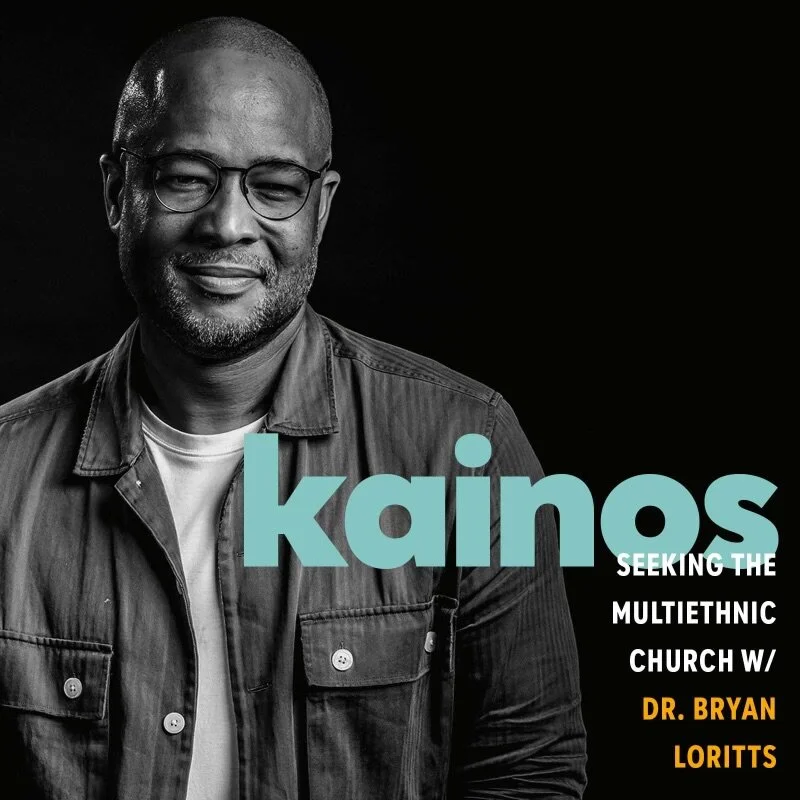
Kainos Podcast (Coming Soon)
If you’re looking for a pastoral podcast that offers practical solutions infused with hope for how to build a multiethnic church then this is for you. Almost done recording season one. Stay tuned.

Some Helpful (and Quick) Thoughts on Travel
I started preaching when I was seventeen, and when I was twenty-two, Dr. Maurice Watson was the first person to put me on a plane to come preach for him. Since that time, almost thirty years ago, I’ve learned some things from my travels, and I thought I’d share them with you:
Get the TripIt app. You’re welcome.
Boredom is not the friend of holiness (ask David). So keep a full schedule.
When it makes sense, take family with you.
Be mindful of your spouse’s capacity for your travel.
Don’t be a diva...or a jerk.
It’s a calling, not a gig.
At least once a year give the honorarium check back. You won’t miss it.
Rent your cars from National. You’re welcome.
Minister, don’t perform.
Once you say yes, don’t trade a “lesser” opportunity for a “greater” one. Be a person of integrity.
Call your spouse from the road often.
Minimize television. Maximize worship.
Maximize travel benefits. As much as you can, fly with one airline and enroll in their mileage program.
Never take the opportunity for granted. Show gratitude to your host publicly.
Whether to a handful or the masses, preach your heart out.
Workout.
Eat right.
No alone time with the opposite gender.
Don’t counsel the pastor's members. They’re not your sheep.
Preach shorter than the host pastor does.
Keep track of what you preach and where. It will save you embarrassment. Believe me, I know!
Be understated in your dress. The people are there to see God, not you.
Ministry begins with the intern, not the stage. You never know how a kind word of wisdom could change the life of the one assigned to assist you.
Wash your hands often. You’ll shake a lot of them.
As soon as you get back, take the trash out. The last few days you’ve been catered to, so you need to remind yourself you are a servant.

My Checklist to Preaching
One of my greatest joys in life has been mentoring young preachers. Over the years I’ve been asked about my approach to preaching, and what I specifically think about whenever I put a message together? Specifically, there are seven questions I ask of every message I preach, and I thought I would share those seven questions with you.
Did I privilege the text?
For some preachers the Bible is the diving board, while the pool becomes whatever waters they want to spend the next half-hour or so swimming in. I’m sure you’ve heard preachers like this, where the text is the launching point to the message, not the message. Effective, transformative preaching necessitates allowing the Bible to not only be the diving board, but the pool. After all, God’s promise is that his Word would not return void (Isaiah 55:11). This is why I am a big believer in expository preaching, which can be defined as allowing the text to set the agenda for the message. I know I’m privileging the text when I’m pointing people to the historical, grammatical and cultural context. The text is setting the agenda for the message when rich theological themes, and words are being examined and excavated. My cultural insights and catchy illustrations can and have returned void, but God’s Word will not.
Was the message simple, not shallow?
The job of the preacher is not to overwhelm the people with word studies, where for a half-hour or so they simply say their version of, “It means. It means. It means,” and then sit down. Dr. Charles Ryrie once quipped that the mark of brilliance is the ability to make the complex simple. Jesus was simple but not shallow. He took deep concepts like the kingdom of heaven and the end times, and used stunning visual illustrations to keep his message simple. To help me with simplicity, I do two things. First, I write my sermons out word for word, not so I can memorize them, but so that I can internalize and gain much needed clarity. As H.B. Charles says, “Preachers, write yourself clear.” Secondly, I work to frame my points applicationally. My explanations answer the question, “What does it mean?” My applications answer the question, “What does it mean to me?” This goes a long way towards simplicity.
Did I articulate the universal felt need?
Paul tells Timothy that all Scripture is profitable (II Timothy 3:16), which means it is useful. A major part of the usefulness of Scripture is that it deals with deep needs common to humanity. I believe every text deals with a felt need. When Paul tells the Corinthians that he is to be regarded as a servant of Christ (I Corinthians 4:1), he is dealing with the felt need of identity. Just about every passage in Solomon’s memoirs (Ecclesiastes) deals with the felt need of purpose. Job addresses the felt need of suffering and evil. Even more so, Paul models this when on Mars Hill he points to the altar dedicated to the unknown God, and preaches a sermon where he shows our felt need of worship (Acts 17).
There are several reasons why this is a key question to address. One is that not long into your sermon, every listener is asking themselves the question, “Why should I listen?” The sooner you can get to the universal felt need of the text, the more likely you are to compel them to listen to you. Secondly, just like Paul used the felt need of worship to appeal to non-believers, so identifying the felt need of humanity is a compelling way to engage and include non-Christians in your message.
Did I overwhelm them with law?
John Wesley, the founder of the Methodist church, had his basic framework for preaching. He always sought to begin with the love of God, overwhelm the people with the law of God, rendering them hopeless, and then conclude with the grace of God. If people leave my sermon feeling as if they can achieve the things I expounded in their own strength, I have not accurately preached the text. Husbands should not leave a message on Ephesians 5:22-33, feeling as if they can do those things on their own. A wife should not feel as if she can muster up the strength to submit to her husband on her own. And singles should feel it’s impossible to live a celibate lifestyle by simply applying more will power. Like a great movie, a great sermon should have some sad scenes, where people want to cry, devastated by their own inadequacies and sins.
Did I revive them with grace?
But, like any great movie, there should be moments where people rejoice, feeling revived. This is what grace is in the sermon- stirring great relief and hope. This “scene” of grace should come after law. Helplessness should lead to hopefulness. Good Friday must point to Resurrection Sunday. This is the meta-narrative of Scripture, and should be the arc of the sermon. Why?
Did they see Jesus?
Just like I believe the Bible points to Jesus, so I believe every text makes its way to Jesus. In some passages it’s simple and easy. In other passages one might have to do a little work, and apply some theologically accurate connective tissue, but all roads point to Jesus, just like Spurgeon said all roads in England can at some point get you to London. The great Brooklyn and worldwide preacher, Gardner Taylor, had a sign engraved on his pulpit for him and any preacher to notice. The sign simply said, “We would see Jesus.” I have not preached unless I’ve shown them Jesus.
The story of David and Goliath is not ultimately about conquering the giants in your life. Yeh, we may use that as a way secondary application (like waaaaaaay), but ultimately, it points to Israel’s need for a deliverer, and how that deliverer (David) came from an unlikely place. Jesus is of the house of David and conquered the giant of Satan and death on the cross. Our people need to see Jesus, and not just ourselves.
Did I inspire them?
This is my final question, and please don’t take this to mean, “Did I make them feel good?” Here I’m thinking, did I move them to action? No, I can’t get them to change, but did I preach in such a way that they want to change? To settle for informing people without also inspiring people is lazy preaching. What helps me to inspire are things like preaching with passion, having conviction and giving compelling illustrations and stories to help them visualize the point.

The Freedom of Identity
1 Corinthians 4:1-5
We’ve been in a series called, This Verse Changed My Life, and I want to take you to a verse in the Bible that when you and I really live into this reality, will completely revolutionize our lives and set us free from people-pleasing and the tyranny of judgment. It’s a verse tucked away in I Corinthians 4. Let’s go there.
“This is how one should regard us, as servants of Christ and stewards of the mysteries of God. Moreover, it is required of stewards that they be found faithful. But with me it is a very small thing that I should be judged by you or by any human court. In fact, I do not even judge myself. For I am not aware of anything against myself, but I am not thereby acquitted. It is the Lord who judges me. Therefore do not pronounce judgment before the time, before the Lord comes, who will bring to light the things now hidden in darkness and will disclose the purposes of the heart. Then each one will receive his commendation from God.” -1 Corinthians 4:1-5
You and I understand what identity theft is: it’s when someone poses as you, and is able to open lines of credit, and make all kinds of purchases, while you get the bill. It’s a very real thing that has happened to good friends of mine, and so because of that, a few years ago, my wife and I decided to make sure our identities were secure by purchasing something called LifeLock. Whenever LifeLock suspects suspicious activity they will send Korie and I notifications. Now the essence of these notifications can be reduced to three words, “Is this you?” In short, they want to know if this is really who I am; if this is our true identity?
The question of identity is a core question of life. “Who Am I,” is the soundtrack to our souls, a question we can never escape. In fact, Dietrich Bonhoeffer—the great 20th century German theologian—wrestled with the question of identity deeply. Just a few days before he was executed by the Nazis for standing in opposition to them, Bonhoeffer wrote this poem:
“Who Am I? This or the other? Am I one person today, and tomorrow another? Am I both at once? A hypocrite before others, and before myself a contemptibly woebegone weakling? Or is something within me still like a beaten army, fleeing in disorder from victory already achieved? Who am I? They mock me these lonely questions of mine. Whoever I am, thou knowest, O God, I am thine.”
-Dietrich Bonhoeffer, Who Am I?
Oh friend, if we were to be really honest we would join the ranks of Bonhoeffer and confess that the question of identity stalks us daily. The recently retired athlete asks this question—Who am I? The parents who have spent years guiding their children, and are now staring down the empty nest, asks this question. The one who just lost their job asks the question. The successful businessperson who started the company, sold it for millions and has nothing but time on their hands now, asks this question. The recent college graduate filled with more dreams than success or money asks this question. The question of identity, of who am I, is the background elevator music of our minds. Answer the question of identity correctly and you will know freedom and contentment. But answer the question of identity incorrectly and you will know bondage and discontent. Yes, the question of identity is the question of life.
The Only True Answer to Identity—I Corinthians 4:1-2
So what is the answer to identity? This is why Paul writes our passage. I Corinthians 4:1-5 is all about identity. The reason Paul is writing on this subject is that according to I Corinthians 1:10, he has gotten word from Chloe’s house that there are divisions in the church. One group says they are of Paul, another of Apollos, another of Peter and still another of Christ. Instead of one unified church, we have a church that is fractured and divided, with people placing their identities in men. By the way, division tends to happen when we settle for the lesser identities of this world. When people choose to put their identity in success, they will look down on the less successful. When people put their identities in their ethnicity, they will naturally experience division from another ethnicity. And when people choose to put their identity in a political agenda, they will find themselves at odds with people of a different agenda. Of course this is not to say we shouldn’t be successful, celebrate how God made us or have our political convictions, we should do these things. But doing and having them as an identity are two different things.
Now what’s interesting here is this: on the one hand, there was a group of people at Corinth who said they were of Paul, which is easy to understand, because when we talk about sheer influence, Paul is one of the top five leaders in world history. Easy. And Paul could have played into this, and built his brand around his success and celebrity. But this would have lead to an overinflated ego, and a nauseating pride. On the other hand, there were groups of people at the church of Corinth who not only refused to follow Paul, but actually ridiculed him for his unimpressive speaking. Paul could have let this perceived weakness of him define him, allowing it to become his identity. You and I know of plenty of people who have built their identities in being a victim. See the tension? Building our identity around our successes or weaknesses will never do.
Instead, Paul gives us a third option for building our identity. Look at verses 1-2.
“This is how one should regard us, as servants of Christ and stewards of the mysteries of God. 2 Moreover, it is required of stewards that they be found faithful.”
The Greek word for servants means an under-rower and was a reference to the large Roman ships where below deck there would be scores of rowers who moved at the command of the pilot. The word steward simply means the manager of the house. This was not the owner of the house, but the one who ran the house on behalf of the owner. What both these words have in common is a person who doesn’t exist for their own pleasure, but whose identity is inextricably tied to the one in authority over them. Likewise, Paul is saying that his identity is not in his successes or weaknesses, but in the one who is in authority over him: Christ. When my identity is in Christ I am free to put gospel distance between my successes and weaknesses. Those things don’t define me. Jesus does!
You and I have heard these stories. Yeh we have. A person got locked up decades ago for some violent crime, and it seemed as if all hope was lost. And then they discover that since being locked up they’ve developed this thing called DNA testing, which is all about identity. So they run the DNA test and find out that person didn’t do the crime and having figured out their identity there’s freedom. Oh friends, this is exactly Paul’s point. When we live into our true identity in Christ there’s freedom! Freedom from performance. Freedom from the opinions of others. Freedom from the snide remarks that come my way. Freedom from my own opinions of me. Once you live into the DNA you share with Christ you are free.
Breaking Free—God is Our Judge. I Corinthians 4:4b-5
Yeh, but what exactly does this look like, and how do I practically live into this freedom on a daily basis? Paul answers all these questions. Now notice with me there’s a little word that keeps popping up- judge. It’s an important word that we have to understand to make sense of this text. The word judge doesn’t so much mean verdict, as it does the process that leads to the verdict. It’s the idea of one who is being evaluated and scrutinized. This is further illumined as Paul uses more legal language in verse three when he talks about the “human court.” If you’ve ever been a defendant in court, you understand that for the time leading up to the trial, and during the trial, you are under a tremendous amount of scrutiny and evaluation. Everything is being looked at, and opinions are being formed. Now notice, Paul says that’s what it’s like to some degree for his whole life. Study his ministry. Always under scrutiny. The Judaizers told the Galatians that they couldn’t trust Paul because he wasn’t a real apostle. The religious leaders attacked him and tried to kill him. Crowds in Lystra and other places got upset with him. He stood before King Agrippa in a human court to plead his case. Everywhere he turned he was facing constant evaluation and scrutiny. Paul was the Lebron James of his day.
And to some degree that happens to all of us daily. People are evaluating and forming their own opinions of us based on where we live, go to school, send our kids to school, what we drive, how we vacation, what we say, who we vote for, the whole nine. Everyday we get up it seems as if we are walking into human court after human court. And trying to live up to people’s evaluations is a miserable existence.
But Paul goes onto say that it is not just others who judge, it’s ourselves who judge (3b).
“In fact, I do not even judge myself.” -1 Corinthians 4:3b
We all have an inner lawyer who is constantly evaluating us. Charles Spurgeon was known to sulk on Sunday afternoons if he thought the sermon didn’t go well, to the point of melancholy, his inner lawyer working overtime. Who in here can relate? We leave a meeting or a time of hanging out and many of us brood over, did we say the right thing? Was I too harsh? Why didn’t I speak up? Did I talk too much? Did they like me? Or, maybe it’s your inner lawyer, who like the author Brennan Manning, describes as one who is constantly calling you an imposter and calling into question your faith. Doubt washes over you all the time. There’s a voice always saying you’re not good enough and you never will be. We all need to fire our inner lawyer. Paul did.
So how do we break free of this constant evaluation from others, and ourselves? Paul tells us. He actually says there’s a third source of judgment, and it’s God (5).
“Therefore do not pronounce judgment before the time, before the Lord comes, who will bring to light the things now hidden in darkness and will disclose the purposes of the heart. Then each one will receive his commendation from God.” -1 Corinthians 4:5
God is the only real judge, because he is the only one who knows everything about us. While we make judgements on appearances, the Lord knows the heart. God is the one who knows me, and he is the one I will ultimately have to answer to. And when we understand that future reality, it should change how we live in the present!
In just a few weeks Korie and I will drop our second son off at college in California. From the time he was born, we envisioned this day, so we have been putting money aside. The future reality of him going to school, impacted our present daily lives. Friends, don’t you see. Because I know there is a future reality when I will stand before my one and only judge, that should impact how I live today.
Breaking Free- People Are Small, God Is Big- I Corinthians 4:3a
Okay, so when my identity is in Christ there’s freedom. What does this look like? Well, I understand God is my only true judge and when I live that way it will free me from the judgments of others. But there’s more. Look at verse 3.
“But with me it is a very small thing that I should be judged by you or by any human court. In fact, I do not even judge myself.” -1 Corinthians 4:3
The Greek word for “small” is the superlative of micros. It means tiny, tiny, tiny! See what he’s saying? When I live in the light of God being the only true judge, people become small and God becomes big. It’s not that other people’s judgments are invisible, it’s just that they’re beyond microscopic.
This was something Paul lived. So Paul plants the churches in Galatia, seeing many Gentiles come to Christ. After he leaves, Jewish religious leaders known as the Judaizers come in and they start telling these new Gentiles that Paul can’t be trusted; that he’s not a genuine apostle. Just real nasty stuff. Paul gets word and writes the letter to the Galatians and notice what he says from jump street: “For am I now seeking the approval of man, or of God? Or am I trying to please man? If I were still trying to please man, I would not be a servant of Christ,” (Galatians 1:10). See it? Paul says if you spend your time people pleasing, your identity is not in Christ. But for the person whose identity is in Christ, people are small and God is big. This doesn’t mean people are insignificant, but it does mean that they’re not who I’m living for.
When Jaden was a little boy every time he made a shot he’d look up in the stands at me and smile. After the game he’d come up to me and ask me, “Hey dad, how did I do?” He never asked anyone else that in the stands. He didn’t ask his teammates that. And I never saw him ask his coaches that. It’s as if he knew, that if dad said I did good, that’s enough for me. That’s what Paul is saying. Play your life for the one person in the stands, and his name is God. Let him be big, and everyone else small. Do you know that freedom today? Or are you still in bondage to the tyranny of people and their judgments?
Breaking Free—Performance Free-Living- I Corinthians 2:1-5
Now listen to me. When a person’s identity is not in Christ, but is found in the lesser identities of this world (work, money, success, etc), what happens? Well, then they are a slave to what others or themselves think, people have a disproportionate role in their lives, bigger than God, and they are on the treadmill of performance, always feeling like they have to prove themselves. Madonna felt this way. Listen to what she says in an article in Vogue:
“My drive in life comes from a fear of being mediocre. That is always pushing me. I push past one spell of it and discover myself as a special human being but then I feel I am still mediocre and uninteresting unless I do something else. Because even though I have become somebody, I still have to prove that I am somebody. My struggle has never ended and I guess it never will” -Madonna, Vogue Magazine.
And this is a millionaire celebrity adored the world over saying this! When your identity is in the lesser identities of this world, you will be a slave to performance.
But when our identity is in Jesus, the ultimate identity, now we are free. Remember, Paul is writing the Corinthians because many of them don’t like his speaking, they don’t feel as if he is performing up to par for them. They say Paul is not eloquent. Look at how Paul answers them,
“And when I, I came to you, brothers, did not come proclaiming to you the testimony of God with lofty speech or wisdom. For I decided to know nothing among you except Jesus Christ and him crucified. And I was with you in weakness and in fear and much trembling, and my speech and my message were not in plausible words of wisdom, but in demonstration of the Spirit and of power, so that your faith might not rest in the wisdom of men but in the power of God.” -I Corinthians 2:1-5.
See the freedom here? Paul’s identity was so secured in Christ, he was freed from any notion that he had to live up to their expectations. (By the way, I wonder how many churches in world history fired their pastors because they didn’t have impressive speech?)
Gospel Conclusion
Paul didn’t have to labor in the human court of approval, because Jesus had already stepped into that court. Some two thousand years ago, Jesus stepped into the kangaroo court of this life. People had scrutinized him and cast their verdict. They demanded that he be crucified. On the cross, Jesus took humanity’s bad verdict, so that God, the only true judge could render the final good verdict on each of us. And you know what that final verdict is? RIGHTEOUS! So we don’t have to perform for his verdict, instead we labor from his verdict. We are free!

Jesus and When Minorities Should Leave
If I were pressed on a short list of questions I regularly get from people of color serving on staff in majority white spaces, it’s the question of when is it time for them to leave?
I surprise them when I say that Jesus actually spoke to this. In fact, his answer was so compelling (as if any of his answers weren’t), it’s recorded in all of the gospels except John.
Jesus said we should never put new wine in old wineskins.
Jesus isn’t speaking about age; he’s actually after something else. When one puts wine in new wineskins, over time the wineskin would expand to house the new wine and the gasses it was emitting. The reason you never put new wine in old wineskins is there’s no room to expand. No elasticity. And when there is no elasticity, the new wine would just burst the old wineskins creating a huge mess.
The principle Jesus is establishing is crucial: A fresh vision housed in an environment that refuses to grow and expand will cause a huge mess.
For so many existing homogenous churches, their leadership is articulating a fresh vision of being multiethnic. I rejoice over this. We all should. And, I know many of these churches whose culture is exhibiting a willingness to grow, churches like the one I’m currently serving.
But a new vision, with new looking leadership is not enough. There must be elasticity in the culture of the church or organization. Of course we get these things don’t happen overnight, so we need to have patience, not passivity. Being a new wineskin church will require courage as new initiatives are introduced, programs established and changes take place. It will require constant teaching, many emails and conversations with the constituents who in their own way will push back or question the culture shift. And in some cases it will necessitate saying, “God bless you, but this is the direction we are headed in, and while we’d love to have you with us, we understand if you can’t continue on the journey.” If you don’t say these things to some from one crowd, you will end up saying them to many of the new crowd you’re trying to reach.
So, when should minorities leave majority spaces? At whatever point the elasticity has maxed out, the growth has stopped and the change has ceased is when one should look for the exits.