No Quid Pro Quo
Ever been betrayed? Wondering how to use the gospel to bring healing to a broken relationship? This message by Dr. Bryan Loritts will provide hope and much needed answers:
No Quid Pro Quo
Matthew 5:38-48
Some years ago, most of us can remember a really popular phrase- quid pro quo. At its core, the phrase means “you do something nice for me, and I’ll do something nice for you.” It seemed as if this phrase spent more time in the news cycle than a Kardashian. It came to popularity because of some accusations levied at our then president, and no matter where you may have fallen out on the issue, or politically, I think we can all agree that we got really sick of that phrase.
Creating the Need- The People Problem
While it has become fashionable to levy the blame of quid pro quo on our president, we should all understand that the law of quid pro quo is endemic to humanity. Beneath the surface of all of our hearts is this “I’ll scratch your back if you scratch my back” way of doing life and relationships. It was C.S. Lewis who once said that all great friendships begin on the note of, “Oh, you too.” What he meant by that is our friends are people whom we share common affinities with, and yet beyond that, our friends are those who reciprocate in kind. I call you, you call back. I help you when you are in need, and you help me. When I’m wounded and weary, I come to you for solace and counsel, and when you are wounded and weary you come to me. I keep your confidences, and you keep mine. This is how relationships work, right? But the problem comes when people’s humanity and sinfulness get in the way, and instead of scratching my back they begin to stab me in the back. And when people don’t go the way of quid pro quo, and act as our enemies, this throws us, big time. So what are we to do?
Now I really need you to get this, because if you don’t you’ll miss the whole thing. Yes our passage is about how Christians are to respond to enemies, but it’s way more than Jesus offering tips on how to engage those who mistreat us. We must see Jesus’ teaching through the larger lens of Scripture. Here’s what I mean: When we look at this through the lens of the gospel, we come to a profound truth. See, the gospel in essence says that at one point you and I were enemies with God. Ephesians 2 actually says that we were objects of God’s wrath. Yet, at great cost to himself, God did the unthinkable- He gave his only Son, who gave his only life. Jesus Christ endured persecution and mistreatment. He was scourged, spit upon, had his beard plucked out, jeered and crucified. Why did he endure such mistreatment? So that you and I may be reconciled to God. See, the gospel is not God just doing nice things for we enemies! The gospel is about reconciliation- transforming enemies of God into friends of God. And to be a Christian (literally little Christs) means that in some way we do the same with those who have acted as enemies towards us!
This was the message of the CRM. If you think the CRM was only about changing laws you’re wrong. It was about reconciliation. John Lewis, one of the leaders of the CRM, said that the mission of the movement was to redeem the soul of America. I was once with a pastor who marched with Dr. King, and he said it was all about reconciliation. That’s why the method of non-violence was used- to be a tool of transformation that would lead to friendship. King said it this way, “We will wear you down by our capacity to suffer. Do to us what you will and we will still love you. We will meet your physical force with soul force. You may bomb our homes and spit on our children and we will still love you”- Dr. Martin Luther King, Jr.
Now, tough question: Who is in your life that you need to say these words to? It could be that ex-spouse who has wronged you deeply. Yeh, the marriage is over, but your call to love them with agape love is not. It could be that boss who has gone out of their way to make life miserable for you. It could be that child who is really hard to like. It could be that friend who has betrayed you. Maybe it’s the stranger who uttered those racially hurtful words at you that has wounded you deeply, and instead of going cancel culture on them, you need to say these words.
See, we all have enemies at various points in our lives. Jesus is going to tell us that we do not win our enemies by going tit for tat or quid pro quo. In other words, we don’t wait to do something nice to them, when they do something nice to us. Instead, Jesus is going to say something really hard: We win our enemies by losing our rights.
Losing Our Rights- Matthew 5:38-42
If you’re new to the faith, or maybe you wouldn’t even call yourself a Christian, I would highly recommend reading Matthew 5-7, The Sermon on the Mount. It’s the Blinkest version of the Christian life. But beware, you are going to read this and feel overwhelmed at the impossibility of it all. And nowhere is this more clear than in our text, as Jesus gets into how we are to engage our enemies.
Now, I want you to look at how he describes the enemy. He calls them evil (morally abhorrent). They are physically violent, ruthless- suing and going after everything, even your cloak- forcing people to do what they don’t want to do by going a mile, and they persecute them. Now, notice carefully with me how Jesus says we are to respond. He says that if a person slaps you on the right cheek. Stop right there. In that day, as it is today, most people were right handed, so for a right handed person to slap you on the right cheek means that they have given you a backhanded slap which is deeply insulting. Jesus says, no problem turn to them the other cheek. Then he says if someone sues you and takes your tunic, give him your cloak as well. Back then people had several tunic’s, but only one cloak. The cloak was seen as so essential, there were laws prohibiting people from taking it, and yet Jesus says, give them what’s rightfully yours to keep. He then goes onto say if someone forces you to go one mile, go with him two. Back then, Jesus is talking to a region that was occupied by Roman guards who at any given moment could tap you with their sword and demand that you carry their pack for a mile. Really humiliating. Jesus says at the end of the mile, don’t say I’ve fulfilled my rights, no, go another mile. And finally he says to give to people when they beg and seek to borrow from you. Sure, you have the right to not give money, but lose your rights and give. See the common denominator to each of these four scenarios? They all have to do with losing your rights! Scholar D.A. Carson sums it up well when he writes, “What Jesus is saying in these verses, more than anything else, is that his followers have no rights. They do not have the right to retaliate and wreak their vengeance, they do not have the right to their possessions, nor to their time and money. Even their legal rights may sometimes be abandoned...Personal self-sacrifice displaces personal retaliation, for this is the way the Savior himself went, the way of the cross. And the way of the cross, not notions of ‘right and wrong,’ is the Christians principle of conduct”- D.A. Carson, Jesus’ Sermon on the Mount. The message is clear, we are to LOSE OUR RIGHTS.
Now, I don’t hear any amens at all, only groans and a lot of push back! And the reason why we bristle at this is that we have been discipled by American culture, which is all about individual rights. America was founded on the right to religious liberty. The American revolution was about our rights to be free and independent. The Civil War has been described by many historians as, among other things, states rights. There’s AA rights. There’s Women’s rights. There’s LGBTQ rights. And while I am making no moral statements about these individually, what I am saying is that everywhere we look it’s about our rights. Couple this with sin and the fallen nature of our hearts and Jesus’ words here in our text to lose our rights, means OF COURSE WE PUSH BACK AND BRISTLE at this!
Let me drive this home with two analogies and a much needed disclaimer. Let’s go back to the 1960s and look at Malcolm X and MLK. Now we might say Malcolm was all about rights, right? This is the man who gave us the phrase, “by any means necessary.”.He’s pictured with a gun at his bombed home in Queens. He ridiculed MLK and the CRM movement for being sell outs and soft. On the other hand was MLK and the whole idea of non-violent resistance which was all about losing your rights. They didn’t fight back when spit on, or had hot coffee thrown on them at sit ins. They didn’t retaliate when bitten by dogs, beaten by police or had fire hydrants turned on them. Now sixty years later we would do well to ask, which way was the most redemptive? What brought about the most change? Holding onto rights, or losing rights? You know the answer.
Or let’s look at marriage. Okay, she cheated on you and you’re devastated, as you should be. Now you have the right to divorce, and no one would fault you for that. Completely understandable. But what if you actually said, “I’m going to lose my rights here, because marriage is an illustration of what God in Christ has done for me on the cross.” Which way is a more compelling illustration and picture of the gospel? Holding onto rights, or losing rights?
Now, I want to be careful here. Jesus, nor I, am advocating abusive relationships. We know this because Jesus’ analogies all have limits. We only have two cheeks. We only have one cloak. You’re only told to go one more mile. And we only have so much money to give. There’s limits. If you are being abused, talk to someone; get some help. We want to help.. If you’re with a person who refuses to repent, it’s time to move on. That’s why Paul would say in Romans 12:18, as best as you can be at peace with all people. It takes TWO to have a healthy relationship.
So let me ask you- where do you need to lose your rights?
Loving Your Enemy- Matthew 5:43-44
Jesus is concerned with winning our enemies through the power of the gospel. We do this by losing our rights, and also by loving our enemies. See, if it was just about losing our rights, that’s a passive thing, but responding to our enemies is also active. Jesus gets to this when he commands us to love our enemies and pray for those who persecute us. One scholar says that the word love means unconquerable benevolence and invincible goodwill. I like that! The idea here is that no matter how bad you treat me, there’s nothing you can do to make me stop doing good to you. Even if the relationship has been toxic to the point where I have to leave because you fail to repent, I can still love you by praying for you.
I remember a season in my life where an individual had betrayed me, I mean really knifed me in the back. I was just hurt. I go on these prayer walks in the morning, and I just sensed the Lord saying to me, “I need you to commit to praying for this person, and I want you to pray prayers of blessing over them.” And I’m like, I’ll pray for them alright! Seriously, I started to pray that God would bless their finances, their kids and marriage, and so on. I prayed the great prayer of blessing over them from Numbers 6. You know what happened to me over time, don’t you? The anger and bitterness began to dissipate, and what started out as forced awkward prayers, ended up with being these intense, authentic, like really do this in their lives kind of prayers. Loving your enemy often begins with prayer!
Now this is so hard for me, and for you, because when people wound us, our natural reaction is to treat them in less than humane ways. Sometimes we lash out, but most of us are too sophisticated and prideful for that, so we delete their name and number, block or mute them on social media, avoid and ignore, and act as if they don’t exist. You know, the whole cancel culture thing. But this is not what Jesus means when he says to love our enemies.
Loving our enemies requires that we pray for them, but it also means that we acknowledge what Bishop Desmond Tutu calls ubuntu. In the 1990s when South Africa was emerging from apartheid, the nations leaders said we need more than changed laws, we need reconciliation among people of color and whites. So they started something you’ve heard of called the TRC. Now, Tutu in his book, No Future Without Forgiveness, says that the impetus for reconciliation was ubuntu. At its core ubuntu means my humanity is caught up with your humanity- that we need each other, that we are incomplete without each other. In other words, a failure to forgive and reconcile dehumanizes both the offended and the offender. One person, during apartheid, said that while they were being beaten by their enemy, he thought the person was acting like an animal, and that they needed to forgive this person in order to give them back their humanity! This is ubuntu.
Who’s humanity do you need to give back to? Who’s acted like an animal towards you, that your unconquerable and invincible love is needed to give them back their humanity. What beast do you need to “kiss” with your forgiveness? We can’t control reconciliation (that takes two), but we can extend the olive branch by forgiving.
Looking Like God- Matthew 5:44
“So Bryan, do you really know my boss or co-workers and how often they’ve been to me? If you spent a week with my ex, you would understand that what you’ve been talking about is just impossible. Or do you know the racial trauma I’ve experienced?” I mean why should I even consider engaging my enemies in such a way that they become friends? Jesus tells us in verse 44. You know what we call this? Common grace. Common grace says that God loves everyone, and by everyone we mean everyone. Daily, everyone is a recipient of God’s common grace. That’s right: Trump and Obama; MSNBC and Fox News watchers; Duke and UNC fans; people in Manhattan AND people on Staten Island!
No, seriously. This idea of God’s impartial active love called common grace is so important for us, because we do really act as if God should love us more than the person who hurt us. Theologian James Cone got to this in many of his books. Widely regarded as one of the pioneers of Black liberation theology, Cone said some deeply problematic things, things like the God we serve is only the God of the oppressed. It was Cone who popularized the oppressed/oppressor binary, with more virtue being assigned to the oppressed and multiple categories of oppression. And while this may make me feel good as a Black man, when I hold this thinking up to the lens of the gospel there are some significant problems. See, if I really get the gospel, and that it is for everyone, I come to the uncomfortable conclusion that Christ died for the lynched and the lynch mob, for BLM and the Proud Boys, for the spouse who didn’t cheat, and the spouse who did, for the persecuted and the persecutor! And when we show this kind of love towards those who have wronged us, we look like God!
And it’s here where Jesus ends by saying something so easily misunderstood: He calls us to be perfect in verse 48. Now he’s not talking about a life that is mistake free, oh no. The word perfect means completion or desired goal or end. Here it means a person who is living up to their full purpose. Don’t you see? In context, Jesus is saying that when we are wronged and refused to go quid pro quo, and instead choose to lose our rights, actively love and look like God in the midst of all the wrong, God slaps high five with Jesus and says, That’s exactly why I created them. You’re living up to your purpose- displaying the gospel!
Civil right’s leader John Lewis did this almost daily during the sixties. In 1961, he was a freedom rider, working to end segregation in bus terminals and other places. One day his bus stopped at Rock Hill, SC. He was met by a white man named Elwin Wilson who immediately began to beat him. In that moment, John Lewis thought to himself that it was not good enough to not hit back. It was not good enough to not hate. He needed to love the person even as they beat him. And that’s what he did. Over the years, Elwin could not get Lewis out of his mind, and the fact that he didn’t go quid pro quo. Finally, Elwin turned to Jesus, and in 2009 (48 years later) he turned to John Lewis and asked for forgiveness. John, being a Christian man freely forgave, and they reconciled and would speak together at events. Writing of this episode, Jon Meacham said that to know John Lewis was to clearly encounter a man whose kingdom was not of this world, but was of a different world!
Well, there was another man whose kingdom was not of this world, but was from another world. For 33 years he took on flesh and lived among us. When beaten he willingly gave up his rights. When attacked by an angry mob, he healed a man’s ear. When jeered, he refused to return evil for evil! The result is that you and I have gone from being enemies with God to being friends and sons and daughters of God. May we live the same way!

John Lewis and Elwin Wilson in 2018.
Lands of the Bible Cruise- 2022
Join Drs. Bryan Loritts, Albert Tate, and Eric Mason on a 14-day teaching cruise through the holy lands. Click on the flyer for registration information. Register by July 3, 2021 to receive a $200 discount.


Prophets AND Pastors
A Pastoral Word in a Prophetically Dominated Conversation on Race:
One of the challenges of recent discussions regarding race is that we are hearing more from prophets than we are from pastors, and there is a world of difference. Prophets care more about the what. They speak to the issue. The prophet’s wardrobe has historically been monochromatic, allowing little room for variation. And please don’t misunderstand me, we need prophets. Prophets tell it like it t-i-is. Prophets make us squirm. Prophets tend to talk and tweet with their outside voice. Prophets tell us to #leaveloud, call out white supremacy and white privilege, then exit stage right, heading out to the next event.
But when the event is over and you are sitting in a multiethnic room for the debrief, among people who go to your church where you have not been called to leave (or #leaveloud for that matter), what then? It’s here where you need a pastor.
Writing to the Colossians, Paul said something interesting regarding his aim as a pastor: “Him we proclaim, warning everyone and teaching everyone with all wisdom, that we may present everyone mature in Christ” (Colossians 1:28). In essence, Paul is working under the pastoral assumption of immaturity. Like a parent, Paul takes it for granted that his people just won’t get it, and so should we as pastors. Every day our people are being formed away from God’s vision for sexuality and generosity (to mention just a couple examples), so of course they won’t get it when we call them to steward their bodies and money God’s way.
The same holds true when it comes to matters of race and ethnic unity. For four hundred years in America, we have been shaped by a system that seeks to extend value to one group of people based on the color of their skin and extract value from other people groups based on the color of their skin. So when they show up to our churches, we likewise must assume immaturity in matters of race and ethnic unity. The prophet points this out, while the pastor must patiently walk this out.
It was the great African American pastor, A. Louis Patterson who said there are three qualities for the pastor:
1. Patience with people.
2. Patience with people.
3. Patience with people.
While prophets care about the what, pastors care about the who and the how. While prophets point to the desired destination, pastors join with the people on the journey. While prophets are blunt with their language, pastors are careful with their language. Prophets have a low threshold for pain; pastors have a much higher threshold.
So what does this mean for us on a real practical level? Several things. First, you have to know your calling and function accordingly. We need both prophets and pastors. But if you try to function as a prophet while wearing the title of “pastor” in a multiethnic church setting, you will not last long. You can’t retweet prophetically true, yet abrasive statements while wearing the mantle of pastor or leader in a multiethnic church. I can’t tell you the amount of times I’ve found myself nodding my head over the prophet’s social media post, while resting my thumbs.
Second, as pastors we must be careful with language, especially in a multiethnic church setting. Truth is uncomfortable. I get that. When talking about matters of race and ethnic unity, you can say things as carefully as you can, while injecting a lot of levity, and people will still send the nasty email—and even leave. Understood. I am not asking us to water down the truth. However, the multiethnic pastor is keenly aware of how people will hear things, and will not unnecessarily trigger. After all, they are dealing with immature people, shaped by four hundred years of racism. The pastor, in talking about race, will always ask, “Is there a way to faithfully deal with the text, exegete the culture, and call out the sin, without unnecessarily alienating people?”
Prophets are needed, and so are pastors. Prophets are like doctors who diagnose and necessarily inflict pain during surgery. Pastors are the physical therapists who encourage their patient to push through the pain. Prophets, like doctors, are there for a moment, while physical therapists show up over and over again, coming alongside their patient in their journey into wholeness.
We need both.
We don’t need pastors who ignore the prophets.
We don’t need prophets tearing down pastors.
We need both.
We need to work together.

The Kainos Cohort
Kainos Ministry exists to see the multiethnic church become the new normal in our country.
The Kainos Cohort is an opportunity to equip leaders in how to lead multiethnic churches and movements.
This year’s Fall Kainos Cohort will take place virtually on October 26th-28th, 2020. The cohort will include the following teaching schedule and faculty:
Dr. Bryan Loritts, Dr. Curtiss DeYoung, Dr. Larry Acosta, Pastor Marcos Canales
October 26
1PM The Gospel and Multiethnic Movements, Dr. Bryan Loritts
2PM Practicing Biblical Reconciliation in 21st Century Congregations (and Para Church Organizations), Dr. Curtiss DeYoung
3PM Cultural Competence and Multiethnic Movements, Dr. Bryan Loritts
4PM Q&A
October 27
1PM Devotional, Dr. Bryan Loritts
2PM Before Jesus was White: Deconstructing the Whiteness of U.S. Christianity, Dr. Curtiss DeYoung
3PM Trends and Tools for Mulitethnic Congregations and Organizations, Dr. Curtiss DeYoung
4PM Navigating Racial Trauma in Multiethnic Movements, Dr. Bryan Loritts
October 28
1PM Developing Next Gen. Multiethnic Leaders, Dr. Larry Acosta
2PM Understanding and Reaching Latino Millennials, Pastor Marcos Canales
3PM Leading Beyond Fumes: YOU…Better, Healthier, Stronger, Dr. Larry Acosta
4PM Q&A

Dr. Bryan Loritts is the privileged husband of Korie, and the graced father of three sons—Quentin, Myles, and Jaden. He serves as a teaching pastor at The Summit Church in North Carolina. He is the award-winning author of seven books including Saving the Saved: How Jesus Saves us From Try-Harder Christianity into Performance-Free Love, which was given the Christianity Today Award of Merit, and his latest release, The Dad Difference. Dr. Loritts co-founded Fellowship Memphis in 2003, and later founded The Kainos Movement, an organization committed to seeing the multiethnic church become the new normal in our world, where he serves as president. In addition to his responsibilities as a pastor, Dr. Loritts travels extensively throughout the world preaching the Good News of Jesus Christ at conferences and events, as well as serving on the board of trustees for Biola University and Pine Cove Christian Camps.

Dr. Curtiss DeYoung is the CEO of the Minnesota Council of Churches. Previously he was the Executive Director of the historic racial justice organization Community Renewal Society in Chicago and the inaugural Professor of Reconciliation Studies at Bethel University in St. Paul. He is ordained in the Church of God (Anderson) where he served in local congregations in Minneapolis, New York City, and Washington, DC. DeYoung earned degrees from the University of St. Thomas, Howard University School of Divinity, and Anderson University. He has written and edited twelve books including Radical Reconciliation: Beyond Political Pietism and Christian Quietism, co-authored with Allan Boesak; United by Faith: The Multiracial Congregation as an Answer to the Problem of Race, co-authored with Michael Emerson, George Yancey, and Karen Chai Kim; and Coming Together in the 21st Century: The Bible’s Message in an Age of Diversity.

Dr. Larry Acosta is the Founder of the Urban Youth Workers Institute and KIDWORKS and has been training next gen. pastors and leaders for over 25 years. Larry is currently the Executive Director and Multiethnic Church Planting Catalyst for City to City Los Angeles. His vision is to train, mentor and mobilize 100 healthy missional leaders to plant 100 missional churches that will change the trajectory of darkness in the city by 2030 or sooner. Larry’s claim to fame however, is that he is married to Jayme, his bride of 29 years and they have four children- Brock (24), Karis (22), Malia (18) and Diego (16).

Pastor Marcos Canales, originally from Costa Rica, has been pastoring amongst the Latina community of the greater Los Angeles area for more than a decade. During this time, he has also worked with non-profit community organizations in the areas of youth development, mentoring, and immigration advocacy. He has also been a leading strategist for the Center for the Study of Hispanic Church and Community (Centro Latino) at Fuller Theological Seminary and an adjunct professor at various theological institutions. He received his Master’s of Divinity degree from Fuller Theological Seminary and he loves to integrate Christian discipleship, social justice and Latina theology. Currently, Marcos is the pastor of La Fuente Ministries- a bilingual, intercultural, and intergenerational congregation of Pasadena First Church of the Nazarene. He is married to Andrea, who is a clinical psychologist, and they are raising Elias, their son, in the city of Pasadena, California.

A Happy Few
“Show me your friends and I’ll show you your future,” was one of the first things I told my son Myles over breakfast the other day. It’s his senior year, and with his aspirations to go to some faraway place for college, I am already feeling sad. He doesn’t quite grasp how much things are about to change, but I do, and I want to make the most of what will probably be his last season in our home. So every week I’m giving him some parting shots. It’s my attempt to reinforce lessons I’ve tried to teach him along the way.
The most recent lesson is on friendship, and how our friends often are a good forecast for our future.
In between bites of Myles’ usual- chocolate chip pancakes- I asked him to tell me what he knew about Samson and David? What did they have in common? Both were leaders. Both were killers. And both had a weakness for women, a weakness which lead both to failure. Yet David is able to arise from his failure with Bathsheeba, while Samson is made a spectacle by his enemies, and ultimately dies in captivity.
“Tell me the difference, Myles? Why did one come out of it, and the other die in it?”
After a few moments of silence, I answered my own question with another:
“Tell me about David’s male friends.”
Myles spoke of Jonathan, and we talked about all the men David hung with in caves, war, expeditions and on the run.
“And who were Samson’s male friends?”
Silence.
I’ve seen a lot of men wreck their lives. It’s heartbreaking, and it’s scary because I am no better. I’ve seen many pastors even, allow a pattern of sin to stain a lifetime worth of work. If you were to ask me what the common denominator was to just about all of these failures, especially among leaders, I’d say without hesitation they had no friends. Oh sure, they talked about their “friends”. And I’ve been introduced as their “friend” only to think, “No we’re not. We talk maybe once a year.” Too many times I’ve found myself thinking on my way to the stage right after they’d introduced me as their friend, “If that’s friendship you’re in bad shape.”
In his book, A Resilient Life, Gordon MacDonald talks a lot about friendship, or what he calls a, “happy few”:
“The older we get, the more we come to understand the inestimable value of the ‘happy few,’ that inner circle of intimate friends who will always be there long after the lights of the fast and glamorous life have been extinguished. The ‘happy few’ may be the most important treasure one will ever possess this side of heaven. Resilient people know this from experience.”
If the bible, prayer, God, Jesus and the Holy Spirit were all we needed in life, then why did God look at Adam and say it’s not good for him to be alone, and then create Eve to be his companion? Why do we read in the Scriptures that to isolate ourselves is equivalent to foolishness? Tell me why are there over a hundred “one another” verses in the New Testament? And why did Jesus have his happy few of Peter, James and John?
Friendship is one of the deepest and most pervasive longings of our hearts. Maintaining friendships can be one of the deepest and most pervasive frustrations of our hearts.
Over the years with my happy few I’ve found the following to be helpful in nurturing friendships:
1. Fish in the right pond. Most of my friendships were found in church or Christian environments. We met in places like small groups, Sunday school classes and retreats. Friendships rally around the deepest bonds, and there is no bond deeper than faith in Jesus.
2. Be slow to enter into friendships, and even slower to exit.
3. Don’t keep score, but don’t take a beating. Of course there will be many stretches in friendship where I’ve had to give more than I received, but in the overall picture, my friends have been life giving, and not life taking.
4. Realize most friendships are but for a season. Your happy few are friends who transcend moves, job transitions, geography and seasons of life. They’re called a “happy few,” for a reason.
5. Make more deposits than withdrawals.
I pray God gifts Myles (along with my other sons) great friends…life-giving friends. His future counts on it, and so does yours.
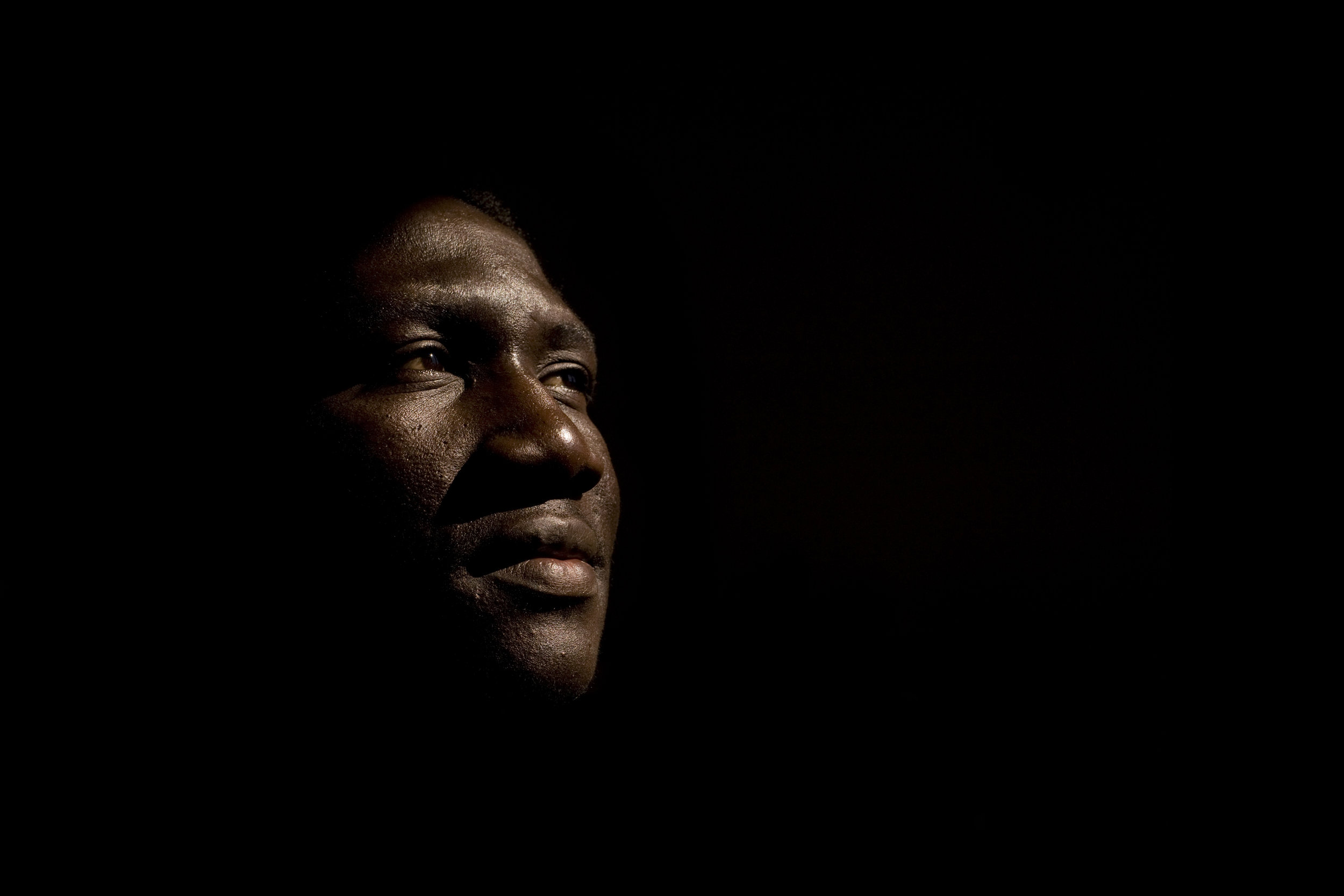
The Perpetual Foreigner: Encouragement for Minorities in Majority Spaces
The work of reconciliation as minorities in majority spaces can be lonely and exhausting. In fact, if we only see this as “work,” chances are we won’t make it to the finish line, but instead will flame out in a fit of (understandable) bitterness like the prophet Jonah. Over the years I’ve often referred to this as the call for minorities to serve as missionaries, seeing the mission field as our white brothers and sisters. My decades long exchanges with people of color trying to live incarnationally among our white siblings, has lead me to conclude the missionary metaphor is inadequate. Sure, there are aspects to the imagery which fit: Cross ethnic/cultural exchanges. Having to learn a new language. Modifying one’s customs. Always having to dial back who you are. But what are we to do when the mission field is supposed to be our home- a place which has been historically formed to be hostile to people of color? A place where we continue to feel the subtle drips of long ago firehoses? As the Asian scholar, Amos Young, frames it- to be a person of color called to the work of reconciliation can induce a prevailing sense of being the “perpetual foreigner”.
I guess I could pull you into my own journey, and inundate you with a litany of sleepless nights, obscene moments where I have been the recipient of overt racism in churches I’ve served, and long walks in the valley of loneliness. But in some ways I’ve already done this in my book Insider/Outsider. Instead, I want to give you some hope. Effective leadership demands a positive attitude. And our attitudes are merely the thermometers of our emotional health. Minority brother or sister, hear me: The effectiveness and longevity of your ministry will depend on you fighting for your emotional well being. As the writer of Proverbs says, we must guard our hearts.
In my decades served as a reconciler, I have found these three things to be absolute non-negotiable’s in nurturing emotional health:
Boundaries:
Missionaries get furloughs- times where they must leave the field and come back to what’s familiar. As minorities we need to take emotional furlough’s. Daily. Some of you are expected to make your church diverse, and to be the answer to the ethnic and cultural ill’s in your community. Listen to me. Have John the Baptist’s words plastered on the walls of your mind, “I am not the Christ.” Stop right now, and say that to yourselves. Say it again. And again. Once you embrace this, you can now put healthy emotional boundaries in place. As a matter of soul care, you have to get away from it. Put the book on race down, and read something else, something mindless. Stop wracking your brain over whether you are a critical race theorist. Stop brooding over the email you received chastising you for paying tribute to John Lewis because he was pro-choice. In fact, delete the email. Jesus didn’t heal everyone, and neither can you. It’s not your calling. Set boundaries.
Permission to Play:
While you’re on emotional furlough, give yourself permission to play. You know what kept me sane twelve years in Memphis, and what keeps me sane today? Jesus and golf! I know you were looking for something more spiritual, but that’s all I got. I never would have made it without these two. In fact, I’m convinced Jesus gave me golf to aid in my emotional well-being. Never confuse hobby with optional. Hobbies are essential. Some of my heroes and mentors in the faith do consistent spa days (you know who you are!), get dirt under their nails gardening, are so good at naps it’s become a sport, vacation well, or attend movies by themselves. They play well, and decades later they are doing well in ministry. This is exponentially more so for we perpetual foreigners.
Homogenous Enclaves:
You also need to give yourself permission to spend time with people who look like you. No, this doesn’t need to be your exclusive community. And of course, one of the most biblical and redemptive things God has done to form me is to experience rich, vibrant community with people who don’t look like me. But the work of reconciliation is beyond tiring. Always having to explain what you meant. Always needing to restrain dimensions of who you are to not offend. I guess what I’m saying is to be a perpetual foreigner is to have a perpetual filter. Well, we need moments to put the filter down. My golf group in Memphis were mostly black deacons. I didn’t have to be culturally measured with them. I didn’t have to tiptoe around them. I could also vent. A four hour unfiltered round of golf, gave me the emotional bandwidth to go back to the office measured. We minorities must have moments where we are unfiltered so we can be filtered.
It’s been said the most important thing a leader can do is to stay encouraged. Do these three things and you will be encouraged, ready to engage our white siblings with great joy.
Let me go. My tee time is soon.

On Color-blindness: A Quick Response to a Well-Intentioned White Brother
Recently, I received a note from a white brother, saying that in light of these tumultuous times, he does not see me as black. While I do not respond many times to notes like these, I felt prompted to issue the following:
Thanks for reaching out dear brother, and sharing your honest thoughts.
Your sentiments are not new to me (color-blindness), and in some ways I really get what you are saying. I believe what you are attempting to express is that you do not value me more or less, or treat me any different based on the color of my skin. Because surely you can’t physically deny a difference in skin tone/ethnicity.
Reading Revelation 5 and 7, we are forced to conclude that ethnicity will be a part of our future eternal reality. Therefore, ethnicity is not a fruit of the fall (even though man’s construction of a race based value system is).
Reading John 4 and Jesus’ conversation with the Samaritan woman helps us to see that the Scriptures do see differences in ethnicity. She is known by her ethnicity. So is the Ethiopian Eunuch in Acts 8, along with a myriad of other examples. So it is both okay, and right to see ethnicity.
The problem also is, we live in what’s been called a racialized society where implicit bias abounds, and often times expresses itself in very de-humanizing ways. For example, even though African American’s make up less than 15% of Minneapolis’ population (Where our brother, George Floyd was murdered), over 60% of incidents of police brutality are directed at African American’s.
I once went to take out a lease from an apartment that happened to be owned by a white woman. She demanded I give her six months in advance. But then when I sent my wife (who looks white) to the same lady to lease the same apartment, she was only asked to give first and last months. These are but a few scant examples undergirding the truth that we live in a racialized society that very clearly sees, and limits opportunities (and even lives) for people of color.
Also, numerous sociologist's point out that whites do not see themselves as whites. One sociologist, Dr. Korie Edwards (Ohio State University) explains it this way. Right now just about all of us in this world have two arms. We do not consciously see ourselves as having two arms. But if you had one arm in a two arm society you will be constantly aware of your limitations. This is the black experience in America.
If we are going to move forward in true ethnic unity we must name these things, acknowledge them, confess and intentionally move forward. Isn’t this the general sentiment of I John 1? We cannot have true fellowship with God without first acknowledging the truth of our sins. Color blindness gets us nowhere.
I love my white brothers and sisters, but I cannot have true fellowship unless you see a significant part of who I am- a black man- acknowledge, and dialog with me about it.
Yes my relationship with Christ is the epicenter of who I am, but following Christ does not eradicate my blackness.
I hope this helps.
Yours in the struggle for true ethnic unity,
Bryan
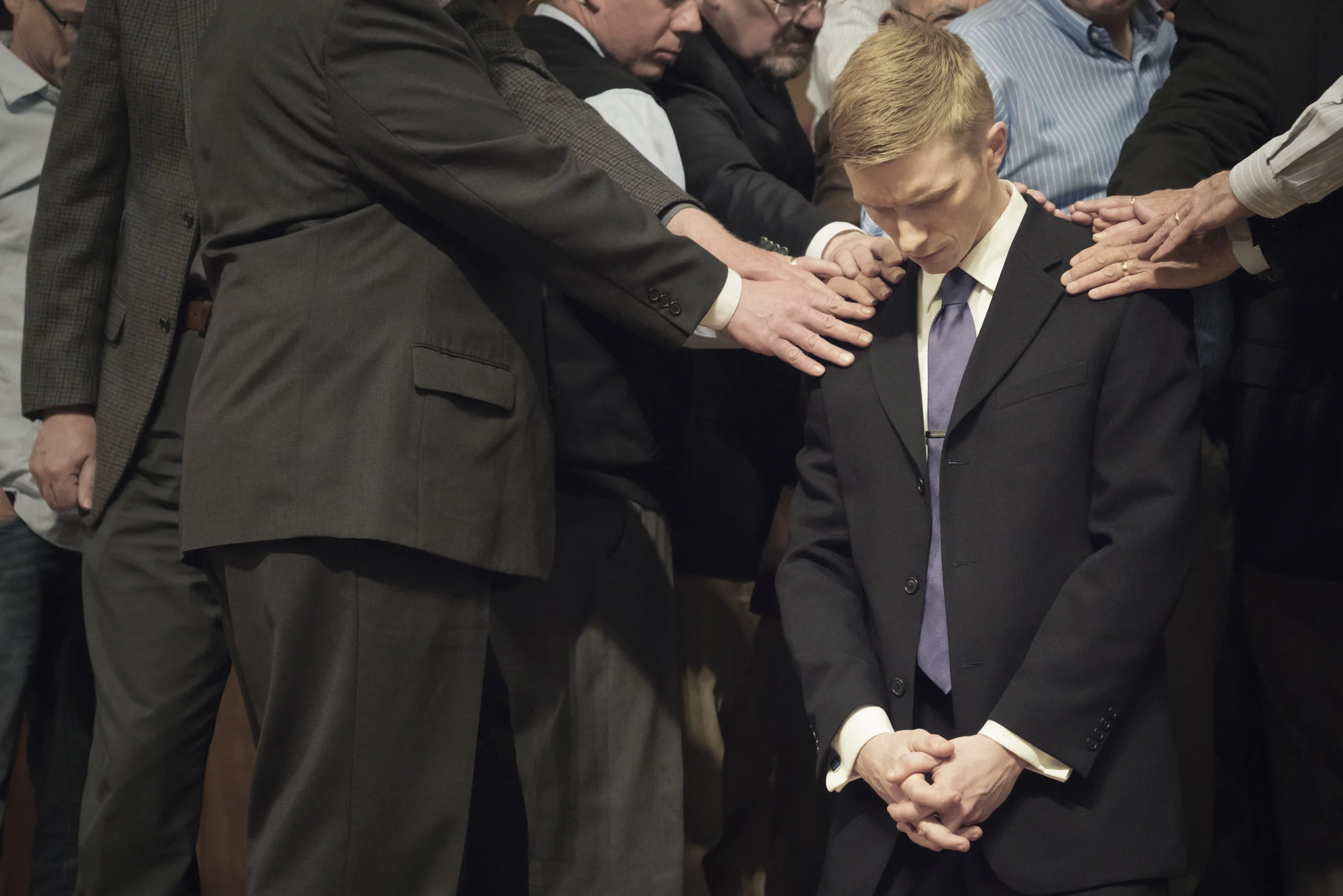
Offensive Eldering
When it comes to the personal care and shepherding of the local pastor, we need elders who will play offense and not defense. Elders lead, and not just react. It’s been my experience based on numerous conversations with pastors across the country, that most elder boards are filled with leaders- godly leaders- who can become so focused on the needs of the congregation they neglect to proactively care for the needs of their pastor. If you are an elder, or aspire to be an elder, there are at least five ways you can offensively elder your pastor:
Don’t burden pastors with expectations of omnicompetence. The average pastor is expected to be a great preacher, great leader, great counselor, great people person, great administrator, have a great bedside manner, be a great visionary, and at the same time have a great marriage, great family, great personal life, great walk with the Lord…just be great, great, great, great, great. Well, that person doesn’t exist, and to expect omnicompetence is a form of pastoral abuse, because it pushes the pastor to attempt to be something his humanity will never let him be. As John the Baptist once said, “I am not the Christ”. These five words need to be the mantra of pastors, and that of elders in thinking about their pastor.
Initiate intimate conversations with your pastor. Ask us in a non-suspicious way how we’re doing in our marriages and with our children. Ask us about our walk with the Lord. Ask us about our emotional health. Ask us about our physical health. Don’t assume we have it all together, and everything is okay, and then when the bottom falls out the elders put on a full court press to clean up the mess. Who knows, many elder boards would never have to go into a defensive frenzy, if they played a bit of offense by just simply showing an interest and asking questions about the various venues of our lives.
Pray with us. Here I’m not talking about the prayer that begins and ends the elders meeting, or the times when the agenda is pushed to the side and we pray for the church. Instead, I’m thinking of an elder playing offense by approaching the pastor and just caring for them off the cuff with prayer. I can only think of one occasion in almost twenty years as a Lead Pastor where I had an elder initiate non-emergency prayer with me. He invited me to his home, sat me down, asked me questions and then we prayed for about a half hour. The wind that put in my soul was enough to push me along for the next season of ministry.
Initiate compensation discussions. We need offensive elders in the area of the pastor’s personal compensation. A pastor shouldn’t have to come and ask for a cost of living increase or a raise. It’s a shame the marketplace does a better job at this with their employees than the church of Jesus Christ does with their pastors. I’ll let you in on a little secret: Most pastors either initiate these types of conversations, risking the appearance of greed, or they say nothing at all, while they inwardly wish someone around the table would. Too many pastors are not prepared for retirement, and die with far less than what they should have because the churches they served didn’t step up. Of course I could disclaimer this point to death with talks of churches who don’t have it and bivocational pastors, but I trust you understand where I’m coming from.
Play offense when it comes to our rest. Did you know the FAA demands that airline pilots and crew get a certain amount of rest before they fly? Do you know how many flights have been delayed because the crew didn’t have sufficient rest? Why does the FAA initiate and demand this? Because the lives of hundreds of passengers are at stake. What the FAA is to pilots and crew, elders must be to the pastor. Why? Because something more important is at stake than just bodies, it’s souls, which, as the Bible says, we leaders give watch over. The work of pastoring is constant, because the needs of people are constant. Plus, we need to consider that the average person’s down time is the pastor’s peak time when it comes to the work week. While our people are off enjoying their Saturday’s and Sunday’s, your pastor is putting the finishing touches on and preaching the sermon. David said of the LORD that He makes him lie down in green pastures. The LORD played offense when it came to David’s rest, and so should elders. A pastor shouldn’t have to initiate a sabbatical policy; elders need to be planning that out. Elders shouldn’t nickel and dime their pastor when it comes to vacation days, but should consider a responsible vacation policy that provides ample rest….and make the pastor stick to it.
I bet we would have less cases of pastoral trauma, burnout and failure if we had more offensive minded elders. May the Lord grant us wisdom.
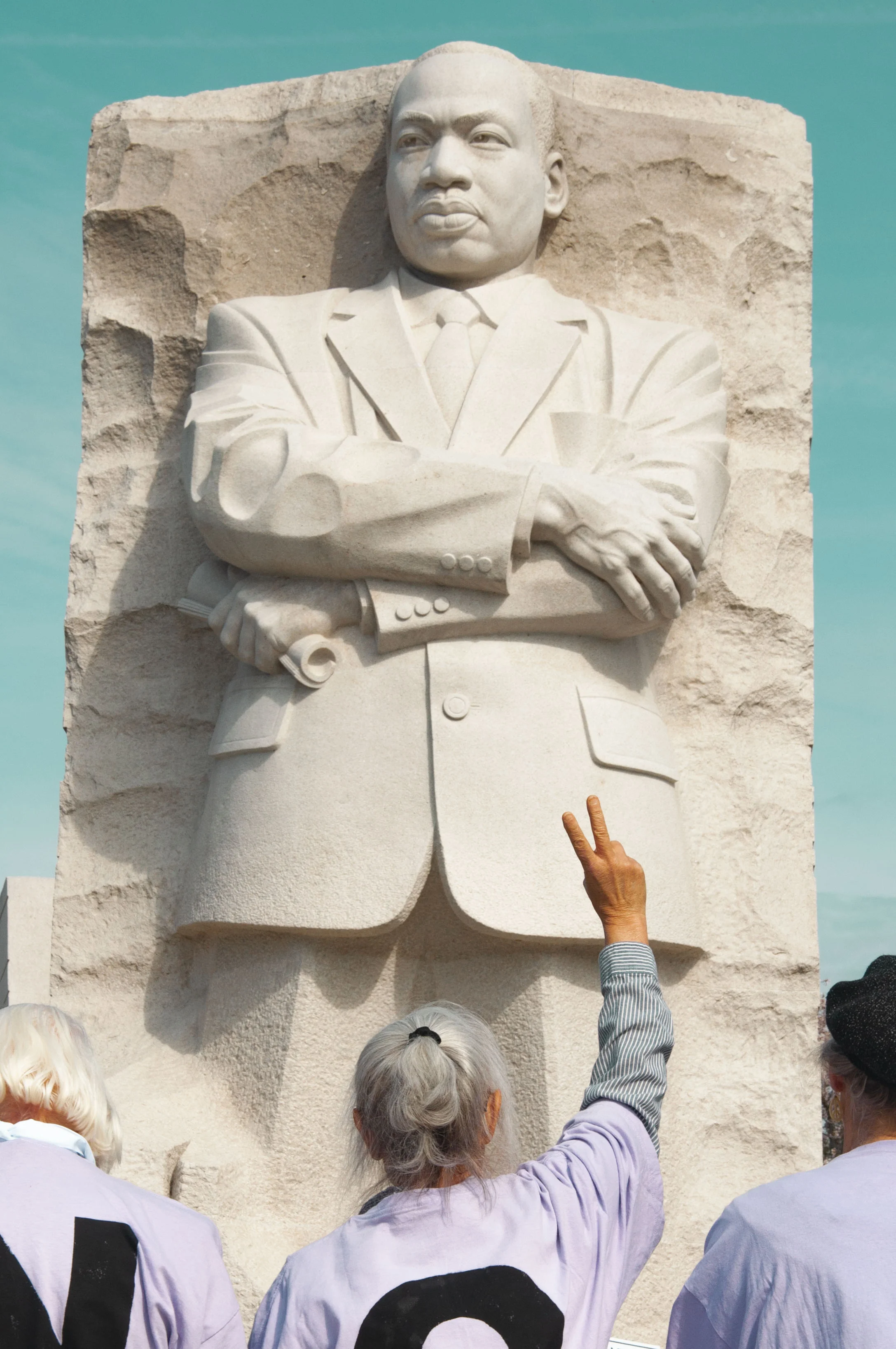
Dr. King and The Not-So-Straight-Line of Racial Revolutions
When I first read Dr. King’s observation of, “…when you look at a revolution you must always realize that the line of progress is never a straight line” (At Canaan’s Edge, page 554), something in me cringed and rejoiced all at once.
On the one hand King’s words expose and attack my adolescent impatience where I want all of the problems of race in America (and in the world for that matter) to be settled immediately. These last few years filled with people of color being killed at the hands of mostly white cops, and our brown siblings thrown in cages separated from families, has induced in me more than a deep sadness, but at times a hopelessness in which it’s easy to think there’s been no progress. Just the other day I sat in a meeting in which the topic of diversity was brought up yet again in a primarily white setting, and I had to fight voices of cynicism whispering in my head that this was indeed just talk, and nothing would change.
I’ve had to remind myself that revolutions are never photographs but movies, filled with scenes of tragedy and regression, but ultimately triumph and victory. Yet it’s human nature to walk through these “scenes” of regression and conclude all has been wasted.
On the other side, King’s comments about the crooked line of revolution, brings joy to my soul. Stepping back to catch a sense of the not-so-straight-line of revolution over the last sixty plus years in America there’s hope. Schools have been integrated. Segregation has been legislatively ended. Voting rights have been secured and multiethnic churches are on the rise. Oh, and a black president of the United States has been elected. No, we have not yet arrived at the mountaintop King spoke of on the eve of his assassination, but we are climbing higher and higher.
Finally, King’s remarks on revolutions makes me think of the gospel, and my own walk with Jesus. For followers of the Way, our journey is never a straight line. There are seasons of defeat and victory, tours of duty in the valley and on the mountaintop. Like the story of race in America, following Jesus is not a photograph, but a movie, where we are never to cast a verdict based on one scene of our lives, but when we stand back and look at the whole graph of that not-so-straight-line, may we see an upward trajectory, granting us confidence that we really have been redeemed by the blood of the Lamb.

The "Bi-Racial" Jesus
There exists a pervasive loneliness to those of us busy about the work of what’s been called racial reconciliation. This is what I believe Edward Gilbreath was alluding to when he likened us to bridges, and exhaled how it is the nature of bridges to be stepped on.
James Baldwin, the pen of the civil right’s movement, discovered this on the evening of July 16th, 1961. Seated to the left of the Honorable Elijah Muhammad in the leaders Chicago mansion, Baldwin reflected on how he had to endure a dinner filled with venomous references to our anglo siblings as “white devils”. For Muhammad and his thousands of followers known as the Nation of Islam, there was but one alternative to the legacy of racism exacted upon the Negro- rejection and separation. Elijah’s “white devil” laced conclusions were met with a chorus of amen’s by all but one at the crowded dinner table. The lone voice of silence that evening was ironically Baldwins, the famous soon to be author of, The Fire Next Time. Even though James had received more than his share of hate from whites in response to his many writings and public speeches, he held out hope that there were whites who could be redeemed; whites, “who were struggling as hard as they knew how, and with great effort and sweat and risk, to make the world more human” (James Baldwin, see, The Fire is Upon Us, page 144).
Standing on the steps of that Chicago mansion post dinner, Baldwin had to have felt a loneliness, an I-can’t-win-for losing sense of hope-filled despair.
There are several things that Chicago dinner table teaches us, and one lesson is for those of us engaged in the work of reconciliation there is the constancy of loneliness, of never feeling totally at home. Oh yes, I along with an army of racial reconcilers know that feeling all too well. Among one group we push too hard; and among another we don’t push hard enough. One ethnicity deems us to be liberals, and the other sell-outs. All at once we are considered gospel heretics, and not gospel enough. We are too theologically dark skinned for one crowd, and too theologically light skinned to another. How can one person be both sociologically and theologically black and white all at the same time?
Jesus had to have experienced this. His was a theological and sociological “bi-racial” ethic; and by bi-racial I am not positing some new theory of his ethnicity. Nor am I being glib with my language, since I am the father of “tri-racial” children. Instead what I mean is this sense that wherever Jesus went, the setting did not reflect the totality of who he was. He was too conservative for the Zealots, and too liberal for the Pharisees. The crowds rushed to crown him king, while others sought to kill him because he threatened their kingship. And to be an instrument of reconciliation is to follow in the footsteps of this “bi-racial” Jesus, where no one setting encompasses the totality of our aspirations or call.
Like Jesus, I too have caught it from both sides. Every time I’ve preached on race some of my white brothers and sisters have walked out over the perception of me being too radical. And when I have called out the lack of love which exists among some of my ethnic kin, I’ve been dismissed, raked over the coals and have had the veracity of my blackness questioned and even attacked. Like Baldwin, I’ve sat silently in private settings where “grilled white devils,” have been served for dinner, trying my hardest not to join in on the festivities.
To catch it on both sides…to be theologically and sociologically “bi-racial,” is to be like Jesus.
And yet, what kept Baldwin from participating in the hate that Chicago evening? Love. For Baldwin, love refuses to stay in what he called, “social ease”. This higher ethic of love, among other things, is to be wielded in such a way that it disturbs the southern white contemporary who was comfortable with Jim Crow, as well as the leader of the Nation of Islam and his followers who had chosen the path of rejection and separation. In his famous Christian inspired essay, Down at the Cross, Baldwin wrote of the importance of love and race relations, “Everything now, we must assume, is in our hands; we have no right to assume otherwise. If we- and now I mean the relatively conscious whites and the relatively conscious blacks, who must, like lovers, insist on, or create the consciousness of the others- do not falter in our duty now, we may be able, handful that we are, to end the racial nightmare, and achieve our country, and change the history of the world”.
Amidst the racial turmoil of his milieu, Baldwin held onto love, and this love filled him with hope even on lonely Chicago nights.
But the Chicago table also cautions us against the septic nature of bitterness. Homogenous settings like that July table tend to expose the rancor in our hearts. Those of us in the lonely work of racial reconciliation must not give into bitterness, for bitterness is what happens when the spirit loses hope and love. Bitterness joins in the chorus of look-alike dinner tables spewing epithets of our oppressors. Bitterness is what contaminated Jonah’s spirit as he preached to the ethnically other people of Nineveh, and then sulked when God loved them to himself. Jonah shows us it’s possible to challenge the status quo and not truly love.
What we are in need of is a prophetic, “bi racial” kind of love, the kind seen in Jesus. This kind of love is equitable in its scope, calling out homogenous dinner tables in inner city settings, as well as those found in gated communities. Love doesn’t laugh at the awkward racial joke, but chooses instead to create an awkward moment of its own by calling it out. Yes, Baldwin, love jolts people out of their social ease, the same way the Messiah- an incarnated Jew- jolted the Samaritan woman out of her moral ease by calling out her immorality.
And when we do this, we will catch it from both sides. But take heart, this is a sign we are following in the lineage of Jesus.