Offensive Eldering
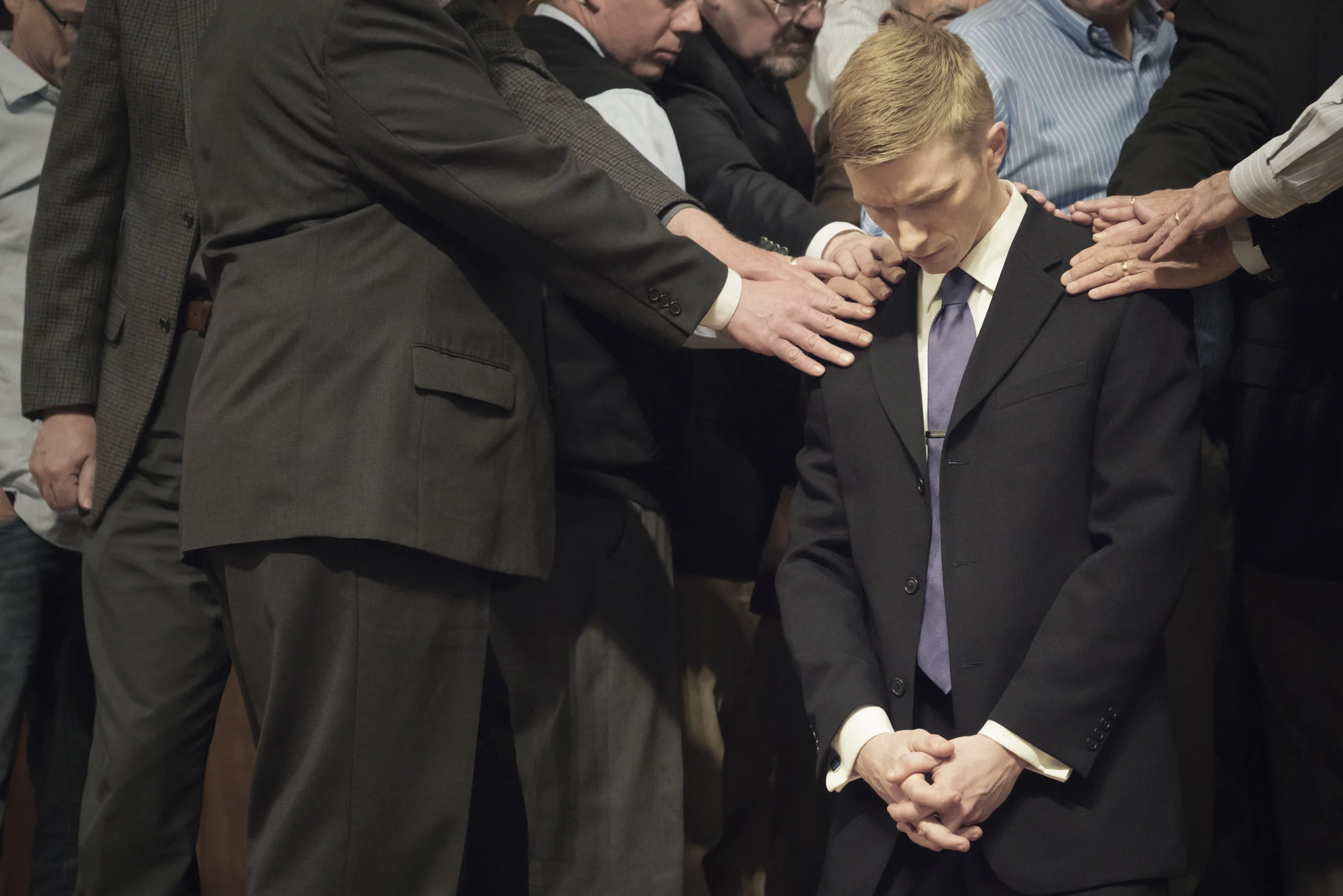
When it comes to the personal care and shepherding of the local pastor, we need elders who will play offense and not defense. Elders lead, and not just react. It’s been my experience based on numerous conversations with pastors across the country, that most elder boards are filled with leaders- godly leaders- who can become so focused on the needs of the congregation they neglect to proactively care for the needs of their pastor. If you are an elder, or aspire to be an elder, there are at least five ways you can offensively elder your pastor:
Don’t burden pastors with expectations of omnicompetence. The average pastor is expected to be a great preacher, great leader, great counselor, great people person, great administrator, have a great bedside manner, be a great visionary, and at the same time have a great marriage, great family, great personal life, great walk with the Lord…just be great, great, great, great, great. Well, that person doesn’t exist, and to expect omnicompetence is a form of pastoral abuse, because it pushes the pastor to attempt to be something his humanity will never let him be. As John the Baptist once said, “I am not the Christ”. These five words need to be the mantra of pastors, and that of elders in thinking about their pastor.
Initiate intimate conversations with your pastor. Ask us in a non-suspicious way how we’re doing in our marriages and with our children. Ask us about our walk with the Lord. Ask us about our emotional health. Ask us about our physical health. Don’t assume we have it all together, and everything is okay, and then when the bottom falls out the elders put on a full court press to clean up the mess. Who knows, many elder boards would never have to go into a defensive frenzy, if they played a bit of offense by just simply showing an interest and asking questions about the various venues of our lives.
Pray with us. Here I’m not talking about the prayer that begins and ends the elders meeting, or the times when the agenda is pushed to the side and we pray for the church. Instead, I’m thinking of an elder playing offense by approaching the pastor and just caring for them off the cuff with prayer. I can only think of one occasion in almost twenty years as a Lead Pastor where I had an elder initiate non-emergency prayer with me. He invited me to his home, sat me down, asked me questions and then we prayed for about a half hour. The wind that put in my soul was enough to push me along for the next season of ministry.
Initiate compensation discussions. We need offensive elders in the area of the pastor’s personal compensation. A pastor shouldn’t have to come and ask for a cost of living increase or a raise. It’s a shame the marketplace does a better job at this with their employees than the church of Jesus Christ does with their pastors. I’ll let you in on a little secret: Most pastors either initiate these types of conversations, risking the appearance of greed, or they say nothing at all, while they inwardly wish someone around the table would. Too many pastors are not prepared for retirement, and die with far less than what they should have because the churches they served didn’t step up. Of course I could disclaimer this point to death with talks of churches who don’t have it and bivocational pastors, but I trust you understand where I’m coming from.
Play offense when it comes to our rest. Did you know the FAA demands that airline pilots and crew get a certain amount of rest before they fly? Do you know how many flights have been delayed because the crew didn’t have sufficient rest? Why does the FAA initiate and demand this? Because the lives of hundreds of passengers are at stake. What the FAA is to pilots and crew, elders must be to the pastor. Why? Because something more important is at stake than just bodies, it’s souls, which, as the Bible says, we leaders give watch over. The work of pastoring is constant, because the needs of people are constant. Plus, we need to consider that the average person’s down time is the pastor’s peak time when it comes to the work week. While our people are off enjoying their Saturday’s and Sunday’s, your pastor is putting the finishing touches on and preaching the sermon. David said of the LORD that He makes him lie down in green pastures. The LORD played offense when it came to David’s rest, and so should elders. A pastor shouldn’t have to initiate a sabbatical policy; elders need to be planning that out. Elders shouldn’t nickel and dime their pastor when it comes to vacation days, but should consider a responsible vacation policy that provides ample rest….and make the pastor stick to it.
I bet we would have less cases of pastoral trauma, burnout and failure if we had more offensive minded elders. May the Lord grant us wisdom.
Dr. King and The Not-So-Straight-Line of Racial Revolutions
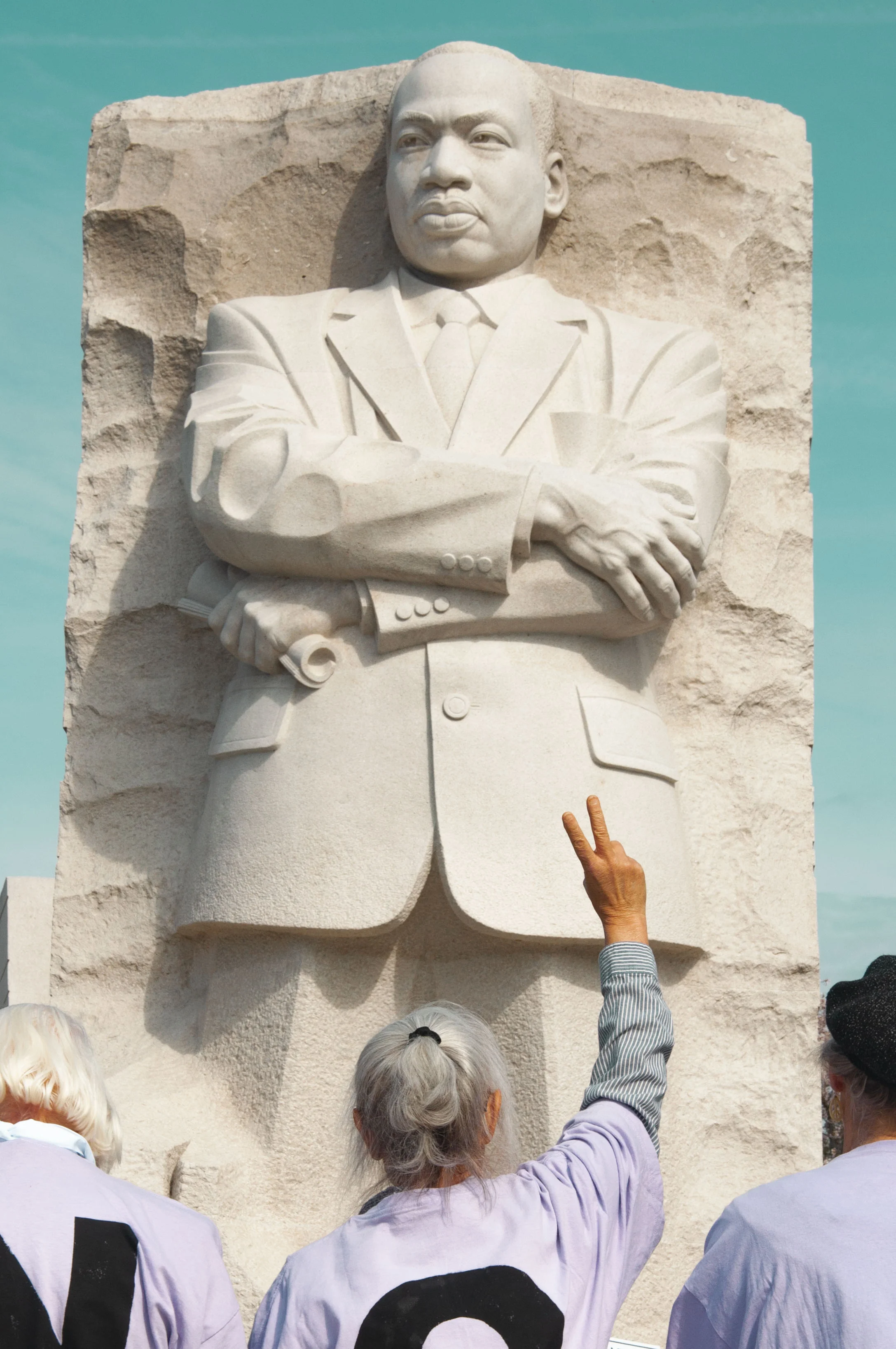
When I first read Dr. King’s observation of, “…when you look at a revolution you must always realize that the line of progress is never a straight line” (At Canaan’s Edge, page 554), something in me cringed and rejoiced all at once.
On the one hand King’s words expose and attack my adolescent impatience where I want all of the problems of race in America (and in the world for that matter) to be settled immediately. These last few years filled with people of color being killed at the hands of mostly white cops, and our brown siblings thrown in cages separated from families, has induced in me more than a deep sadness, but at times a hopelessness in which it’s easy to think there’s been no progress. Just the other day I sat in a meeting in which the topic of diversity was brought up yet again in a primarily white setting, and I had to fight voices of cynicism whispering in my head that this was indeed just talk, and nothing would change.
I’ve had to remind myself that revolutions are never photographs but movies, filled with scenes of tragedy and regression, but ultimately triumph and victory. Yet it’s human nature to walk through these “scenes” of regression and conclude all has been wasted.
On the other side, King’s comments about the crooked line of revolution, brings joy to my soul. Stepping back to catch a sense of the not-so-straight-line of revolution over the last sixty plus years in America there’s hope. Schools have been integrated. Segregation has been legislatively ended. Voting rights have been secured and multiethnic churches are on the rise. Oh, and a black president of the United States has been elected. No, we have not yet arrived at the mountaintop King spoke of on the eve of his assassination, but we are climbing higher and higher.
Finally, King’s remarks on revolutions makes me think of the gospel, and my own walk with Jesus. For followers of the Way, our journey is never a straight line. There are seasons of defeat and victory, tours of duty in the valley and on the mountaintop. Like the story of race in America, following Jesus is not a photograph, but a movie, where we are never to cast a verdict based on one scene of our lives, but when we stand back and look at the whole graph of that not-so-straight-line, may we see an upward trajectory, granting us confidence that we really have been redeemed by the blood of the Lamb.

The "Bi-Racial" Jesus
There exists a pervasive loneliness to those of us busy about the work of what’s been called racial reconciliation. This is what I believe Edward Gilbreath was alluding to when he likened us to bridges, and exhaled how it is the nature of bridges to be stepped on.
James Baldwin, the pen of the civil right’s movement, discovered this on the evening of July 16th, 1961. Seated to the left of the Honorable Elijah Muhammad in the leaders Chicago mansion, Baldwin reflected on how he had to endure a dinner filled with venomous references to our anglo siblings as “white devils”. For Muhammad and his thousands of followers known as the Nation of Islam, there was but one alternative to the legacy of racism exacted upon the Negro- rejection and separation. Elijah’s “white devil” laced conclusions were met with a chorus of amen’s by all but one at the crowded dinner table. The lone voice of silence that evening was ironically Baldwins, the famous soon to be author of, The Fire Next Time. Even though James had received more than his share of hate from whites in response to his many writings and public speeches, he held out hope that there were whites who could be redeemed; whites, “who were struggling as hard as they knew how, and with great effort and sweat and risk, to make the world more human” (James Baldwin, see, The Fire is Upon Us, page 144).
Standing on the steps of that Chicago mansion post dinner, Baldwin had to have felt a loneliness, an I-can’t-win-for losing sense of hope-filled despair.
There are several things that Chicago dinner table teaches us, and one lesson is for those of us engaged in the work of reconciliation there is the constancy of loneliness, of never feeling totally at home. Oh yes, I along with an army of racial reconcilers know that feeling all too well. Among one group we push too hard; and among another we don’t push hard enough. One ethnicity deems us to be liberals, and the other sell-outs. All at once we are considered gospel heretics, and not gospel enough. We are too theologically dark skinned for one crowd, and too theologically light skinned to another. How can one person be both sociologically and theologically black and white all at the same time?
Jesus had to have experienced this. His was a theological and sociological “bi-racial” ethic; and by bi-racial I am not positing some new theory of his ethnicity. Nor am I being glib with my language, since I am the father of “tri-racial” children. Instead what I mean is this sense that wherever Jesus went, the setting did not reflect the totality of who he was. He was too conservative for the Zealots, and too liberal for the Pharisees. The crowds rushed to crown him king, while others sought to kill him because he threatened their kingship. And to be an instrument of reconciliation is to follow in the footsteps of this “bi-racial” Jesus, where no one setting encompasses the totality of our aspirations or call.
Like Jesus, I too have caught it from both sides. Every time I’ve preached on race some of my white brothers and sisters have walked out over the perception of me being too radical. And when I have called out the lack of love which exists among some of my ethnic kin, I’ve been dismissed, raked over the coals and have had the veracity of my blackness questioned and even attacked. Like Baldwin, I’ve sat silently in private settings where “grilled white devils,” have been served for dinner, trying my hardest not to join in on the festivities.
To catch it on both sides…to be theologically and sociologically “bi-racial,” is to be like Jesus.
And yet, what kept Baldwin from participating in the hate that Chicago evening? Love. For Baldwin, love refuses to stay in what he called, “social ease”. This higher ethic of love, among other things, is to be wielded in such a way that it disturbs the southern white contemporary who was comfortable with Jim Crow, as well as the leader of the Nation of Islam and his followers who had chosen the path of rejection and separation. In his famous Christian inspired essay, Down at the Cross, Baldwin wrote of the importance of love and race relations, “Everything now, we must assume, is in our hands; we have no right to assume otherwise. If we- and now I mean the relatively conscious whites and the relatively conscious blacks, who must, like lovers, insist on, or create the consciousness of the others- do not falter in our duty now, we may be able, handful that we are, to end the racial nightmare, and achieve our country, and change the history of the world”.
Amidst the racial turmoil of his milieu, Baldwin held onto love, and this love filled him with hope even on lonely Chicago nights.
But the Chicago table also cautions us against the septic nature of bitterness. Homogenous settings like that July table tend to expose the rancor in our hearts. Those of us in the lonely work of racial reconciliation must not give into bitterness, for bitterness is what happens when the spirit loses hope and love. Bitterness joins in the chorus of look-alike dinner tables spewing epithets of our oppressors. Bitterness is what contaminated Jonah’s spirit as he preached to the ethnically other people of Nineveh, and then sulked when God loved them to himself. Jonah shows us it’s possible to challenge the status quo and not truly love.
What we are in need of is a prophetic, “bi racial” kind of love, the kind seen in Jesus. This kind of love is equitable in its scope, calling out homogenous dinner tables in inner city settings, as well as those found in gated communities. Love doesn’t laugh at the awkward racial joke, but chooses instead to create an awkward moment of its own by calling it out. Yes, Baldwin, love jolts people out of their social ease, the same way the Messiah- an incarnated Jew- jolted the Samaritan woman out of her moral ease by calling out her immorality.
And when we do this, we will catch it from both sides. But take heart, this is a sign we are following in the lineage of Jesus.

Can We Please Stop Saying, "White Privilege"
White is the new four letter word, in the same lineage of expletives whose origins were well intentioned but given the cruelty of time have devolved into dehumanizing adverbs. To dance white, talk white or look white is not so subtle innuendo all done to communicate one is not with it, out of fashion and touch.
Following closely behind in this same stream is the phrase white privilege.
Now we all know to be white in 2020 still carries meaning and advantage. Just a few years ago, I remember stepping off the one train in the middle of Harlem and seeing a Whole Foods. Huh? Looking around, I noticed young white couples pushing baby strollers, and to my surprise, the next morning white women joggers going up and down the same streets Malcolm X once walked. Their presence meant healthy food options, higher real estate values and a dissipating minority community, once known as the largest black community in America. There exists no stronger visual in modern America that to be white is to enjoy privilege, and a kind of privilege which means pushing others out, than twenty-first century Harlem.
My problem with white privilege is not so much the ugly, truthful realities the phrase conveys, but how it is said. White privilege is said by many the same way a frustrated mother refers to one of her brood who has disappointed her and she is forced to make an appeal to their father to step in and do something: “Sammy, come get your son.” Your son. Yes, that child does share DNA with Sammy, but this mother was not underscoring a biological truth, but attaching a sense of displeasure. That’s how I hear white privilege. It has a ring of displeasure, a note of attack and sourness. White privilege. Your son. Neither conveys love, and love is the insignia of the Christ follower.
Many are misinformed when they say white privilege, demonizing privilege for the sake of privilege. When we do this we need to be wary of hypocrisy. Just about all of humanity has received a portion of privilege (some more than others of course). The fact you’re reading this from a device suggests you are privileged in some way. My parents will celebrate fifty years of marriage next year. Think of that: I, a black man, have my two biological parents who are still together, love Jesus and have given me a good name. That’s a measure of privilege, while not on par with whiteness, which still sets me at an advantage.
And more importantly, if privilege was sinful then Jesus Christ was sinful. Philippians 2:1-11 argues that Jesus was the most privileged person ever to live, who in his status was God. But what did Jesus do with his privilege? He humbled himself by becoming obedient to the point of death, even death on a cross (Philippians 2:8).
Does white privilege exist? Absolutely. Should our white brothers and sisters feel guilty about their privilege? Let me ask it this way- Did Jesus feel guilty about his? No. Neither should our white siblings. So the real issue isn’t privilege- because we all have a measure of it- it’s the stewardship of privilege. In humility, Jesus used his privilege to die on the cross for us, so that we may have eternal life. Here he shows us the potency of privilege stewarded well. When we use the advantages God has blessed us with not for self promotion, but for the benefit of others, we look like Jesus and bless our world. Show me anyone who is white, who is not humbly seeking ways to disadvantage themselves for the advantage of others, and I will show you someone who does not truly get the messianic lineage they have supposedly inherited.
To read more on this, pick up my book, Insider/Outsider.

Christ In Your Body: ALCF 2020 Teaching Forecast
I recently heard a pastor friend remark how Christ needs to be felt and seen in our bodies. I like that. So much of the emphasis of following Jesus has been on inviting him into our hearts, and while I appreciate the sentiment, it just doesn’t mesh with the biblical teaching of what it means to follow Jesus. Of course Christ needs to reign in our hearts, but he also needs to rule over and be seen in our hands, feet and the totality of our lives (Matthew 22:36-40).
This idea of Christ being felt and seen in our bodies is at the heart of Paul’s instructions to the Philippians when he wrote, “Work out your own salvation with fear and trembling” (Philippians 2:12). To “work out,” conveys visibility. Christ should be seen and felt through our bodies. So for the rest of this year we are going to work out through our preaching at Abundant Life Christian Fellowship what it looks like to work out our relationship with Jesus in key dimensions of our world and lives:
The Marginalized. The last three Sunday’s in January we are going to talk about what it looks like to workout our salvation towards the unborn (1/12), across ethnic lines (1/19) and towards the poor (1/26).
The Church. Beginning the first Sunday in February through the first Sunday in March we are going to examine how to work out our salvation in the context of the local church, by walking through our core values, or what we call the 5 G’s: Gospel, Grace, Generosity, Gathering and Going.
Singleness. The Bay area consistently ranks toward the top for its population of single, educated professionals. As I was telling a friend, there’s no way we can do effective gospel ministry in the Bay without having a consistent, winsome word for singles. So this spring we will spend ample time talking about how to make the most of one’s singleness.
Good Sex. Every day our culture is seeking to disciple us in the area of sex. Images on television and social media, along with unprecedented access to pornography, demands Christ-followers capture a vision for sex which transcends fundamentalism and the prohibitions of “purity culture”.
Manhood/Womanhood. Finally we will go into summer by looking at what it means to work out our salvation in the area of our God ordained genders. In an era of #MeToo and a culture sinking in functional and literal androgyny, we need a compelling vision for authentic womanhood and manhood which will liberate us.
To access the preaching card which will give you the exact dates and themes go here.
To listen to these messages you can go here.

God’s Gift of Love

Preached at Abundant Life Silicon Valley on Sunday, December 22nd, 2019
Isaiah 40:1-5
Hey Isaiah, come on back. I need to get some things off my chest with you for a moment. Okay, God. As you know, we’ve been having some issues with my bride Israel, and especially one of the tribes of Israel- Judah. Yeh, you know about that. Judah has gotten herself into one world of a mess. I mean Isaiah, when are my people going to stop being so hard headed and learn to trust me? Remember the Assyrians? Of course you do. Those big, bad, brutal Assyrians who had amassed this huge army, and pioneered savage techniques like crucifixion. Well, they start gaining momentum and making their way towards Judah and Jerusalem, and I could just see the fear on Judah’s faces, but I told them to calm down, don’t fear, I got this. Just trust me. But does she? No! When Assyria gets like eight miles outside of Jerusalem my people decide to make a treaty with them and to put their trust in the Assyrians, and not me. Man. Oh, and when Assyria breaks their treaty you would think Judah would come to her senses and turn to me, but she doesn’t. Instead she turns to the Egyptians for salvation and deliverance and enters into agreement with them. And when that eventually falls through do they decide to trust me? No, they turn to the Babylonians for salvation and deliverance, placing their trust in them. And what do the Babylonians do, Isaiah? They break their agreement, attack them and then carry them off in exile to Babylon. Man. Just look at them Isaiah. You can see the sadness on their faces. I don’t get it, Isaiah. The thing that frustrates me to no end is my people refuse to trust me.
Now before we get all self-righteous and start shaking our head at Judah we should take a look inside ourselves and realize Judah ain’t the only one in here today who has trust issues. We all know what it’s like when life backs us up against its proverbial rock and a hard place to look around instead of looking up with our trust. And I get it, there’s no literal Assyrian, Egyptian or Babylonian army threatening to wipe us out, but we’ve all made our silent deals with our own version of Assyrians, Egyptians and Babylonians.
For some of us that means when life disappoints me, or I’m triggered, that’s when we go and make a treaty with our “Assyrians,” those things we turn and put our trust in like alcohol, or pornography, hoping to find comfort. Or others of us we hate the sense of loneliness, so instead of using these alone seasons to look up to God, we look around and find Egyptians and Babylonians to put our trust in- like unhealthy relationships. For others of us our finances have become our Egyptians. We’ve made a treaty with our bank accounts where we will find our sense of security and comfort not from God, but from what’s in our banks. You know your money has become your security when the base for all of your decisions is money, where you refuse to take steps of courageous faith, or to give sacrificially when God is calling you to. Like Judah you’ve made a treaty where your trust has been re-routed from God to money. Others of us relationships have become our Babylonians, our source of trust. Some of you are married and your mom and dad still play too much of a prominent role in your life, and your kind of good with it and it’s just weird. You call them all the time telling them intimate things about your marriage they shouldn’t know. And when life gets hard you just pick up the phone and call and boom you got what you need. Others of you, you’re not married, but single and still living with mom and dad not really out of survival but out of fear and comfort. Instead of trusting God by getting out of the house and pursuing the dream, you’re cool with just staying home, trusting them for provision while you’re on social media all day pontificating on the problems of the world. Your parents have become your Babylonians and it’s kind of weird.
On and on we can go with the examples. But someone once said we often turn to God when our foundations are shaking, only to discover it’s God who is shaking them. God will sometimes send or allow tough times to come our way to reveal to us where our trust really lies. Trials are like turning on the lights in our hearts revealing any Assyrians, Egyptians or Babylonians we have made treaties with. And what Judah had to learn is a lesson we all must learn- there can be no lasting security in this world outside of an intimate relationship with God where he becomes our ultimate sense of trust.
GOD’S COVENANT- ISAIAH 40:1
Isaiah, it pains me that my people just don’t trust me. I mean I’ve been nothing but faithful to them. And I’ve been patient. Remember Isaiah I sent you to plead with them to turn from trusting other things and people and to trust me, but because they refused to listen to us we are in this mess. Now they’re in exile in Babylon, and you know how miserable and sad they are. One of them just wrote these words in Psalm 137, “By the waters of Babylon, there we sat down and wept, when we remembered Zion. On the willows there we hung up our lyres. For there our captors required of us songs, and our tormentors, mirth, saying, ‘Sing us one of the songs of Zion!’ How shall we sing the LORD’s song in a foreign land?”- Psalm 137:1-4. Hear the sadness, Isaiah? My people are hurting, and it’s all their fault. So here’s what I want you to do- look at verse 1- “Comfort, comfort my people”. The Hebrew word for comfort literally means to breathe. It’s a picture of a person who is so distressed, so beaten up and miserable that they are heaving and sobbing, and someone comes alongside of them and rubs their back telling them to breathe. In fact, God says it twice, it’s his way of saying, “Breathe, breathe”. The word is actually a command. God is commanding Isaiah to be an extension of his hand on the back of his distressed, sobbing, heaving people, rubbing them and telling them to breathe, that everything is going to be okay. There’s no semblance of I told you so here. He’s comforting them, even though this is all their fault!
When I was six years old my father told me to go upstairs and bring him his shaving kit. But he was very clear- he told me not to go in it because there was a razor and I could cut myself. Well of course you know what I did, right? Disobeying my father I went in it, found the razor and eventually cut myself, and boy was I bleeding. I got some tissue and tried to stop it and it wouldn’t stop. I must’ve taken a long time because dad called for me to come downstairs immediately. So reluctantly I did and I was a sight for sore eyes. Dad saw the blood and I braced myself to be yelled at or worse. But surprisingly he picked me up and set me on his lap and comforted me. There was no I told you so’s. Dad saw my distress and figured that was enough.
We’ve all been there haven’t we? We all know what it’s like to sit down by the “waters of Babylon,” and know that the horrible stuff we are going through is all our own fault. This morning God is saying, I saw you in the abortion clinic years ago, and I see you now. I know the distress you’re in when you see a child that’s the same age your child would have been, and you’re beating yourself up as you sit down by the waters of Babylon. I’m not here to judge or condemn you. I’m here to comfort you. Yeh, you over there, I see you. You’re divorced, and let’s just keep it 100, you were the one primarily at fault. You stepped out on your spouse, compromised your vows. You were abusive, and now you look through the rearview of all the carnage and heartache you’ve caused and you’re in distress as you sit by the waters of your Babylon. I’m not here to judge you, I’m here to comfort you. Breathe, breathe. Hey you with the addiction you can’t kick and all the lies you told, and now you’re in distress. I’m not here to judge you, I’m here to comfort you. Breathe, breathe.
My People
But as powerful as the word comfort is, it’s not the most powerful word in verse one. You want to know what the most powerful word is? It’s my. God doesn’t tell Isaiah to comfort “this people,” but instead he tells him to comfort, “my people.” Now if I’m Isaiah I’m going to be like, wait a minute God. You still claim them as your own? Don’t you realize how awful and for how long they’ve been? I mean I’ve been prophesying against their rebellion through five different kings. They’ve gone to the Assyrians, then the Egyptians and finally the Babylonians. In fact God, they’ve been sinning since before I got here, and you still call them, “my people”. God’s like yep. Judah’s my bride, and not my girlfriend. Girlfriends audition for the ring, brides don’t. No matter how bad she’s been, and no matter how long she’s been bad, she’s MY PEOPLE.
Early on in my pastoral ministry I sat down with a young husband we’ll call Jack. Over the course of several years of walking with Jack our counseling sessions would go like this: How’s it going Jack? Not good. Caught Ashley cheating again. Again, Jack? Yep. Walked in on her in my own home. Or watched her go into the hotel. What did you do Jack? There were times he’d throw the guys out of the house or the hotel. Over time he’d sit patiently in his car and wait until things were over. So what did you say to Ashley Jack? Well she was very apologetic and promised this was her last time, and really sorry for how she hurt me. Did you take her back? Yes pastor, I did. Why do you keep taking her back, Jack? I can’t explain it. I guess, I love her so much.
Now I know what some of you are thinking- Jack is a fool! This woman by her repeated affairs is making him look like a fool! But now let me ask you, if we are married to God, and our sins are likened to cheating on God, aren’t we Ashley, and God, Jack. How many of us made God look like a fool just this week? And God does to us what he did to Judah. In the midst of our cheating, he rubs our back, comforts us and takes us back saying you are my people. You are my bride. God, why do you keep taking us back? I can’t explain it. I love you!
CENTRAL IDEA: Don’t ever forget, when you find yourself seated by your waters of Babylon and the reality of your sin comes crashing in on you: WHEN DISTRESSED, REMEMBER GOD’S LOVE IS GREATER THAN YOUR MESS.
GOD’S CALL- ISAIAH 40:2-4
Now I know what I just said may sound scandalous, or that it looks like I or God am not taking sin seriously. We know this isn’t true. God takes sin seriously. I mean just look at verse two. God calls it what it is when he says that Judah’s iniquity is pardoned. You know what iniquity is? It’s sin. The word pardoned is very interesting: It means to receive with pleasure. It’s a technical temple term that was used of priests who were presented with an animal to sacrifice for a person’s sins. If the animal met the standard of being without spot or blemish, they would receive it with pleasure and the persons sin would be covered. God says that he can claim Judah and you and I as “mine” because he’s paid our debt. But what’s interesting is that nowhere in the text do we find Judah even asking for their sin or debt to be paid.
Some weeks back I was eating at PF Changs in Atlanta’s airport, terminal A of course. I didn’t’ eat a lot, maybe about twenty bucks worth of food. Anyways, it was time for me to catch my flight and so I asked the server for the bill and she said, “Sorry sir, can’t do that. Someone else has already paid.” I’m like, “What?” So I’m looking around and around and around, and didn’t see anyone I knew. So I grabbed my bag and finally left.
Oh if you’re in Christ your bill has already been paid when Jesus died on the cross! Yes we confess and ask for forgiveness, but nonetheless the bill has already been paid! So stop looking around and around and start looking up, because I’ll tell you where to find the person who paid your bill! It’s God in Christ on the cross. Because of this, God claims you no matter what. The bill has been paid! The war has been settled! The anger is satisfied! WHEN DISTRESSED, REMEMBER GOD’S LOVE IS GREATER THAN YOUR MESS!
Ah, but it’s here where things get even more interesting. God says, hey Isaiah, tell my people I need them to prepare the way of the LORD. This is a command. God is saying, Isaiah, I’ve got work for my people to do. I’m not through with them. I’ve got a call on their life. In fact, God says these words to them while they are in distress in Babylon for not trusting him, “For I know the plans I have for you, declares the LORD, plans for welfare and not for evil, to give you a future and a hope”- Jeremiah 29:11. WOW! God says to Judah in the midst of her misery and failure, I’m not finished with you, I’ve got plans for you, there’s a call on your life!
So imagine I come home from my trip in Atlanta and I get a call from the woman who mysteriously paid my bill at PF Changs asking me to fly to Pittsburgh where she lives and babysit her kids. I’m going to be like, slow your roll. It was only like twenty dollars missy! I’m not flying to Pittsburgh. I’ll get you a thank you note with like a gift card to 7/11! But now imagine this person paid off my mortgage and she asked me to babysit her kids. I’m on the next flight out and I’m like I’ll watch your kids and Pookie anem’s for a whole month! Why? Because the greater the redemption the greater the response.
Don’t you see; God has forgiven us all of our sins, and now he’s saying, I’ve got a call on your life. Your daddy may have abandoned you, but I have adopted you. Your mama may have treated you like dirt, but you’re my masterpiece. I’m not finished with you! WHEN DISTRESSED REMEMBER GOD’S LOVE IS GREATER THAN YOUR MESS.
GOD’S CHRIST- ISAIAH 40:5
Well, what’s the call on my life? Look again at verses 3-5. Whenever a king in antiquity would come to a part of his kingdom for the first time he would never travel on already built roads, but a new road specially made for him. What we have here is the building of a road for the king, but it’s a special road, a road where mountains are brought low, valleys lifted up and rough places being made plain. In other words, and here’s the point behind all the imagery- this road will not go into any troublesome spots, but will be built on level, straight and even ground, guaranteeing the arrival of the king. Don’t you see the beauty here? God is saying this king is coming for sure. His arrival is guaranteed. Who is this king? It’s king Jesus!!! You know this is written 750 years in advance of Jesus coming? You know why we are here today? We are celebrating the truth of these words. Jesus actually came. And just as he came once, he is guaranteed to come again. And this is your call and my call no matter how messed up we maybe. God is choosing to use we wayward sinners to prepare the way for king Jesus!
I’m in my seat. I have a friend who lives in Palm Beach, Florida where our presidents golf course Mara Lago is. And my friend says living there is a bit of a nuisance now, and I asked why. He says that when the president comes to town the city goes from peace to chaos. I said, what do you mean. He says when Air Force One is about to land, all air traffic in the area stops. Flights are often delayed. The airport is in chaos. Not only that, streets are in chaos. When he gets in his car, streets are barricaded, traffic is jammed and re-routed, and what was once normal has totally shifted because the president is there. In fact, he says he has a friend who is on the local police and one of his jobs is to set up the barricades. When people ask him what he’s doing he says he’s making things ready for the president.
Oh friend, soon and very soon someone greater than any president or earthly king is coming. And when he comes the script will be flipped. Advent is about reversing the order of things, and when king Jesus shows up on the scene our world will go from chaos to peace, from division to harmony, because King Jesus is here. But in the meantime he’s called you and I to set up the barricades and to prepare the way of the LORD. There’s a call on our lives, and that call is bigger than paychecks, likes on IG posts or social media followers. The call is about Jesus! Will you be ready?

The List (Prayer, Part 2)
From time to time Korie will send me a text message with a list of items she needs me to pick up from the grocery store. Now two things you should know about me: One is I’m incredibly impatient, and the other is I hate feeling incompetent. These two things make going to a grocery store extremely nerve wracking because I have no clue where things are (even with the signs), and I want to hurry up and get out of there with all the items on the list fulfilled. So as impatient as I am, I’ve learned to just give the store employee the whole list. And because they are so familiar with where things are, the list gets handled quickly. When it’s all done, I thank the person who helped me, check out and leave, never to see them again.
That’s kind of how prayer can be for a lot of us, isn’t it? We all know what it’s like to hand God our list, hoping he’ll check each item off, and quickly. And when the items on our agenda are handled, we tend to “take off,” not in a hurry to visit with God again, until we need help with new items on the list.
Someone once said prayer is not so much a matter about getting what we want, but encountering who we want. Jesus understood this, which is why in what has been called the, “Lord’s Prayer,” he not only postures prayer relationally as an encounter between us and our “Father,” but he shows us we need to begin our encounter with God not with our lists, but with adoring God’s character. This is what Jesus means when he says, “hallowed be your name.” To hallow is to declare as holy, or to adore; and the idea of name is character. In antiquity, a child’s name was a hopeful declaration of who they would become in their character. Names are character.
The point Jesus is making is there’s a direct relationship between what we know of God’s character (names), and the intensity of our worship.
Imagine you’re at a dinner party seated randomly next to an older gentleman. You’re polite with him and ask him his name and he tells you it’s Louis. You then ask what he does for fun, and he says not much since he’s in his nineties now, but back in the day he loved to run. You ask him what were some of the events he ran in and he tells you he ran in the 1936 Olympics where he got to know Jesse Owens, and even shook Hitler’s hand (before he knew how awful he was). Later you discover he served in WWII, crashed in the Pacific Ocean where after several weeks he was picked up by the Japanese, placed in a concentration camp and tortured. Miraculously he survived, came home and was addicted to alcohol, wandered into a tent in downtown Los Angeles where a guy named Billy Graham was preaching. He gives his life to Christ, goes back to Japan and forgives those who tortured him, and now they’ve just written a best selling book about him, along with a movie called, Unbroken. The guys name is Louis Zamperini and all of this is true. Now, at the end of this conversation I’m going to guess you’ve gone from exchanging polite pleasantries to being in awe. What changed? You got to know him and his character.
If we struggle to really adore God it could be because we don’t really know God. God is saying in so many words, “Google me. Get to know me. And it will impact your worship of me.” You may want to begin by meditating on his name Yahweh- the personal God who provides for us. Or think on his name God, or Elohim, the strong God who is transcendent. Or contemplate his name Adonai which speaks of his role as Master, one who is in control. When we really get to know God it will impact our worship and adoration of God.

The Umbilical Cord of Prayer
Children are dependent, and that dependency doesn’t begin when they exit the womb; it starts at the moment of conception. This is why God has created the umbilical cord. The purpose of the cord is to transfer essential, vital and life-giving nutrients from the mother to the child. The umbilical cord isn’t an amenity or something nice to have or an occasional luxury; it’s a matter of life and death.
One of my favorite writers on prayer is E.M. Bounds. He once defined prayer as the expression of the souls dependence on God. When we pray we are acknowledging our neediness and dependence. Like the infant in its mothers womb, prayer is the umbilical cord tethering us to God and transferring essential, life-giving gospel nutrients from our Father to us. And like the umbilical cord, prayer isn’t an amenity or an additional, optional extra. Prayer really is a matter of life and death. There is no way we can live into the fullness of all God has for us without prayer. Our souls wither into malnourishment without the umbilical cord of prayer.
Jesus understood this, which is why he gave his most popular teaching on the subject of prayer known as the “Lord’s Prayer”. Scholars point out that this prayer should actually be labeled the “Disciple’s Prayer,” because it is a model for how we, his followers, are to pray (John 17, they point out, is actually the “Lord’s Prayer”). And in this model prayer Jesus shows us three big picture things to keep in mind when we pray:
Pray Relationally. Jesus uses one name for deity in the prayer- Father. Just think of all the names he could have used- God, Jehovah, Most High, Lord- but instead he uses a relational term. And when we think about fathers, they do two primary things- provide and protect. Imagine one of my sons friends coming to my home with all of their worldly possessions saying they were going to move in. Or imagine they just opened my refrigerator without asking. Or just think of how strange it would be if they said to me they were experiencing some sort of injustice and needed me to intervene. Now, it maybe nice for me to let them move in, eat my food unsolicited or advocate on their behalf and protect them, but I am hardly under any obligation to do these things because we do not share DNA. But my children come home and open the doors to our refrigerator without asking (I wish they’d do it less!), climb into bed night after night under my roof, and when problems come their way, look to me for protection, and rightly so. These are not just things that are nice for me to do, this is actually a right, an expectation they should have, because I’m their father. When we really relate to God as our Father through prayer, we can approach him in courageous confidence, holding him to his promises. When we need provision for such things as a job, or money or shelter, we should boldly remind him of his role as Father. And when we are in need of protection from the enemy, we need to remind God that he is our Father, and father’s protect.
Pray Communally. You don’t need to spend a day in seminary to notice a glaring omission in this prayer: There’s no words like I, me or mine. Instead we see words like our and us. In other words, this model prayer is a communal prayer. Jesus is saying a completely un-American thing to us: When we pray don’t just think of ourselves, bring others with us. Let me ask you a question: If God were to answer all of your prayers over the last twelve months with a resounding, “YES,” would THE world change, or just your world? Do you pray communally?
Pray Sequentially. Finally, notice the sequence of this prayer. When teaching us to pray, Jesus doesn’t begin with our petitions, but with God’s praise. We should begin with God’s agenda before we get to our agenda. It’s sort of like the section of math called order of operations. Remember that? Order of operations are complex formulas and equations where there’s addition, multiplication, division and subtraction along with fractions; all stuff which is very intimidating to a preacher like myself. Now the interesting thing about order of operations is that while we can get the math right, if we get the sequence or order wrong, the whole thing is wrong. Sequence matters. Now, don’t hear Jesus as being legalistic. Like I don’t think your petition is going to get denied because you forgot to begin by praising God. But there is something beautiful about being lost in the beauty of God before I get down into the weeds of my needs.

The Truth About LGBTQ+ (And the Rest of Us)
I often think of my seminary days and shake my head. Never would I have imagined someone asking me to officiate a wedding for a same sex couple. Not in my wildest fantasies could I have dreamt of being asked to do a baby dedication where the parents were gay. It’s not that I had an opinion on these matters, I couldn’t even think of these as remote possibilities. But here we are, and I’m hopeful. I believe in the sovereignty of God he has allowed you and I to live at “such a time as this.” We get the chance not to soak in fear, but to re-write the narrative of generations of Christians in America (and around the world) who have just made some serious mistakes in the name of Christ when it comes to our friends in the gay community.
In previous posts I’ve talked plenty about the need for grace, but how do we steward truth? After all, it was said of Jesus that he was a man full of grace and truth (John 1:14). I’ve found the following three pillars to be helpful in winsomely engaging the LGBTQ+ community with the truth of the gospel:
Love and Disagreement Can Coexist. Tolerance implies I must extend an explicit endorsement to “your truth.” To not do so is seen as being bigoted. But this is not how tolerance was originally conceptualized. Generations ago, tolerance was defined as the ability to disagree civilly. Boy have things changed. Christians are not called to tolerate, or to even be inclusive by modern definitions. Instead, Christ followers are to love. Given this, it’s quite possible to love someone and disagree with them at the same time. And if you want a picture of this, look at just about every parent with their children. My kids have made colossal mistakes, and so far in every instance we’ve shared truth with them while embracing them at the same time. So can I disagree with someone’s lifestyle choice and invite them over for dinner with good food and drink and laughs at the same time? Of course.
The Goal is Jesus. As a Christian I’m far more interested with a person’s soul than their sexuality, and I think it’s safe to say Jesus agrees. When I befriend people who don’t know Christ, I pray and plead they would come to know Jesus. I actually think the enemy wants to distract us by having us consumed with lesser side bar issues than their souls. Satan is pleased if the interactions devolve into hours of debate over Romans 1 and other biblical passages, when instead the focus should be on Christ. Let Jesus move in, and once he authentically does, other matters will be addressed.
I’m No Better. I had a member of our church who found out one of our leaders in ministry struggles with homosexuality, so she decided to confront me. I smiled and told her I knew about this person, and had engaged in numerous conversations with them and was fine with them serving in ministry. She was appalled at how I could do such a thing. I shared with her how this person is leaning on the grace of God one day at a time in their journey, and while they are living victoriously there have been moments of defeat. “Now," I said to her, leaning forward in my seat, “Tell me, is that any different from you, or me? We may have different struggles, but if you’re perfect, please let me know and I’ll remove him.” She couldn’t say anything. I really don’t think we get this, and it’s a real shame. Our pride just keeps getting in the way.

Top 10 Books I Read in 2019
I used to wait until the last week of the year to unveil the top books I read, but due to the steady stream of requests from people asking me for recommendations as they go Christmas shopping for their loved one’s, I’ve decided to bump things up a bit just in time for Black Friday and the holiday rush. So here you go:
#10- “At Canaan’s Edge: America in the King Years, 1965-1968,” by Taylor Branch. A re-read for me.
#9- “Letters to the Church,” by Francis Chan.
#8- “The Gatekeepers,” by Chris Whipple.
#7- “Jayber Crow,” by Wendell Berry (novel).
#6- “Washington Black,” by Esi Edugyan (novel).
#5- “How to be an Antiracist,” by Ibram X. Kendi.
#4- “Delighting in the Trinity,” by Michael Reeves.
#3- “South of Forgiveness",” by Thordis Elva and Tom Stranger.
#2- “Talking to Strangers,” by Malcolm Gladwell.
#1- “The Color of Compromise,” by Jemar Tisby