Sunday's Teaching Guide
God At Work: Daniel 1
This week we began a new series on the book of Daniel called, God at Work. The series title is a double entendre. At the lowest levels I believe that the book of Daniel shows us the powerful effect of work done well to the glory of God, and the effect that can have on those in the work place who are not in covenant relationship with God. At the highest levels, the book of Daniel is not about Daniel, but about the sovereignty of God, a God who is at work thwarting even the most powerful human kings. I’m beyond excited for how God will use this series.
This is what we learned this week:
The Sovereignty of God means that God is control (Nehemiah 9:6; Psalms 135:6; Ephesians 1:11)
God’s sovereignty is, “His exercise of power over His creation”- Wayne Grudem.
The Sovereignty of God in Daniel 1 (verses 2, 9 and 17).
The message of the book of Daniel is that it is possible to live a faithful life in this world surrounded by pagan influences if one sets their mind on serving God wholeheartedly.
“The principal theological emphasis in Daniel is the absolute sovereignty of YHWH, the God of Israel. At a time when it seemed to all the world that His cause was lost and that the gods of the heathen had triumphed, causing His temple to be burned to the ground, it pleased the LORD strikingly and unmistakably to display His omnipotence”- Gleason L. Archer
Nebuchadnezzar’s Purpose (1:1-7)
Nebuchadnezzar’s Plan (1:1-7)
Daniel’s Resolve (1:8)
Daniel’s Reward (1:17-21)
I Used to Love H.E.R. Reflections on (Christian) Hip Hop
Common’s joint, I Used to Love H.E.R. is a hip hop masterpiece in which he personifies his frustrations with the then current state of rap in the form of a woman. She (hip-hop) has changed, and Common is not bemoaning her metamorphosis, how could he? Art must change. People change (I’m reminded of the old line, “My wife’s been married to five different men, and all of them have been me”). Instead, Common is grieving the downward trajectory of “her” evolution. The purity has been tainted, the message lost. His “woman” has been ravaged by materialism, capitalism, and every other sort of sinful “ism”. Rap just ain’t what it used to be, Common concludes.
I’m beginning to share Common’s sentiments about (Christian) rap. It feels as if the game has changed in ways that are beyond necessary, bordering along the lines of compromise.
Before I get into all of that you need to know that I love (Christian) hip hop. I’m a child of the eighties where Run DMC, LL Cool J and the Beastie Boys were my favorites. We used to laugh when the well meaning older people at our church tried to get us to listen to DC Talk, or PID. No offense to these groups but while their message was phenomenal their art was, well, arum…
I went to college with Duce, aka, The Ambassador. In the days of high top fades and boom boxes I remember late night conversations in our dorm room there on the outskirts of Philadelphia in which he vowed to be the first follower of Jesus to make great hip hop that was theologically robust in its message. I met Tonic when he was Exodus. And I remember the euphoria I felt when I popped in my first Cross Movement CD. I called Duce and congratulated him on making good on his vow. Nothing makes me happier than to have my 12, 11 and 9 year old sons demand that I put in Lecrae on the drive to school. In just one generation we’ve gone from great content/bad art to great content/great art. But now I’m starting to get the sense that our passion for art is bypassing rich theological content. We’re on the brink of great art/so what exactly are you saying?
Now I know I’ve just opened up Pandora’s box, right? The age old question that Reinhold Niebuhr wrestled with in his classic, Christ and Culture, is exactly how does a follower of Jesus engage culture? Theories abound on this, and for this reason I have put the word “Christian” in parenthesis before hip hop, not to be pejorative, but to allow rap artists who follow Jesus to determine how they use their art to engage culture. To be clear this post is NOT about your method of engagement.
If it were up to me I’d love to free the “Christian” from her parenthesis, so that it would be CHRISTIAN rap. You know the kind of rap that screams Jesus on every song. While these maybe my proclivities, my biblical moorings will not allow me to make this prescriptive. For example, in the book of Esther, not once is the name of God mentioned. Esther, being a biblical story, is art, and yet God chose to not allow his name to be mentioned at all (You may want to read that last sentence again). However, His fingerprints are left all over the narrative. Esther, a Jew, has been given great beauty, and therefore a relationship with the king. At the same time her people are on the brink of extinction, a fact that her uncle Mordecai will not let her forget. She must use her position with this secular king to save her people. But there’s a cost involved, she may lose her life. The reader is left wondering what fundamentally drives Esther? Is it the position and prestige of being in the palace, or is it God and his covenant people? Will Esther choose her personal ambitions for acceptance, or will she sacrifice all for God?
These are great questions to ask (Christian) hip hop artists. What’s driving you? Is it to have the kings of the music industry respect your art? Is it sales, or interviews with well known main stream media personalities? I ask these questions because I’m beginning to sense that it’s cool to not have art associated with being Christian. I’m with you on one hand. I hate the secular/sacred divide. But if earning respect among the likes of Jay-Z- that rapper who blasphemes The NAME by ascribing the personal name of God to himself- and his contemporaries is what you’re ultimately after, you must be careful because you run the danger of prostituting God’s gift he’s given you to steward. The same God who made Esther stunningly beautiful, so much so that she won the favor of the king, gave you beautiful art. Esther’s beauty was not given to her by God to bask in her acceptance by the king, and your art was not bequeathed to you by a sovereign God for you to revel in being embraced by the world. I say to you what Mordecai said to Esther, perhaps God has given you these gifts and placed you where you are, “for such a time as this”.
When thinking about your stewardship of art, regardless of your worldview of cultural engagement, the following principles must mark your ministry:
1. Opposition. The system of the world will always be opposed to God and his kingdom. Therefore to be loved in mass by the world should cause one to wonder if they are being faithful to God.
2. Holiness. God’s call to every follower of Jesus is to be holy. Holiness is not just moral purity, it’s also the idea of being markedly different, distinct. As a follower of Jesus Christ who raps, your songs must be noticeably different no matter what label you’re signed to.
3. Foolishness. The message of the cross, Paul tells the Corinthians, is foolishness to those who are perishing. To be foolish is the antithesis of the drive to be embraced.
One final word. I’ve always admired hip-hops aggressive nature. She’s never been known to be docile or passive. She’s screamed to the top of her lungs that she’ll kill you, she’s been loud about her love for marijuana , how she’ll “rob the preacher for the offering,” drive the nicest cars, barked like a dog (DMX) and sleep with the most women. This girl has never been bashful, even if you don’t agree with her. So why are (Christian) rap artist’s breaking with hip-hop’s tradition of in your face, loud, this is what I believe tradition? Why are Christian’s suddenly shy about their message?
The Age of Ageism
We are in an age of ageism where many of the young men I meet today in the church do not know how to relate to older men in ways that honor them and God all at once. The demise of the family, and the absence of strong godly men to lead their children, has left a void in our young men (and women too for that matter) leaving them ill equipped in simple yet significant ways. For those who do cry out for help, wanting to be mentored they can end up sending all the wrong signals
Recently a pastor friend of mine was sharing a much too common experience: Young men reach out to meet with him. He carves time out of his busy schedule and arranges a breakfast. Then the following happens:
- The young man shows up a few minutes late.
- He then proceeds to small talk the pastor to death.
- Finally, after prompting from the pastor as it relates to the whole point why the young man wants to meet, gets around to the purpose, kind of.
- He doesn’t turn his phone off, even answers calls and texts.
- As the pastor is sharing pearls of wisdom in answer to his long belabored question, the young man is not taking any notes.
- Through it all the man is relating to the pastor as if they are peers.
- When the check comes he doesn’t offer to pay, and barely says thank you.
Young man let me help you. If you can make these things a part of your DNA all kinds of doors will be open for you:
1. The older, wiser, more seasoned and experience man that you reached out to, to help, well, you, is not your peer. He’s been somewhere that you have not, and has something that you desire. So treat him with dignity and respect. Don’t call him by his first name until he gives you permission to do so.
2. Because of his status, assume that his time is way more valuable than yours. Therefore don’t waste his time. Show up early. Beat him to the meeting.
3. Bring something to write with. Taking notes sends the message that you value his time and what he has to say.
4. Unless you are taking notes on your phone (and if so let him know you are, so he doesn’t think you’re fooling around), turn the phone off.
5. If you didn’t do so before the meeting, within the first five minutes let him know exactly what you want to talk about, and have well thought out questions prepared to ask.
6. I don’t care how broke you are, your mama may have had to give you bus fare to get to the restaurant, offer to pay for breakfast (and pray he turns you down!). It’s just good manners.
7. Thank him profusely for his time.
8. And if you want to really go the extra mile send him a thank you note when it’s all said and done.
STOP SHARING AND PREACH
“What I liked about his preaching was that it was so conversational. I felt like he was one of us.”
These were the words that I heard recently as our staff was evaluating one of our young preachers who was subjected to the cruel and unusual torment of having to preach his trial sermon to our team. I wish I could say that this was the first time I heard a remark like this, but it’s not, in fact it’s becoming more and more frequent because it fits so well in our postmodern culture.
Postmodernism was originally linked to architecture, and it’s growing emphasis on community. For example, the way churches were built in years past reflected the values of the Enlightenment. These ancient buildings would have a pulpit down front, followed by rows and rows of pews organized in a very linear fashion. This style of building was intentional reflecting the dissemination of information that came from the speaker and filtered down a line throughout the congregation. Well, today churches are no longer being built in such a linear style that emphasizes knowledge, instead they are structured in more of a semi circle displaying, once again, our value of community and relationships. This architectural approach has also effected not only our view of the preacher, but the preacher himself.
In the age of the Enlightenment, the preacher was seen as an authority (if not the authority). Now in a postmodern era we view the preacher as one of the boys, a man just like us. It’s no secret that in postmodern culture we don’t like authority, thus the so called “compliments” on preaching when we say that someone’s style was very conversational, and we like that.
There’s just something in us that stiffens its back when it comes to authority, and this is a problem of biblical proportions.
If you have a problem with authoritative preaching you would not have liked Jesus as a preacher. The gospel writers go to great lengths to describe the impression that Jesus’ preaching made on his hearers:
“And when Jesus finished these sayings, the crowds were astonished at his teachings, for he was teaching them as one who had authority, and not as their scribes”- Matthew 7:28-29.
“And they were astonished at his teaching, for he taught them as one who had authority, and not as the scribes”- Mark 1:22.
Jesus’ preaching was not the passing on of good advice, nor was it the dropping of deep truths to merely contemplate or consider. Jesus was not posturing himself as one of the boys offering a different take on things for us to chew on. No, his preaching was marked with authority.
Authority is not necessarily yelling or screaming, or even animation.
Authority is the confidence that what I am saying is the truth.
Authority is the understanding that what I am telling you is from the very mouth of God.
Authority is rooted in urgency- that the next 30 or so minutes that I have with you is a matter of life or death.
Authority is found in a speaker who actually believes that what he is saying is true and therefore he will take a bullet…will lay down his life for what he is telling you.
Authority could care less how you view me, or what your opinions are of my sermon.
Authority is consumed with the praise of God and not the applause of man.
God deliver us from whimpish, conversational, talk show host oriented, metro-sexual, fearful, cowardly “preaching”.
Preacher. Stop sharing and preach.

Tom
We were minutes from pulling away from the gate at LAX, and the seat next to me was empty. An empty seat next to an introvert like myself is more than an answer to prayer, especially on the long flight from Los Angeles to Memphis. But wouldn’t you know it at literally the last minute, he came running in. Sweat was pouring down his face as if he had sprinted from his house in the valley all the way to Inglewood on the 405. After shaking my disappointment filled hand, he announced that he was a full time stay at home dad, married to another man and the proud father of four children that he and his partner had adopted. Sprinkled in for good measure were a few f bombs, and of course some moments later he asked me, a pastor, what I did for a living? The next three hours and twenty minutes were going to be interesting.
He grew up in Memphis and was returning to look after his brother who happens to be gay as well, and had gotten into some recent financial trouble. I couldn’t resist. I asked Tom (a made up name) what it was like to be gay growing up in a deep south town like Memphis, where that lifestyle is still frowned upon by the Memphian? I found his story to be a fascinating one- a tale filled with rejection by the evangelical church, dismissal from a parachurch ministry and even shunned by his own parents. He literally had to flee to southern California to feel as if he could be himself.
My constant questioning of Tom definitely caught him off guard. I think he was readying himself for me to toss a few Leviticus 18 and Romans 1 grenades his way. Instead what he got was what society would label as a conservative pastor from Memphis sincerely interested in his life and journey. I just couldn’t stop. I wanted to learn more. What was his husband like? Where did they adopt the kids from? Do they get picked on for having two dads? Did he think any of them would embrace his same lifestyle?
And I also wanted to know what he thought about Louie Giglio being pressured by his community to not pray? Now he was frustrated with me. “Do you think the liberal left speaks for me?” Then slowly for emphasis, “They. Do. Not.” After adding that the legalistic right didn’t speak for him either, he shocked me by saying that Pastor Giglio, in his opinion, should have prayed. Tom exhaled, “And who does the gay community think they are by demanding that everyone agree with them?” I sat there in silence, my assumptions dismantled.
As the plane prepared to touch down he asked me for my contact info. Tom wanted to stay in touch. His brother attends church regularly, but doesn’t feel comfortable with his latest stop. “Maybe your church will be the place for him,” Tom said, as he pulled out his business card and scribbled his cell number across it.
I couldn’t stop thinking about Tom as I lay in bed that night. In my younger days Tom wouldn’t have been Tom, an actual person. He would have been a label. Gay guy. The problem. Enemy. And where I come from, some hateful terms would have come to mind, if not have rolled off my lips. As I thought of Tom I saw a person, a story. I felt his sense of displacement. I tried to put myself in his shoes- a thirteen year old boy who just felt naturally attracted to other boys, standing in the locker room knowing he could never let on. I tried to feel his sexual disequilibrium as he walked through the halls of Rhodes College as a student in the early 1980s, telling himself no one better know the real him or he would lose his scholarship (or so he thought). Tom was not a label to me, he was a real person, made in the image of God. He was not an issue to be debated, but a person to be loved.
Moments from sleep that night, I saw the seat next to me on the plane that for so long sat empty, vacant. Just like that it was filled with a person I couldn’t avoid, a person I had to address, a person who became a part of my life. Sadly, many in the Christian community would love it if the seats around us were vacant. We don’t want to have to deal with the gay community, the Tom’s of our world. We wish they would stay in their midtown’s, on their side of the tracks, so we won’t have to think about them, hiding behind our pulpits and lobbing Leviticus 18 and Romans 1 grenades at them from a safe distance.
This isn’t our future though. I’m days away from turning forty, and if the Lord lets me live to life expectancy, I believe that in my lifetime gay marriage will be sanctioned across all fifty states. Their voice will become louder. Tom will move in next door to us. His kids will go to our schools, and play in our athletic leagues. We better have something more to say than, “Love the sinner, hate the sin.”
I get the feeling that right now you maybe a little unsettled with this blog. You want some apologetic from me on how wrong “they” are, and how right “we” are. You want me to state the truth about the issue in words that have an edge to them. But this isn’t what Jesus gives us. Even though homosexuality was prevalent in the Roman empire, Jesus never spoke of it. No his silence isn’t passive approval, but instead of dealing with the issue, he focuses on the Christians response. In John 13 he says that the badge of the disciple is our love for others. When backed into a corner and asked what the greatest commandment was, Jesus gave a two part response- love for God and love for neighbor. Then to illustrate who he meant by neighbor he talked about a person that the Jews went out of their way to avoid- a Samaritan. Their version of Tom.
Tom doesn’t need our worn out cliché’s. Tom needs the truth of the gospel message packaged in the unwavering love of the messenger. Tom needs to be invited into our homes, with his husband and kids, where a great steak, some good wine is waiting on him, prepared by people who love him enough to point him to the one who gave his life for him. The gospel is never about changing homosexuals into heterosexuals, but transforming sinners into Christ followers.

Desperate
Prayer is the expression of the souls dependence upon God, so said E.M. Bounds that great nineteenth century prayer warrior and writer. At it’s core, prayer is desperation. It’s King Jehosophat with his back against the wall, facing the prospect of annihilation, and yet he calls the people together for a corporate fast exhaling to God, “We do not know what to do, but our eyes are on you” (2 Chronicles 20). It’s a financially and socially vulnerable widow who has been victimized by an adversary, pleading her case constantly before the judge, wearing him out (Luke 18). The desperate person, according to the psalmist, is like the dear panting for the water, so our soul longs after God (Psalm 42). Desperate people pray.
Or do they? Phillip Yancey, in his book, Where Is God When It Hurts? argues that pain is one of God’s greatest gifts because it prevents us from doing further damage to ourselves. The worst thing that could happen to a person is to not feel pain, for the inability to feel is not a gift but a curse, resulting in further damage. The sore ankle tells you something is wrong, so stop playing, sit down and rest. The toothache compels me to visit a dentist who can address the ailment. Pain may be of the white elephant variety, but nonetheless it is a gift, keeping us in tune with our desperation.
Because of this leprosy can become one of the most tragic sentences ever levied on the human body. Lepers cannot feel. Yancey, in arguing that pain is a gift from God, dives headlong into the disease of leprosy. He tells of one little girl who had contracted the disease. Her parents walked into her room one morning shocked to discover that she had playfully chewed off her finger, and there it was stranded in a pool of blood. This little girls numbness forfeited her finger.
My grandmother used to say that God has kept us from dangers seen and unseen. What she was pointing to was a sovereign, merciful and caring God who was in command of our lives, so in command that there’s stuff he has kept us from that we don’t even know about. If this be the case,then what cannot be denied is man’s universal desperate need of God. All of us, regardless of our tax bracket or season of life are desperate. Our lives hang by a single solitary strand called grace and mercy. Jeremiah pointed to this in Lamentations when he said that God’s faithfulness is so great, that morning by morning new mercies we see. Little did you know it but God woke you up this morning with a fresh batch of mercy. At any given time God can demand that we give him back his breath and our lease on life is over, just like that. We are desperate.
Desperation is a good thing. As chest pains propel us to the doctor, so desperation sends drives us to Jesus. But herein lies the tragedy, the body of Christ is filled with many Christ followers and churches who have contracted spiritual leprosy. We ignore God’s alarm bells of spiritual pain and agony. A prayerless person, or one who prays nominally, does not mean the person is not desperate, instead it points to a spiritual leper who refuses to acknowledge his desperate condition before a holy God.
Jesus said that the church was to be a gathering of desperate people who make his house a house of prayer.
Paul, in writing the manual on the church in I Timothy, says that fundamentally, the church of Jesus Christ is to be a place where desperate people offer prayers to God (Chapter 2)
The great success of the first church in the book of Acts was not in her programs or visionary leadership, but it was in her praying (Acts 2:42).
I want this in my own life, and the life of the church I lead, Fellowship Memphis. I don’t want us to be a people who numb ourselves at the table of prosperity. I don’t want God to have to use tragedy to jolt me out of my spiritual leprosy in order to drive me to him. Oh that every day I would have a fresh vision of my need for God. I don’t want the reputation of Fellowship Memphis to be that of a church filled with great programs or preaching, but that we would be known as a people of great praying. I don’t want people to be wowed by my gifts, but by my God, and this only happens by prayer.
So we begin at Fellowship Memphis this new year by consecrating the month of January as a month of prayer. Every day we as a people will be desperately seeking God together for the same thing laid out in our 31 Days of Prayer Guide. May our great God know that we are in tune of our desperate need of him.

Top 10 of '13
As we come to the close of another year, I want to continue what’s become an annual tradition by sharing with you the top 10 books that I read in 2013. Looking at the stack of ten volumes, I’ve got to confess that these are some really good ones, so much so that in previous years most of these would have been ranked number one.
#10: Alister McGrath, C.S. Lewis: A Life
One of the best biography’s I’ve read on Lewis, and as you can imagine there’s more than a few bios on him. In fact, for those of you who maybe infatuated with the life of this great 20th century man, and wonder where to start, I’d recommend McGrath’s biography. He gives a wonderful treatment of Lewis, addressing his writing, teaching and personal life with great depth and fairness.
#9: John Piper, A Hunger for God
Ever read a book that just spoke to your soul? This book did that for me. I’m always looking for books that will help me to be a better man, and specifically I was searching for something that would instruct and inspire me to make fasting a more part of the rhythms of my life. Piper’s, A Hunger for God, really convicted and challenged me towards this end. It also was helpful in spurring thoughts that will go into my January series on prayer and fasting at our church.
#8: Larry Tye, Satchel: The Life and Times of an American Legend
I read a ton of biography because I love history, and find that biographies, among other things, are great fodder for sermon illustrations. My grandfather played in the Negro Leagues, and of course I heard of Satchel Paige stories from the time I was a little boy. Finally, I got around to reading a bio on his life, and talk about a page turner. By all estimates Satchel was the winningest pitcher in baseball history, and played into his sixties. But it wasn’t all substance with him, it was a ton of style- the high leg kick, the pause in his windup and calling in his whole team, leaving just him, his catcher and the batter to decide the fate of the game. Wow, what a life, and what a book!
#7: D.A. Carson, The Intolerance of Tolerance
Chuck Colson once said that every Christian should read with the Bible in one hand and the newspaper in the other. His point was that the duty of the Christian was to exegete the Scriptures and the culture! What this means for us in the 21st century is that we have to be able to speak to such conflicting philosophies as the “new tolerance,” which is “tolerant” to everything but Christianity. Dr. Carson has done it again in providing a thoughtful and helpful resource. I found it so helpful that I had our staff read the book and discuss.
#6: Robert Smith, Jr. Doctrine that Dances
Best preaching book I’ve read in years! As the title suggests, preaching is to be both head and heart. Words like inspiring, insightful, foundational, challenging and necessary come to mind when I think of Dr. Smith’s volume. I had my preaching cohort read this. I wish this would have been the first preaching book I read. All aspiring preachers drop what you’re doing and read this.
#5: Nik Ripken, The Insanity of God
In most years this book would have been number one…hands down! What a moving book that chronicles the modern day persecuted church all over the world. The stories you hear of believers who are putting it all on the line for their faith in Jesus Christ will compel you to beg God for forgiveness in being too ashamed to share your faith with the person next to you on the airplane.
#4: Diane McWhorter, Carry Me Home
There’s a reason why this book won the Pulitzer Prize. Diane does a stellar job chronicling the Civil Right’s Movement in her home city of Birmingham in 1963. Not only a great researcher and writer, but because she lived in Birmingham at the time, she is able to write with a unique perspective.
#3: Malcolm Gladwell, David and Goliath
Malcolm has done it again! What attracted me to this book was Gladwell’s revelation that he had come back to faith as a result of writing David and Goliath. His premise is that not all underdogs are underdogs, in fact, he argues, if you look closer they’re actually the favorites. You won’t agree with everything he says (like every other book outside the Bible), but you will at least stop and do your best Arsenio Hall impression and go, “Hmmmm”.
#2: James Swanson, Manhunt: The 12 Day Chase for Lincoln’s Killer
This summer while on vacation I was looking for a little beach reading, and so I picked this up. Ever read something so good that your loved one’s got mad at you because it took you away from them for long periods of time? Well, this was it. A page turner! But beware, if you are not in the best season with your loved one’s you might want to wait a while before reading this, because you won’t be able to put it down.
#1: Rebecca Skloot, The Immortal Life of Henrietta Lacks
A black woman dies in 1951, and without her families knowledge doctors take her cells and are shocked when they discover that hers are the first to continuously grow outside of her body. This revolutionizes the medical industry, allowing them to come up with a cure for Polio and a host of other diseases. Henrietta’s cells have been to most countries, and even gone to the moon, spawning a billion dollar industry. And yet the great irony of it all is that her descendant’s wallow in poverty, many not even having health insurance. I see now why it’s a New York Times Bestseller
Well, there you have it. Hope you’re able to get to some of these books. While you’re at it, look out for my new book, Letters to a Birmingham Jail in February through Moody Publishers.
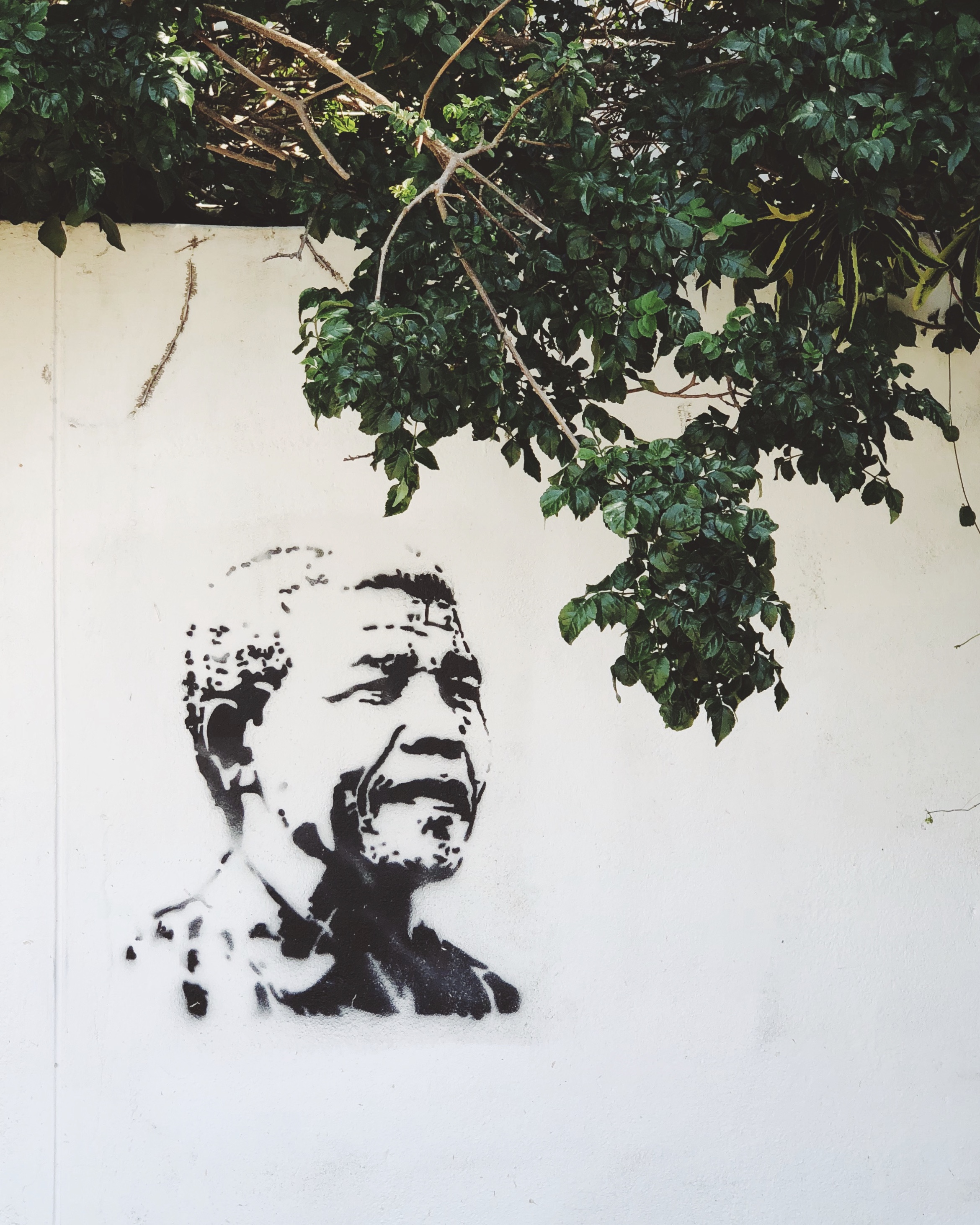
Strides of Forgiveness
Mandela’s emergence from prison in February of 1990 was as transformative as a butterfly being released from her cocoon. His years in incarcerated seclusion had changed him so deeply that it is now hard to fathom the violent proclivities he was once so prone to. Mandela’s Damascus Road experience was forged on a little island just a ferry ride from Cape Town, South Africa.
Much has been made of what happened to Mandela during those decades. Books have been written, and in recent years films have been released, all in their own way trying to probe the depths of what instigated his makeover. While there are many tributary speculations, the source of it all is embodied in the word forgiveness. Nelson Mandela refused to allow the injustices of apartheid to embitter his spirit. Only daily gulps at the fountain of forgiveness could truly cure what ailed him.
And it worked, so much so that President Mandela required that his nation return to the same fountain, over and over again. How else would a country which had been ravaged by apartheid ever come together? So convinced that forgiveness must lead the way, a series of gatherings were organized that the world would come to know as the Truth and Reconciliation Commission (or TRC). These were powerful moments where people could openly confess their atrocities to the one’s they had offended, and be forgiven.
One of my favorite TRC stories is of the time in which a white police officer confessed to a black woman from Soweto that during apartheid he and his colleagues had come to her house, dragged her husband out into the streets, bound him with ropes, doused him with gasoline and lit a match setting him on fire. They then forced this woman to watch as her husband screamed to his death. As if that weren’t enough, six months later they returned to her home, bound her son, dragged him into the streets, doused him with gasoline, lit a match and made her watch the scene all over again, as the one she had given birth to screamed to his death. “These,” he said to this woman and a gathering of several hundred, “are my offenses”.
The audience was hushed wondering what this black woman would say to this white police officer. Peering into his face she said, “Sir, you have taken from me my only husband, and my only son- the loves of my life. I still feel as if I have a lot of love to give, and I would ask you for one thing. Would you come to my home several times a month? Would you let me cook and clean for you? Would you sir, let me love you?”
Stunned by her words, the audience sat in silence. A few moments later someone began singing a song written by an old slave trader, who like this man had committed racial injustices, “Amazing grace how sweet the sound, that saved a wretch like me, I once was lost, but now I’m found, was blind but now I see.” After only a few lines the rest of the crowd joined in, releasing a sweet healing in that place.
As I reflect on the life and death of Nelson Mandela and all that he accomplished, his most powerful tool was not a government program, or a new ideology; it was simply forgiveness. South Africa still has a long walk ahead of her. But that walk has been shortened by lengthy strides of forgiveness.
If you’re reading this you probably don’t know the pain of having to watch your spouse and seed murdered, but you do know the intense hurt of betrayal, of having your heart broken by someone you thought you trusted. You may not know the frustration of having to sit in jail for decades, but you are well acquainted with the cell of anguish as you have been lied on, gossiped about and made to look like a fool. The long walk to freedom can only begin with one word- forgive. Let it go. Release the debt.
Mandela, sir, thanks for your example.

Happy Thanksgiving!
Thanksgiving was going on long before it became a recognized national holiday in 1863. Prior to Lincoln’s national call to thanks, the day was celebrated by many of the states in the union, at different times. However, in the height of the civil war when our nation was being torn asunder, President Lincoln’s Secretary of State thought it would be a good idea to ironically get everyone on the same page in the midst of such divisiveness. Lincoln agreed.
Expressing his hopes for the last Thursday of November, Abraham Lincoln decreed that this was to be a day, “Commended to God’s care to give thanks to our beneficent Father” (Doris Kearns Godwin, Team of Rivals). Thanksgiving, in other words, had distinctively Christian roots.
One cannot read the Scriptures without concluding that gratitude is to be the insignia of the Christ follower. We are told to bless the Lord at all times, and to pray without ceasing. God is to be the focal point of our lives no matter what season we are in. Indeed we are to give thanks continually, but why?
Our hearts are bent on self glory. We are ruthlessly committed to “me”. C.S. Lewis points to this in a moving passage in his classic, Mere Christianity, where he argues that the fountainhead to all vice is pride. Left to ourselves we will revel, well, in ourselves. And here is where a life of gratitude is so important. To constantly say thanks- to the waiter who refills our cup, to the man who pays the compliment, to the woman who opens the door, to the valet who parks the car, the parent who fixes yet another meal- is to go to war with the weeds of entitlement that constantly need tending to.
Years ago an old preacher told me to write a thank you note whenever I had finished preaching for someone. I thought his advice odd, until I began the practice. There have been more than enough occasions when sitting at my desk some Monday morning, writing a thank you note, that my pride has been insulted. For in that little offering of thanks to the events host, I have acknowledged their graciousness in affording me the opportunity. It was not just the gifts that got me there, but their kindness.
So on this day when we will sit around the table with family and friends, if it seems like an antiquated practice to name the “three things you’re most thankful for this year,” it’s your pride talking. Saying thank you to God for the sunshine and the rain, the promotion and the pink slip, is to wage war with the enemies of entitlement and arrogance.
May today only be the beginning of the daily practice of thanksgiving.

Mulatto Theology: Some Strange Fire Concerns
Recently I felt the gentle nudge of the Holy Spirit to share Jesus with an Ethiopian immigrant. When I asked him about his faith he responded that he was a Muslim, and then he was quick to say that he was not of the fanatical, Al Qaeda variety. By no means did he want that fringe group to represent him and his Muslim beliefs in any way.
We’ve all been in that situation haven’t we? You know where you find yourself apologizing for being of a certain group, because a few eccentrics who also are a part of that group have painted a caricature in people’s minds of what that organization and therefore you are all about. The moment you say you pledged a certain fraternity or sorority you have to explain that you’re not a pretty boy, dumb athlete, loose woman or a thug. Or if you say you grew up Baptist (like I did) that you’re not legalistic. Or if you are a republican you actually do care about the poor.
It’s a problem we’ve been battling with since day one- labels. Which brings me to the moniker charismatic, and the Strange Fire conference. Let me begin by saying that I hold Dr. John MacArthur and most of the assembled team of speakers in high esteem. For years I’ve had the Grace to You app on my phone, and have been inspired and enriched by his sermons. In fact, I even experienced spiritual nourishment as I listened to many of the messages from the Strange Fire conference on the app. But I must pause and offer a few concerns- not a rebuke- just some concerns.
I found myself listening to Dr. MacArthur and his battery of speakers referencing charismatics in a way that I do not personally relate. If by charismatic you mean that I affirm all of the gifts of the Holy Spirit as still being in operation today, and that I do believe that the Holy Spirit speaks to me in clear and specific ways then I must affirm that I absolutely am a charismatic. However, if you mean that a charismatic is someone who rolls around on the floor and barks like a dog, commands his checkbook to be full of money, and his wallet to immediately overflow with large sums of bills, and if you mean that a charismatic is someone who believes that God gives additional revelation to what he has already supplied in the Word of God while he listens to some “peddler of the gospel” on television, then I must say to the latter that I most certainly am not a charismatic.
Which becomes my first area of concern with the Strange Fire conference. In the messages that I listened to I did not really hear a carefully defined definition of charismatic that I thought was clear and accurate of the growing swath of people who are a part of that movement. To address a group of people, and levy harsh judgments against them without having a fair representation of those who are a part of the mainstream of that group (not the fringe), is to do a disservice. It would be like me leading our church into Hispanic ministry without a Hispanic voice on our leadership team to press against my stereotypes and assumptions (my guess is some church has probably tried that).
The second concern I have with the Strange Fire conference is that it seems to lack an awareness of where things are moving theologically in general. What I mean by this is that I am consistently running into young men and women of God of whom it would be impossible to corner as one theological thing. Just a generation or two ago Christ followers could be labeled as cessationist’s or charismatics, reformed or dispensational, but now there is a real movement into what some would call hybrid theology, or what Brian Bantum has referenced as mulatto in his book, Redeeming Mulatto: A Theology of Race and Christian Hybridity.
I found myself relieved after reading Bantum’s book for he gifted me with a vocabulary that expresses my multi-theological views, not in some McLaren “A Generous Orthodoxy” way, but in a robust biblical fashion. I tend to drive older theologians nuts when I express my dispensational leanings when it comes to my eschatology, but my reformed commitments in my soteriology. And, I have also found a place to be ruthlessly committed to the Word of God, and the Reformers passion for sola scriptura, alongside of a growing fierce sensitivity to the voice of the Holy Spirit who does not add to the Word of God, but helps me to apply the clear black and white principles of the Scriptures to my often gray scenarios of life. Yes, I do believe that the Holy Spirit speaks to me.
Please don’t misunderstand me, my theological hybridity was not planned as if I wanted to thumb my nose at the establishment by becoming unduly obstinate. Instead it was a loving pathway that the Holy Spirit sent me on. While in seminary at Talbot School of Theology I fell intensely in love with the Word of God at a place that is unashamedly passionate about the Scriptures. At the same time I attended and served at a charismatic church where people spoke in tongues, interpretation was called for and I saw both the incredible move of the Holy Spirit, and I witnessed plenty of unfortunate abuses (like the time a woman at the church called me to tell me that the Lord told her I was her husband…she clearly “mis-heard”). I agree with Dr. MacArthur that one of the fundamental errors of the church today is a lack of discernment. He goes onto “discern” that the charismatic movement is evil. I discerned, from the same Word of God, that there are evils within the movement, just as there are evils among every denomination, and organization, but if I discover that one of my spiritual mentors is a philanderer does this mean that I should no longer be a follower of Jesus? In the same way the abuses of the likes of Marilyn Hickey or Creflo Dollar do not cause me to denounce my biblical charismatic convictions.
A final concern that I have was that the spirit of the conference seemed to lack any kind of love. What I sensed were a group of people who had gathered all from the same tribe content to amen how right they are and how very wrong the charismatics are. I felt no sense of pleading, no real abiding love which is the cardinal New Testament virtue. In fact, what I felt were men who were using their spiritual gifts (I Corinthians 12, 14) devoid of love, which came across as the metaphor Paul uses for this very scenario (the exercise of gifts minus the ethic of love) in I Corinthians 13.
Will there be some charismatics in hell? Unfortunately yes, just like there will be some cessationist’s, alongside of some open but cautious and pentecostals. What I believe about the person and work of the Holy Spirit is wildly important, but it is not an essential to salvation. If this be the case, then could we be at least open to the fact that charismatics or cessationist’s or dispensationalist’s or reformed are not the enemy, and could very well be our brothers and sisters? And if it’s possible that we might be of some kin, is there not a place for love?