
Desperate
Prayer is the expression of the souls dependence upon God, so said E.M. Bounds that great nineteenth century prayer warrior and writer. At it’s core, prayer is desperation. It’s King Jehosophat with his back against the wall, facing the prospect of annihilation, and yet he calls the people together for a corporate fast exhaling to God, “We do not know what to do, but our eyes are on you” (2 Chronicles 20). It’s a financially and socially vulnerable widow who has been victimized by an adversary, pleading her case constantly before the judge, wearing him out (Luke 18). The desperate person, according to the psalmist, is like the dear panting for the water, so our soul longs after God (Psalm 42). Desperate people pray.
Or do they? Phillip Yancey, in his book, Where Is God When It Hurts? argues that pain is one of God’s greatest gifts because it prevents us from doing further damage to ourselves. The worst thing that could happen to a person is to not feel pain, for the inability to feel is not a gift but a curse, resulting in further damage. The sore ankle tells you something is wrong, so stop playing, sit down and rest. The toothache compels me to visit a dentist who can address the ailment. Pain may be of the white elephant variety, but nonetheless it is a gift, keeping us in tune with our desperation.
Because of this leprosy can become one of the most tragic sentences ever levied on the human body. Lepers cannot feel. Yancey, in arguing that pain is a gift from God, dives headlong into the disease of leprosy. He tells of one little girl who had contracted the disease. Her parents walked into her room one morning shocked to discover that she had playfully chewed off her finger, and there it was stranded in a pool of blood. This little girls numbness forfeited her finger.
My grandmother used to say that God has kept us from dangers seen and unseen. What she was pointing to was a sovereign, merciful and caring God who was in command of our lives, so in command that there’s stuff he has kept us from that we don’t even know about. If this be the case,then what cannot be denied is man’s universal desperate need of God. All of us, regardless of our tax bracket or season of life are desperate. Our lives hang by a single solitary strand called grace and mercy. Jeremiah pointed to this in Lamentations when he said that God’s faithfulness is so great, that morning by morning new mercies we see. Little did you know it but God woke you up this morning with a fresh batch of mercy. At any given time God can demand that we give him back his breath and our lease on life is over, just like that. We are desperate.
Desperation is a good thing. As chest pains propel us to the doctor, so desperation sends drives us to Jesus. But herein lies the tragedy, the body of Christ is filled with many Christ followers and churches who have contracted spiritual leprosy. We ignore God’s alarm bells of spiritual pain and agony. A prayerless person, or one who prays nominally, does not mean the person is not desperate, instead it points to a spiritual leper who refuses to acknowledge his desperate condition before a holy God.
Jesus said that the church was to be a gathering of desperate people who make his house a house of prayer.
Paul, in writing the manual on the church in I Timothy, says that fundamentally, the church of Jesus Christ is to be a place where desperate people offer prayers to God (Chapter 2)
The great success of the first church in the book of Acts was not in her programs or visionary leadership, but it was in her praying (Acts 2:42).
I want this in my own life, and the life of the church I lead, Fellowship Memphis. I don’t want us to be a people who numb ourselves at the table of prosperity. I don’t want God to have to use tragedy to jolt me out of my spiritual leprosy in order to drive me to him. Oh that every day I would have a fresh vision of my need for God. I don’t want the reputation of Fellowship Memphis to be that of a church filled with great programs or preaching, but that we would be known as a people of great praying. I don’t want people to be wowed by my gifts, but by my God, and this only happens by prayer.
So we begin at Fellowship Memphis this new year by consecrating the month of January as a month of prayer. Every day we as a people will be desperately seeking God together for the same thing laid out in our 31 Days of Prayer Guide. May our great God know that we are in tune of our desperate need of him.

Top 10 of '13
As we come to the close of another year, I want to continue what’s become an annual tradition by sharing with you the top 10 books that I read in 2013. Looking at the stack of ten volumes, I’ve got to confess that these are some really good ones, so much so that in previous years most of these would have been ranked number one.
#10: Alister McGrath, C.S. Lewis: A Life
One of the best biography’s I’ve read on Lewis, and as you can imagine there’s more than a few bios on him. In fact, for those of you who maybe infatuated with the life of this great 20th century man, and wonder where to start, I’d recommend McGrath’s biography. He gives a wonderful treatment of Lewis, addressing his writing, teaching and personal life with great depth and fairness.
#9: John Piper, A Hunger for God
Ever read a book that just spoke to your soul? This book did that for me. I’m always looking for books that will help me to be a better man, and specifically I was searching for something that would instruct and inspire me to make fasting a more part of the rhythms of my life. Piper’s, A Hunger for God, really convicted and challenged me towards this end. It also was helpful in spurring thoughts that will go into my January series on prayer and fasting at our church.
#8: Larry Tye, Satchel: The Life and Times of an American Legend
I read a ton of biography because I love history, and find that biographies, among other things, are great fodder for sermon illustrations. My grandfather played in the Negro Leagues, and of course I heard of Satchel Paige stories from the time I was a little boy. Finally, I got around to reading a bio on his life, and talk about a page turner. By all estimates Satchel was the winningest pitcher in baseball history, and played into his sixties. But it wasn’t all substance with him, it was a ton of style- the high leg kick, the pause in his windup and calling in his whole team, leaving just him, his catcher and the batter to decide the fate of the game. Wow, what a life, and what a book!
#7: D.A. Carson, The Intolerance of Tolerance
Chuck Colson once said that every Christian should read with the Bible in one hand and the newspaper in the other. His point was that the duty of the Christian was to exegete the Scriptures and the culture! What this means for us in the 21st century is that we have to be able to speak to such conflicting philosophies as the “new tolerance,” which is “tolerant” to everything but Christianity. Dr. Carson has done it again in providing a thoughtful and helpful resource. I found it so helpful that I had our staff read the book and discuss.
#6: Robert Smith, Jr. Doctrine that Dances
Best preaching book I’ve read in years! As the title suggests, preaching is to be both head and heart. Words like inspiring, insightful, foundational, challenging and necessary come to mind when I think of Dr. Smith’s volume. I had my preaching cohort read this. I wish this would have been the first preaching book I read. All aspiring preachers drop what you’re doing and read this.
#5: Nik Ripken, The Insanity of God
In most years this book would have been number one…hands down! What a moving book that chronicles the modern day persecuted church all over the world. The stories you hear of believers who are putting it all on the line for their faith in Jesus Christ will compel you to beg God for forgiveness in being too ashamed to share your faith with the person next to you on the airplane.
#4: Diane McWhorter, Carry Me Home
There’s a reason why this book won the Pulitzer Prize. Diane does a stellar job chronicling the Civil Right’s Movement in her home city of Birmingham in 1963. Not only a great researcher and writer, but because she lived in Birmingham at the time, she is able to write with a unique perspective.
#3: Malcolm Gladwell, David and Goliath
Malcolm has done it again! What attracted me to this book was Gladwell’s revelation that he had come back to faith as a result of writing David and Goliath. His premise is that not all underdogs are underdogs, in fact, he argues, if you look closer they’re actually the favorites. You won’t agree with everything he says (like every other book outside the Bible), but you will at least stop and do your best Arsenio Hall impression and go, “Hmmmm”.
#2: James Swanson, Manhunt: The 12 Day Chase for Lincoln’s Killer
This summer while on vacation I was looking for a little beach reading, and so I picked this up. Ever read something so good that your loved one’s got mad at you because it took you away from them for long periods of time? Well, this was it. A page turner! But beware, if you are not in the best season with your loved one’s you might want to wait a while before reading this, because you won’t be able to put it down.
#1: Rebecca Skloot, The Immortal Life of Henrietta Lacks
A black woman dies in 1951, and without her families knowledge doctors take her cells and are shocked when they discover that hers are the first to continuously grow outside of her body. This revolutionizes the medical industry, allowing them to come up with a cure for Polio and a host of other diseases. Henrietta’s cells have been to most countries, and even gone to the moon, spawning a billion dollar industry. And yet the great irony of it all is that her descendant’s wallow in poverty, many not even having health insurance. I see now why it’s a New York Times Bestseller
Well, there you have it. Hope you’re able to get to some of these books. While you’re at it, look out for my new book, Letters to a Birmingham Jail in February through Moody Publishers.
Strides of Forgiveness
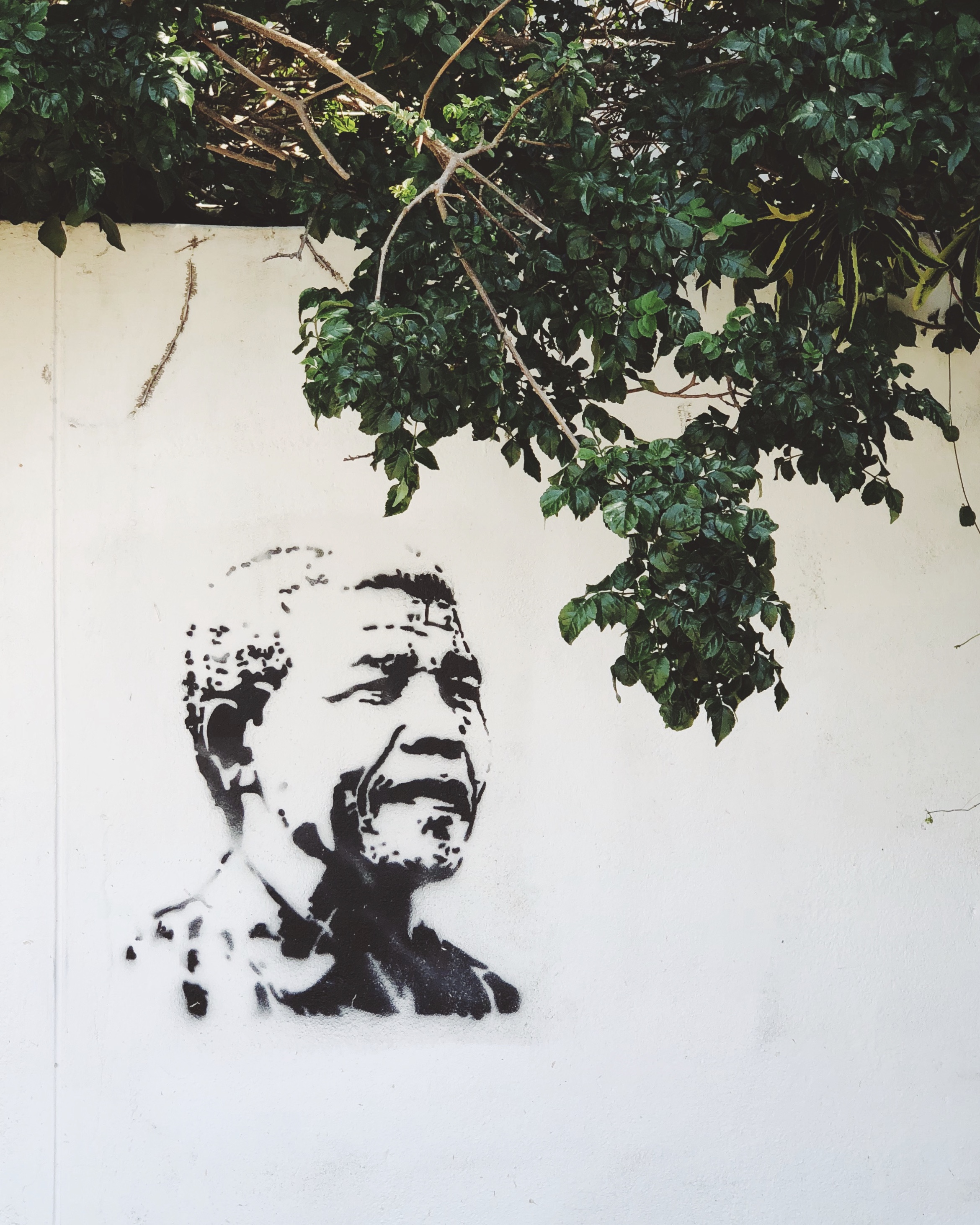
Mandela’s emergence from prison in February of 1990 was as transformative as a butterfly being released from her cocoon. His years in incarcerated seclusion had changed him so deeply that it is now hard to fathom the violent proclivities he was once so prone to. Mandela’s Damascus Road experience was forged on a little island just a ferry ride from Cape Town, South Africa.
Much has been made of what happened to Mandela during those decades. Books have been written, and in recent years films have been released, all in their own way trying to probe the depths of what instigated his makeover. While there are many tributary speculations, the source of it all is embodied in the word forgiveness. Nelson Mandela refused to allow the injustices of apartheid to embitter his spirit. Only daily gulps at the fountain of forgiveness could truly cure what ailed him.
And it worked, so much so that President Mandela required that his nation return to the same fountain, over and over again. How else would a country which had been ravaged by apartheid ever come together? So convinced that forgiveness must lead the way, a series of gatherings were organized that the world would come to know as the Truth and Reconciliation Commission (or TRC). These were powerful moments where people could openly confess their atrocities to the one’s they had offended, and be forgiven.
One of my favorite TRC stories is of the time in which a white police officer confessed to a black woman from Soweto that during apartheid he and his colleagues had come to her house, dragged her husband out into the streets, bound him with ropes, doused him with gasoline and lit a match setting him on fire. They then forced this woman to watch as her husband screamed to his death. As if that weren’t enough, six months later they returned to her home, bound her son, dragged him into the streets, doused him with gasoline, lit a match and made her watch the scene all over again, as the one she had given birth to screamed to his death. “These,” he said to this woman and a gathering of several hundred, “are my offenses”.
The audience was hushed wondering what this black woman would say to this white police officer. Peering into his face she said, “Sir, you have taken from me my only husband, and my only son- the loves of my life. I still feel as if I have a lot of love to give, and I would ask you for one thing. Would you come to my home several times a month? Would you let me cook and clean for you? Would you sir, let me love you?”
Stunned by her words, the audience sat in silence. A few moments later someone began singing a song written by an old slave trader, who like this man had committed racial injustices, “Amazing grace how sweet the sound, that saved a wretch like me, I once was lost, but now I’m found, was blind but now I see.” After only a few lines the rest of the crowd joined in, releasing a sweet healing in that place.
As I reflect on the life and death of Nelson Mandela and all that he accomplished, his most powerful tool was not a government program, or a new ideology; it was simply forgiveness. South Africa still has a long walk ahead of her. But that walk has been shortened by lengthy strides of forgiveness.
If you’re reading this you probably don’t know the pain of having to watch your spouse and seed murdered, but you do know the intense hurt of betrayal, of having your heart broken by someone you thought you trusted. You may not know the frustration of having to sit in jail for decades, but you are well acquainted with the cell of anguish as you have been lied on, gossiped about and made to look like a fool. The long walk to freedom can only begin with one word- forgive. Let it go. Release the debt.
Mandela, sir, thanks for your example.

Happy Thanksgiving!
Thanksgiving was going on long before it became a recognized national holiday in 1863. Prior to Lincoln’s national call to thanks, the day was celebrated by many of the states in the union, at different times. However, in the height of the civil war when our nation was being torn asunder, President Lincoln’s Secretary of State thought it would be a good idea to ironically get everyone on the same page in the midst of such divisiveness. Lincoln agreed.
Expressing his hopes for the last Thursday of November, Abraham Lincoln decreed that this was to be a day, “Commended to God’s care to give thanks to our beneficent Father” (Doris Kearns Godwin, Team of Rivals). Thanksgiving, in other words, had distinctively Christian roots.
One cannot read the Scriptures without concluding that gratitude is to be the insignia of the Christ follower. We are told to bless the Lord at all times, and to pray without ceasing. God is to be the focal point of our lives no matter what season we are in. Indeed we are to give thanks continually, but why?
Our hearts are bent on self glory. We are ruthlessly committed to “me”. C.S. Lewis points to this in a moving passage in his classic, Mere Christianity, where he argues that the fountainhead to all vice is pride. Left to ourselves we will revel, well, in ourselves. And here is where a life of gratitude is so important. To constantly say thanks- to the waiter who refills our cup, to the man who pays the compliment, to the woman who opens the door, to the valet who parks the car, the parent who fixes yet another meal- is to go to war with the weeds of entitlement that constantly need tending to.
Years ago an old preacher told me to write a thank you note whenever I had finished preaching for someone. I thought his advice odd, until I began the practice. There have been more than enough occasions when sitting at my desk some Monday morning, writing a thank you note, that my pride has been insulted. For in that little offering of thanks to the events host, I have acknowledged their graciousness in affording me the opportunity. It was not just the gifts that got me there, but their kindness.
So on this day when we will sit around the table with family and friends, if it seems like an antiquated practice to name the “three things you’re most thankful for this year,” it’s your pride talking. Saying thank you to God for the sunshine and the rain, the promotion and the pink slip, is to wage war with the enemies of entitlement and arrogance.
May today only be the beginning of the daily practice of thanksgiving.

Mulatto Theology: Some Strange Fire Concerns
Recently I felt the gentle nudge of the Holy Spirit to share Jesus with an Ethiopian immigrant. When I asked him about his faith he responded that he was a Muslim, and then he was quick to say that he was not of the fanatical, Al Qaeda variety. By no means did he want that fringe group to represent him and his Muslim beliefs in any way.
We’ve all been in that situation haven’t we? You know where you find yourself apologizing for being of a certain group, because a few eccentrics who also are a part of that group have painted a caricature in people’s minds of what that organization and therefore you are all about. The moment you say you pledged a certain fraternity or sorority you have to explain that you’re not a pretty boy, dumb athlete, loose woman or a thug. Or if you say you grew up Baptist (like I did) that you’re not legalistic. Or if you are a republican you actually do care about the poor.
It’s a problem we’ve been battling with since day one- labels. Which brings me to the moniker charismatic, and the Strange Fire conference. Let me begin by saying that I hold Dr. John MacArthur and most of the assembled team of speakers in high esteem. For years I’ve had the Grace to You app on my phone, and have been inspired and enriched by his sermons. In fact, I even experienced spiritual nourishment as I listened to many of the messages from the Strange Fire conference on the app. But I must pause and offer a few concerns- not a rebuke- just some concerns.
I found myself listening to Dr. MacArthur and his battery of speakers referencing charismatics in a way that I do not personally relate. If by charismatic you mean that I affirm all of the gifts of the Holy Spirit as still being in operation today, and that I do believe that the Holy Spirit speaks to me in clear and specific ways then I must affirm that I absolutely am a charismatic. However, if you mean that a charismatic is someone who rolls around on the floor and barks like a dog, commands his checkbook to be full of money, and his wallet to immediately overflow with large sums of bills, and if you mean that a charismatic is someone who believes that God gives additional revelation to what he has already supplied in the Word of God while he listens to some “peddler of the gospel” on television, then I must say to the latter that I most certainly am not a charismatic.
Which becomes my first area of concern with the Strange Fire conference. In the messages that I listened to I did not really hear a carefully defined definition of charismatic that I thought was clear and accurate of the growing swath of people who are a part of that movement. To address a group of people, and levy harsh judgments against them without having a fair representation of those who are a part of the mainstream of that group (not the fringe), is to do a disservice. It would be like me leading our church into Hispanic ministry without a Hispanic voice on our leadership team to press against my stereotypes and assumptions (my guess is some church has probably tried that).
The second concern I have with the Strange Fire conference is that it seems to lack an awareness of where things are moving theologically in general. What I mean by this is that I am consistently running into young men and women of God of whom it would be impossible to corner as one theological thing. Just a generation or two ago Christ followers could be labeled as cessationist’s or charismatics, reformed or dispensational, but now there is a real movement into what some would call hybrid theology, or what Brian Bantum has referenced as mulatto in his book, Redeeming Mulatto: A Theology of Race and Christian Hybridity.
I found myself relieved after reading Bantum’s book for he gifted me with a vocabulary that expresses my multi-theological views, not in some McLaren “A Generous Orthodoxy” way, but in a robust biblical fashion. I tend to drive older theologians nuts when I express my dispensational leanings when it comes to my eschatology, but my reformed commitments in my soteriology. And, I have also found a place to be ruthlessly committed to the Word of God, and the Reformers passion for sola scriptura, alongside of a growing fierce sensitivity to the voice of the Holy Spirit who does not add to the Word of God, but helps me to apply the clear black and white principles of the Scriptures to my often gray scenarios of life. Yes, I do believe that the Holy Spirit speaks to me.
Please don’t misunderstand me, my theological hybridity was not planned as if I wanted to thumb my nose at the establishment by becoming unduly obstinate. Instead it was a loving pathway that the Holy Spirit sent me on. While in seminary at Talbot School of Theology I fell intensely in love with the Word of God at a place that is unashamedly passionate about the Scriptures. At the same time I attended and served at a charismatic church where people spoke in tongues, interpretation was called for and I saw both the incredible move of the Holy Spirit, and I witnessed plenty of unfortunate abuses (like the time a woman at the church called me to tell me that the Lord told her I was her husband…she clearly “mis-heard”). I agree with Dr. MacArthur that one of the fundamental errors of the church today is a lack of discernment. He goes onto “discern” that the charismatic movement is evil. I discerned, from the same Word of God, that there are evils within the movement, just as there are evils among every denomination, and organization, but if I discover that one of my spiritual mentors is a philanderer does this mean that I should no longer be a follower of Jesus? In the same way the abuses of the likes of Marilyn Hickey or Creflo Dollar do not cause me to denounce my biblical charismatic convictions.
A final concern that I have was that the spirit of the conference seemed to lack any kind of love. What I sensed were a group of people who had gathered all from the same tribe content to amen how right they are and how very wrong the charismatics are. I felt no sense of pleading, no real abiding love which is the cardinal New Testament virtue. In fact, what I felt were men who were using their spiritual gifts (I Corinthians 12, 14) devoid of love, which came across as the metaphor Paul uses for this very scenario (the exercise of gifts minus the ethic of love) in I Corinthians 13.
Will there be some charismatics in hell? Unfortunately yes, just like there will be some cessationist’s, alongside of some open but cautious and pentecostals. What I believe about the person and work of the Holy Spirit is wildly important, but it is not an essential to salvation. If this be the case, then could we be at least open to the fact that charismatics or cessationist’s or dispensationalist’s or reformed are not the enemy, and could very well be our brothers and sisters? And if it’s possible that we might be of some kin, is there not a place for love?

The Problem with Balance
I was walking across campus last week right after speaking in chapel when one of the deans asked, “How do you balance ministry and family, especially with all of your travel?”
It’s a question I’ve been asked enough over the years that it warrants me offering a more extended answer than the one I gave to the dean during our quick journey to lunch.
It would be foolish for me to not acknowledge the obvious- the jury is still out on how good of a job I am doing with all of the plates I’ve got spinning. The answer I give today at forty could be quite different when I’m sixty.
To begin with, balance is way overrated. Can I be frank with you? I hate the word balance. Nowhere in the Bible are we called to be balanced in how we handle life. If my goal is to be balanced in all things, I will be radical in no thing. The call to follow Jesus is the call to a life of radical sacrifice, not balance.
Balanced is lukewarm.
Balanced is a jack of all trades a master of none.
Balanced is nominal.
Balanced is cultural Christianity.
Balanced is unappealing.
I want to be radical.
In the garden, God gave Adam a mission before a mate. Adam was called by God to cultivate the garden. Clear on his calling, God now assigns to Adam what he calls a helper in Eve. Eve was not just someone whom he could share bodies and converse with, but Eve was also someone who was called to walk with Adam in his vocation (Vocation comes from the Latin for calling). Theirs was a holistic partnership in every dimension.
I view my labors as a preacher and pastor as a calling. I am called to preach the gospel. It’s not about money. It’s not about notoriety. It’s not about getting on and off airplanes or leveraging a platform. I am called to this. If there’s one thing I’ve been sure of since the age of seventeen, Bryan Loritts is called to preach.
Nothing frustrates a marriage faster than when a husband feels like he has an opponent rather than a helper. Now hear me, I’m not painting the picture of some docile, yes woman molded after the fashion of the first proposed wife in Coming to America (“Whatever you like”), but if there’s two things you must be clear on it is: 1) What has God called you to do; 2) Who has he assigned to be your helper (not employee)?
Korie is my helper. As Adam and Eve walked in vocational oneness as they cultivated the garden daily, so Korie and I labor in ministry together. While I preach she prays. Whatever growth I am experiencing in holiness, it’s been because of the grace of God, the promptings of the Holy Spirit, and his assistant- Korie! So however God uses me, it’s not just me, but it’s we. For all the souls who have come to know Christ, joined Fellowship Memphis, turned from their sins, it’s not just how God has used me, it’s how he’s used Korie and I together.
The writer of Proverbs says that a man’s gift makes room for him and brings him before kings. I’ve found this to be true in my own life. God has opened doors for me to proclaim the gospel around the world. Common sense and simple discernment dictates that I not say yes to every or even most things, but I do know that I’m called to many of those invitations. I’m not called to be at the dinner table every night. But I am called to be the father of Quentin, Myles and Jaden. I’m not called to make them the center of my world, but I am called to make God the center of my world, affections and labors. Which means that I won’t be at every soccer game, school program or spelling bee.
If I feel a little bit of judgment from you after this last paragraph it’s because I’m writing to a culture, especially a Christian culture, who is guilty of the idolatry of family. I think the desire to be present is not only good, but is necessary. However, if in your estimation a good parent is at every event, and makes their kids the center of their world, you are setting your children up for a colossal failure. Continue down this road and you will not launch arrows into the world, but boomerangs- kids who leave the house, and then return because they realized that in the world they are not the center, but at home they are. So why not return to the one place where they were sold a bill of goods? Could it be that our “failure to launch” culture was built on the pipe dreams of well meaning parents who replaced God with little Johnny?
Again, I don’t want you to misunderstand me, I can’t lead anyone I don’t spend time with, and I am called to be the husband of Korie and the father to my children. Korie and I enjoy weekly dates together, along with trips away, just the two of us. I am at most of Jaden’s basketball games. Myles and I have logged hundreds of hours on the golf course together where in between shots we talk about everything from Harry Potter to his dreams. I’ve stood and watched Quentin take off at a cross country meet, only to make a dash for it to the other side of the course so I can see him finish (why not make the starting and finishing line the same place). When I stand in the presence of God I will have to give an account for how I stewarded the lives of these four people I am called to lead.
But I also have been entrusted with the gospel, and to by vocation, that is calling, steward it to the people at Fellowship Memphis, and for this season the people of other states and countries. I feel the tension of wanting to be out at a restaurant on a Saturday night with my wife, but I have to spend time getting ready to preach at Fellowship the next morning. I am perplexed because on the one hand I want to see Jaden hit another jump shot, but God has called me to preach the good news to a gathering of pastors. I’d love to say yes to that once in a lifetime preaching opportunity, but Korie and I have agreed to block that week off for some needed rest and family time.
I don’t know how to be balanced. I don’t want to be balanced.
I want to radically follow Jesus.
I want to radically love my wife.
I want to radically love my children.
The Preachers of LA: How Much Should A Preacher Make?
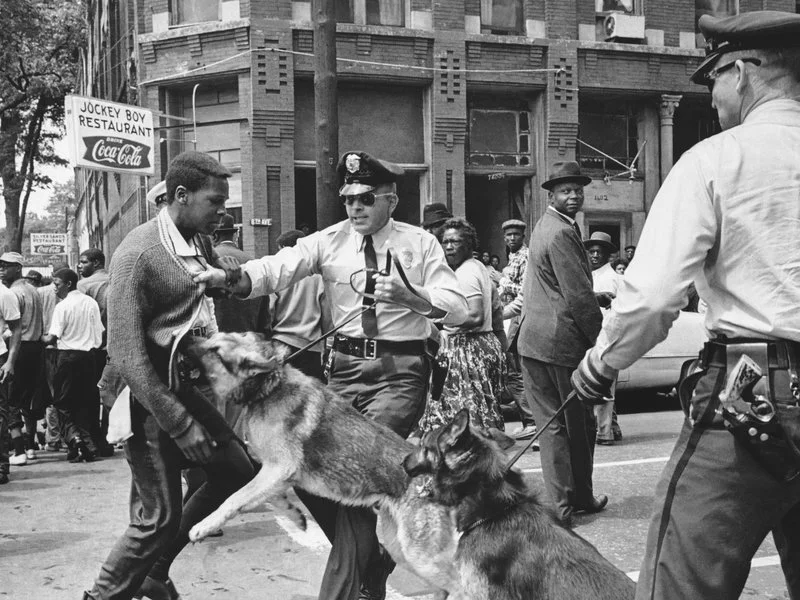
Birmingham, 1963, Bill Hudson took a photo of a young black boy being attacked by a German Shepherd during the civil rights protests. This picture would go onto be one of the most iconic photographs ever taken. As it circulated across the country gracing the covers of newspapers, politicians took note and began to move. Within two years of this picture the voting and civil rights acts were signed and a whole new way of life for African American’s came into existence.
But look closer at the picture and what you will see is surprising. The boy isn’t what he seems. A hard look shows him pulling tight the leash on the German Shepherd, and kneeing him squarely in the jaw. The policeman said that this young black boy actually broke the dogs jaw. What was once perceived as a docile young man non-violently being bitten for the sake of the cause, was the polar opposite. Looks can be very deceiving. Until you see the whole picture judgment should be reserved.
Oxygen’s new reality show, The Preachers of LA has caused a firestorm of reaction both within and outside the evangelical community. At the center of the controversy is the perceived opulence of these preachers and pastors. But is this another case of looks not being what they seem?
To be clear, I am not defending the show, neither am I in agreement with much of their theology. My years in Los Angeles put me into contact with several of these men, where I listened to many of their sermons. Their theology is more than problematic, some of what I heard was actually heretical (I have not heard all of them preach). I also know that most of the preachers adhere to the “prosperity gospel” (as do most believers, even those who would classify themselves as conservative evangelicals. Show me someone who believes that good deeds on one side of the equation should equal good- and by good I mean tangibly/immediately/materially favorable outcomes- and I will show you someone who has subscribed to prosperity theology). One of the nice “amenities” of being a preacher who espouses prosperity theology is that you have to be the visible demonstration of what you want your people to buy into, meaning you have to have the best of the best. But this is not the purposes of this post.
In essence, I want to ask, is it wrong for a preacher to make a certain amount of money that allows him to purchase a Bentley, multi-million dollar mansion, private jet, etc? At what point does too much money and possessions become, well, too much? In other words, is our natural resistance to the show founded in the Scriptures? We need to tread carefully.
We all have what’s called a hermeneutic, which simply means a way of interpretation. For the follower of Jesus Christ our hermeneutic must begin with the Scriptures. So what does the Word of God say about money, wealth and possessions? On one hand we would have to conclude that you can be wealthy and godly at the same time. Abraham, the father of the nation of Israel and a picture of godly fidelity is an example of this. So is his son Isaac, grandson Jacob and great-grandson Joseph- you don’t become second in command of the Egyptians without being wealthy at the same time. These men are the patriarchs of God’s covenant people, who were wealthy. David and Solomon were men of enormous financial means. So was the entrepreneurial Lydia. Philemon’s home was so big that a church could meet inside. He also owned slaves which would put him in a much higher “tax bracket”. A case could even be made that the entrepreneurial virtuous woman of Proverbs 31 was of financial means. Jesus didn’t say that it was impossible for the rich to enter into the kingdom, just that it was difficult. Paul condemned the love of money, not the possession of it. So a fair reading of the biblical record would lead me to determine that wealth and godliness can be congruent.
But that’s not really our problem when it comes to The Preachers of LA. What strikes against the grain of our soul is the thought of preachers and pastors making a lot of money, and using that money in such “extreme” ways as we see in their reality.
So how much do the Scriptures say a preacher should make?
You won’t find any specific amount or percentage mentioned. Instead, what you’ll see as you mine the text are general principles. We preachers are worthy of double honor, Paul says. As those who sow immaterial things through the proclamation of God’s eternal truth, we should reap the material. The ox is not to be muzzled. All of these are very general principles, and here is where I can sometimes find myself frustrated, because what would be easier is to establish a set amount, or better yet a set percentage. If you find it in the Bible let me know!
Paul went to great extremes to not burden the people he lead financially. He boasted on several occasions that he labored with his own hands so as not to abuse the people. He did this through the making of tents. To the Corinthians he even claimed that he had the right to take money from them, but didn’t. But then he said to the Philippians that in his labors he had seasons where he went without, but there were also seasons where he had plenty- more than enough. Paul, and this is interesting, hints at times in his life when his cup was overflowing with material blessings. But before you say, See, Paul needs to be our example, are you saying that all pastors need to be bi-vocational?
So how much should a preacher make?
We love quoting from Charles Spurgeon, that great 19th century London preacher and pastor. He is still looked to as a model of godliness and great evangelistic preaching. But look closer, and you might be surprised at what else you see. Spurgeon enjoyed the finer things of life. He smoked great cigars, was known to drink wine as he read the Bible, vacationed annually in France, had a wonderful home and garden, and even rode the first class section of trains when he traveled. Drummond, in his biography on Spurgeon, tells of the time when he was about to get into the first class section of the train when a poor preacher noticed him. The poor preacher needled him by saying that he was getting into third class to save the Lord’s money. Never one to be outwitted, Spurgeon responded that he was getting into first class to save the Lord’s servant! Any fair treatment of Spurgeon will have to conclude that he not only had an abundance of money pass through his hands, but that he also enjoyed the finer things of life.
So how much should a preacher make?
We are all given to more than just biblical hermeneutics, but cultural hermeneutics as well. Our upbringing, class, environment and experiences radically shape the way we interpret such things as The Preachers of LA. I experienced this firsthand as our compensation committee, in the early days of our church, was trying to decide how much to pay me. The two men who made up the committee were extremely godly men who also happened to be white. As they were wrestling to find a framework for my pay they realized that their way of approaching things was limited, especially in the context of a multi-ethnic church. And so without any prompting from me they began to call around to various African American churches within the city of Memphis to ask how their compensation was decided (notice they faced the same dilemma we all do, nothing is specifically prescribed in the Bible). To their astonishment they were told that most of these churches gave ten percent of their annual budget to the pastor. Now by no means am I saying this is normal for all black churches in Memphis or abroad, but what they realized was that there was a huge cultural difference when it came to a hermeneutic of money for the pastor (they decided on a different structure that has been very encouraging and affirming to me and our family). Their investigation lead them to conclude what most of my African American colleagues had already figured out- ours (AA ethnicity and culture) is an honor culture. So whose right and whose wrong?
While the bible doesn’t give specifics as it relates to compensation, it does have very clear and daunting details about what to do with money once it’s in our hands. To the rich landowner in Luke 12, God doesn’t condemn him for his material and financial blessings. Instead he is called fool and condemned to hell, because he sought to take those blessings and horde them in bigger barns and spend them on his epicurean pursuits, thus betraying an unregenerate heart. Ananias and Sapphira met a similar fate over their greed. While tithing is not mentioned in the NT, the whole spirit of the NT is to exceed that amount out of a generous heart. We are stewards who are expected to give generously to the kingdom.
And this is my dilemma with the show, The Preachers of LA. We see the cars, houses and bling, but we don’t see the giving record or random acts of generosity (supposing they exist). What if I told you that I know of a pastor who has two Bentley’s, a multi-million dollar home in a very exclusive neighborhood…would you say typical and write him off? Or what if you let me finish and tell you that at last count he gives over twenty-three percent of his income to the kingdom? Is this another case of the boy kneeing the German Shepherd?
There’s a lot that’s wrong with the show, you won’t get any arguments out of me there. When I see the cars and possessions my soul grimaces because everything within me says that’s wrong. But is it? Show me the verse. Would I do it? No. I’m just concerned that our cultural hermeneutics maybe superceding our biblical hermeneutics, when instead we need to leave room for the Holy Spirit and our consciences to guide us through how we steward God’s money.

Leadership Rants
- If my character is so out of line with my preaching that my wife struggles to come to church, I need to stop preaching.
- Gifted people are a dime a dozen people, anointed people, people who minister out of the overflow of their walk with Jesus are not.
- My ministry will only last as long as my body does, so I need to take care of my body.
- “No” is the most liberating word in the English language.
- I am not omni-competent, so stop trying to be.
- Be ruthless with time but gracious with people.
- I am not my gifts, so stop being so sad when you preach a bad sermon.
- I am not my calendar.
- There’s one Savior, and it’s not me, so stop trying to change people, I can’t even change myself.
- Build His kingdom, not yours.
- Comparing yourself to others will either make you self righteous, or depressed.
- Gain money, give money, grow money.
- The undisciplined life is not worth living.
- Read. Read. Read.
- Above all else, take care of your soul.
- It’s an awful thing to be worshiped; feeding into it always ends bad. See Herod, and just about every mega superstar.
- Always sneak a peak at the rear view mirror of your past, and praise God for how far He’s brought you.
- Never get so sophisticated in your theology that, “Jesus loves me this I know,” fails to move you.

Why I Believe in the Doctrine of Election
Tomorrow at Fellowship we continue in our series on the book of James by looking at 2:1-13. Our investigation of the text necessitates that I take a few moments to discuss the doctrine of election. The reason for this is because James, in his argument that Christ-followers are never to show partiality, argues that God did not play favorites based on worldly categories of status when he saved us. In fact, James would go onto say, “Listen, my beloved brothers, has not God chosen those who are poor in the world to be rich in faith and heirs of the kingdom, which he has promised to those who love him?” (emphasis mine).
The word chosen in verse 5 points us to the beautiful doctrine of election. The doctrine of election simply means God’s sovereign initiating choice to save certain individuals, adopting them into His family, independent of prior merit. The doctrine of election postures God as the Divine Initiator, and not me. In essence, the doctrine of election says that God chose me, and I did not choose him, i merely responded to his incomprehensible act of initiating grace.
Election has unfortunately been the focal point of much controversy throughout church history, and I am not here to pick a fight with anyone. In fact, I write this post primarily to the members and attenders of Fellowship Memphis. I will say it in my message tomorrow that belief in the doctrine of election is not necessary in order to be saved, and therefore it is not necessary to join our church. There have been many wonderful saints of God throughout the years who have thought and taught very differently from me on this subject, and I am sure they will be seated much closer to King Jesus than I when we get to heaven.
Time in my message does not permit me to give all of the reasons why I believe in the doctrine of election, so let me lay out eight reasons why I have come to embrace this doctrine:
1. The Bible Teaches It. I am amazed at how the doctrine of election keeps coming up in every section of the Scriptures. God chose Israel- Psalm 33:12; Deuteronomy 6:7; Isaiah 41:8-10. Jesus chose the disciples- John 6:70. God chose us the church- Romans 9.
2. Jesus Taught Election. This is similar to my first point, but it’s so significant that it warrants it’s own point. Calvin did not coin the term election. Election is a thoroughly biblical word that Jesus used a lot, centuries before Calvin was even born. Matthew 24:15 and following, Mark 13:27 and Luke 18:7 are but a few examples of Jesus teaching on election.
3. Total Depravity. I believe in the doctrine of total depravity which says that every aspect of my life has been marked by sin because of Adam and Eve’s rebellion in the garden. The doctrine of total depravity does not say that I am as sinful as I could be (degree), but there is nothing in my life that has not been touched by iniquity (extent). If this be the case, then I could not possibly choose God on my own initiative without God initiating with me. Dead people (Ephesians 2 description of us) do not make choices.
4. Intensifies My Worship. For God to choose a wandering sheep, wayward sinner, totally depraved man like me who was mired in self-righteousness and in rebellion against God defies awe and comprehension. Quite frankly, if I believe that I chose God, like one would choose what they would have for dinner, where’s the amazement in that? The doctrine of election keeps me on my face before God, bringing a depth and intensity to my worship over the one who would choose me in spite of me.
5. God, Not Me. The doctrine of election sets the trajectory of my salvation on the sovereignty of God and not on the free will of man. This then promotes a faith that is God made, and not man made. God, His Son Jesus Christ and the Sweet Holy Spirit are at the center of my affections, not me.
6. Intensifies Evangelism. Because God pursues me, he also calls me to be a vessel that he uses to pursue others. Let me remind us that the same guy who wrote Romans 9 (that great passage on election/predestination) is the same one who logged thousands of miles on land and sea preaching Christ, sharing his faith, and seeing many come to the Lord. Paul, the greatest writer on the doctrine of election, was at the same time one of the greatest evangelist’s. Evangelism and election are not foes, they are joined at the hip.
7. Freedom in Evangelism. Also, the doctrine of election frees me in evangelism. Isn’t it liberating to know that because it is God, not our choices who saves? Because of this I need not depend on clever arguments (though I want to be prepared) or trendy presentations in witnessing, I just need to, well, witness, testify what God has done in my life and share the good news with others, leaving the results to God. The pressure really is off!
8. I’m in Good Company. There are a host of godly men and women throughout church history who have believed passionately in the doctrine of election. This is both comforting and affirming. The only two names I will call is Jesus and Paul.

What to do with Your Critics?
The playing field of leadership comes with its corresponding team of color commentators who offer insights into everything you do. Everything, and I mean everything is on the table to critique. What kind of car you drive. Where you send your kids to school. The fact that you do send your kids to school. Choice of attire. Leadership decisions you’ve made. Leadership decisions you “should have” made. How much money people think you make. It’s all up for discussion with most of the dialog taking place behind the leaders back. For all these reasons and more any leader worth his salt has had bouts with discouragement, see Moses. Sometimes the critiques come from neutral people who are neither for you or against you. They just have something to say. Sometimes, however, the commentary is rooted in people who just don’t like you.
So what do we as leaders do with the onslaught of criticism that comes our way? My years in leadership have taught me ten valuable lessons in dealing with critics:
1. Grow Up, Bryan. Leadership is for grown folks. If I can appreciate the perks of leadership, of life in the public eye, then I also need to embrace the dark side. With the applause comes critique. So I’ve had to learn to stop whining and take the bitter with the sweet. If Jesus can have his Pharisees, what makes me think I won’t have mine? Stop complaining Bryan, and be a big boy.
2. Look again. Chances are that there’s an element of truth to their critiques. Stop being so defensive, and try to discern the nugget of truth that you need to embrace and apologize for. As the saying goes, “Turn your critics into coaches”.
3. Humility. I have found that my critics have been used to work humility into me. In my early days of preaching I would say just some really hard things in a really hard way. What has buffed off those rough edges have been the critiques of congregants who offered me a nicer way of saying things, often times in an ironically not so nice way. I’m a lot more tactful because my critics have been used in a redemptive way to work humility into me (still need more).
4. Love. Your critics don’t need to be tolerated, they need to be loved.
5. Six Bullets. Whenever I catch wind of someone who has said something about me that I don’t like I immediately want to rush in and deal with the person and the issue. At this stage of the game however, if I took that route I would literally not have time to do anything productive. I have to remember I only have six bullets and I can’t shoot at everything.
6. Your Spouse. When I first got married I was coached to share everything with Korie. However, I’ve had to learn the hard way that this is not always the best advice. Korie’s fiercely loyal to me, and will tend to internalize attacks on her husband in a way that makes her angry and bitter. My role as a protector demands that I guard what I share with her.
7. Don’t get bitter. Moses’ failure to deal well with his haters barred him from the promised land. Don’t let bitterness rob you of what God has for you.
8. Be courageous. It’s easy to write sermons directly for those who speak against you and turn the pulpit into a firing range. Don’t do this, because quite frankly that’s cowardice. Deal with them in private. I think that’s where Matthew 18 would have us to begin.
9. Seek reconciliation. If your critics profess Christ seek to be reconciled with them in Christ. If they don’t know Jesus, so deal with them that they would want to know this God you claim to have saved you. One of the true tests of Christianity is how you handle those who mistreat you. But at the end of the day it takes two to reconcile. This is why Romans 12:18 is given to us.
10. Keep it moving. There comes a time when that email needs to be deleted, the anonymous note thrown away or the phone call forgotten. You've just got to move on.